





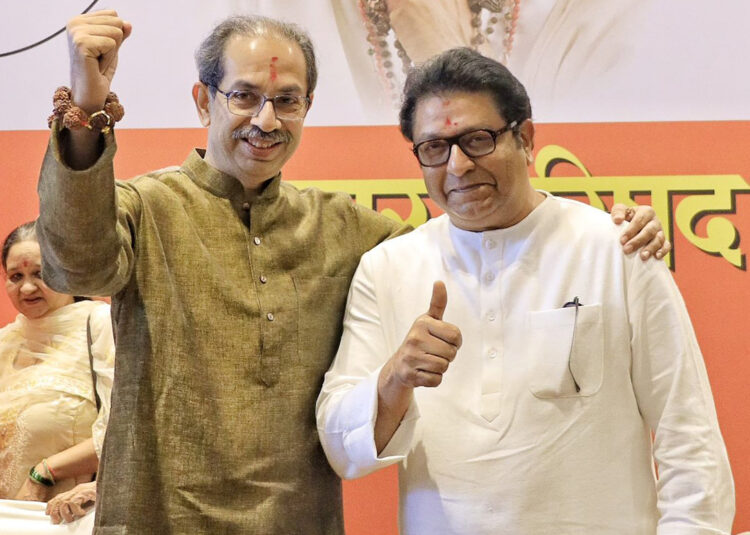
Mumbai: The alliance between Shiv Sena (UBT) and the Maharashtra Navnirman Sena has made the Brihanmumbai Municipal Corporation (BMC) elections significantly more competitive. However, Uddhav Thackeray and Raj Thackeray face a steep uphill task against the high-momentum BJP-led Mahayuti, setting the stage for a contest where emotional appeal will be tested against organisational strength.
Political observers describe the upcoming BMC battle as an acid test of whether the much-talked-about “Thackeray magic” can checkmate the BJP’s formidable electoral machinery. The reunion is politically crucial for both cousins, as their long-standing split had historically fractured the Marathi vote — often benefiting the BJP in tight contests.
A united Sena (UBT)-MNS front is expected to prevent such vote-splitting, particularly in central Mumbai and traditional Marathi strongholds such as Dadar, Parel and Girgaon. Additionally, Uddhav Thackeray has managed to retain a significant share of the Muslim vote, as reflected in the 2024 Lok Sabha results. When combined with Raj Thackeray’s aggressive Marathi outreach, this could create a distinctive electoral bloc aimed at challenging both the BJP and the Shinde-led Shiv Sena faction.
Insiders from both Sena (UBT) and MNS believe the emotional pull of the “Brand Thackeray” will be a key factor. For many loyalists, the public reunion of the cousins symbolises a fight to “protect Mumbai” from what they describe as Delhi-driven political dominance — an emotional narrative seen as their strongest counter to the BJP’s financial and organisational resources.
However, senior leaders privately acknowledge that emotion alone may not be enough to overcome the BJP-led Mahayuti’s robust grassroots network. This concern is underscored by the coalition’s dominant performance in the recently concluded civic elections, where the Mahayuti won 207 of the 288 president posts across 246 nagar parishads and 42 nagar panchayats. The BJP alone secured 117 posts, while the Sena (UBT) was reduced to single digits.
The contest is further complicated by the Congress’s decision to contest the BMC polls independently, effectively turning the election into a triangular — or even quadrilateral — fight. In such a scenario, the BJP is expected to capitalise on a split in anti-incumbency and opposition votes.
There are also potential ideological fault lines within the Thackeray alliance. Raj Thackeray’s past anti-migrant rhetoric and his recent proximity to Hindutva politics could sit uneasily with Uddhav Thackeray’s current inclusive and secular positioning, particularly in Mumbai’s cosmopolitan wards.
Adding to the challenge is Deputy Chief Minister and Shiv Sena chief Eknath Shinde, who controls the official party name and the ‘bow and arrow’ symbol. In civic elections where local corporator networks are critical, Shinde’s ability to attract former UBT corporators remains a significant threat.
Against this backdrop, observers say the Thackeray cousins are likely to focus on checkmating the BJP in Marathi-dominated wards, while the BJP will rely on its strong organisational presence in Gujarati, Rajasthani and North Indian pockets — along with the Congress contesting separately — to maintain its edge in the BMC race.
(IANS)