






New Delhi: Year 2025 was marked by several global disasters as cyclones, floods, wildfires and plane crashes shook the world. From wildfires in the US to earthquakes in Asia, a number of disasters impacted millions across the world. in 2025.
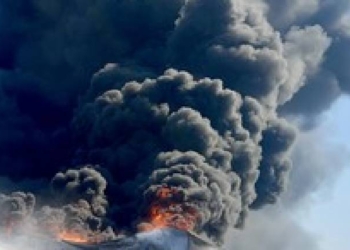
The year began with one of California’s most destructive wildfire incidents. Thousands of people were evacuated after wildfires in California devastated large portions of Los Angeles. The Palisades Fire near the Topanga Canyon on January 7 turned everything into ash, including several lifelong hopes and dreams. The blaze spread rapidly into surrounding communities, burning more than 14,000 acres and destroying thousands of homes and other structures, forcing people to evacuate. As many as 19 people died while nine firefighters were injured due to wildfires in California, according to the official statement released by California Fire. A total of 1,074 structures were damaged, 9,414 structures destroyed due to wildfires in California.
Also in January, three people died and nearly 1000 others were impacted due to severe weather conditions caused by Tropical Cyclone Dikeledi in Madagascar’s Sava region. According to the report from the National Office for Risk and Disaster Management, Cyclone Dikeledi made landfall in Madagascar’s Vohemar district.
In February, Botswana experienced severe flooding due to torrential rains. As many as nine people were killed while over 5,000 people, including children, were displaced due to torrential rains and severe flooding in the nation.
Over 2000 people died after a powerful earthquake of magnitude 7.7 struck near Myanmar’s Mandalay on March 28, resulting in intense shaking that devastated the region and was felt as far away as Bangkok. As many as 52,000 homes were damaged or destroyed due to the earthquake, forcing families into unsafe and overcrowded shelters. More than 2,600 schools were damaged in Myanmar, disrupting learning for thousands of children who were already struggling with conflict-related displacement. A total of 789 hospitals were damaged, limiting people’s access to critical healthcare services, according to the statement released by United Nations International Children’s Emergency Fund (UNICEF).
Acting as the first responder, India launched Operation Brahma to assist people in Myanmar affected by the earthquake. The Indian Army deployed a specialised medical task force to provide urgent humanitarian assistance. India also sent relief material to Myanmar, including tents, blankets, sleeping bags, food packets, hygiene kits, generators and essential medicines.
Heavy monsoon rains, which began in June, triggered flash floods across Pakistan. These heavy rains raised the water levels of Pakistan’s major rivers, including the Ravi, Sutlej, Indus, Jhelum and Chenab, making them breach their banks, leading to Pakistan’s Punjab province experiencing its worst flooding in 40 years. According to the United Nations Office for the Coordination of Humanitarian Affairs, rains and floods in Pakistan have claimed the lives of over 1,000 people this year, including 275 children. Pakistan’s National Disaster Management Authority (NDMA) has confirmed that more than 229,700 houses, 790 bridges and 2,811 kilometres of roads were destroyed or damaged due to the floods in the country. Furthermore, an estimated 2.2 million hectares of crop land were destroyed while more than 22,800 heads of livestock were killed due to floods.
A Bangladesh Air Force’s fighter jet crashed into the Milestone School and College building in Dhaka’s Uttara shortly after it took off on July 21. Over 30 people, mostly children, were killed and several others injured in the tragic accident in the South Asian nation which experienced severe turmoil in 2025 under the interim government headed by Chief Advisor Muhammad Yunus.
Two deadly earthquakes occurred in two different parts of Afghanistan in August, claiming the lives of more than 2000 people. An earthquake of magnitude 6.0 struck Afghanistan’s Kunar province while the second earthquake of magnitude 6.2 jolted Balkh province. Following a series of earthquakes that struck Afghanistan, India sent urgent humanitarian assistance to support relief efforts in the region. By September 1, India had already dispatched relief material to Afghanistan, with 1000 family tents sent to Kabul and 15 tonnes of food materials moved to Kunar from Kabul by the Indian Mission in Kabul.
Late November, Cyclone Ditwah unleashed days of relentless floods and landslides in Sri Lanka, the impact of which would last for several months to come. As of December 12, Sri Lanka’s Disaster Management Centre (DMC) reported that 639 people have died while over 200 people remained missing in the island nation due to severe weather conditions caused by Cyclone Ditwah. Thousands of houses were damaged and lakhs displaced following the cyclone.
In the wake of Cyclone Ditwah, which caused severe flooding, loss of life and widespread disruption across Sri Lanka, India launched Operation Sagar Bandhu on November 28 to provide urgent search, rescue and Humanitarian Assistance and Disaster Relief (HADR) support to the island nation. The Indian Government sent relief materials to Sri Lanka, which included tents, tarpaulins, blankets, hygiene kits, ready-to-eat food items, medicines and surgical equipment and two BHISHM cubes.
(IANS)