





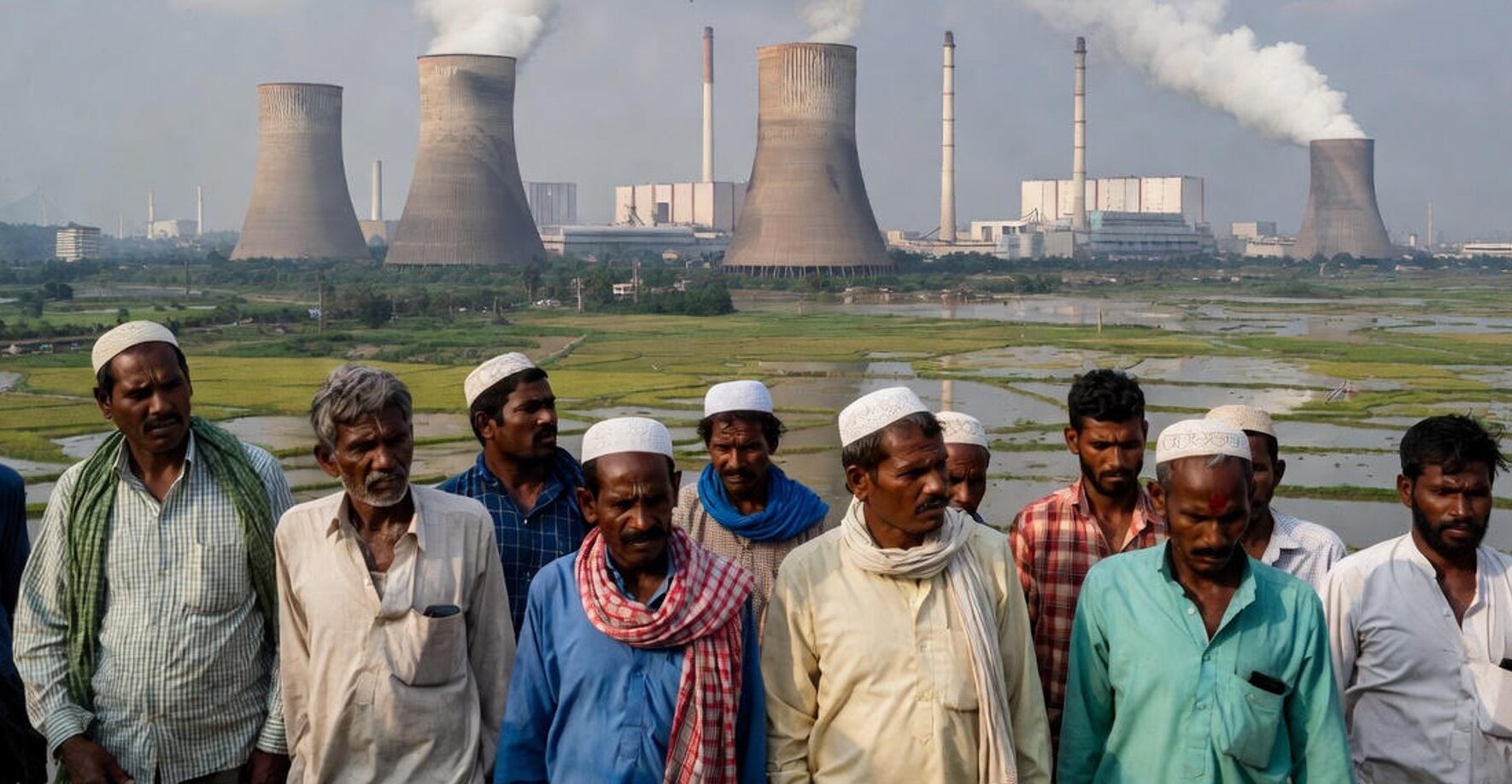
New Delhi: A recent photo exhibition by Bangladeshi photographer Noor Alam at a gallery in Tokyo depicted the sad story of the fishing and farming communities in the Matarbari region of southeastern Bangladesh are struggling to survive after losing their land and livelihoods to coal and gas-fired power plants that are being set up in the region.
Bangladeshi consumers are already bearing the brunt of high electricity bills, a situation set to worsen if reliance on expensive imported LNG continues.
The report cites examples of farmers being displaced from their ancestral lands where a huge coal power plant has been set up. They are now putting up in crowded settlements where they are struggling to eke out a living as their children grow up with a lack of basic facilities, such as enough space to play.
The report highlights heart-rending stories of thousands of betel leaf and salt farmers and fishermen being forcibly evicted from their land and livelihoods by the power authorities without even the promised compensation. Now they have nowhere to go.
The report also highlights that after having successfully prevented a massive new coal-fired power station, Bangladeshis in the Chattogram division are being pushed by foreign interests to accept huge polluting liquefied natural gas (LNG) power plants and infrastructure, according to a report in The Diplomat.
New LNG power projects and import terminals will cost the Bangladesh economy $50 billion, according to a recent Market Forces report, threatening the safety and health of millions of Bangladeshis due to toxic pollution and worsening climate disasters, such as floods and cyclones, the report states.
The report highlights that as Bangladesh faces brutal heatwaves and demand for power soars, $50 billion is poised to be invested in the LNG industry, which will make global warming worse.
However, $36 billion spent on gas power plants could instead be used to make Bangladesh a clean energy powerhouse by enabling 62 Gigawatts of renewable power, over two times the country’s current total electricity generation capacity.
(IANS)