





New Delhi: India enters 2026 facing a complex matrix of geopolitical friction, internal security deadlines, and climate-induced economic pressures, marking a shift from the stabilisation efforts of the previous year, according to official data and strategic analysts.
While the domestic economy maintains a growth trajectory above seven per cent, New Delhi is currently navigating a “diplomacy of repair” to address 50 per cent US tariffs on key exports imposed in 2025.
The Indian government is pushing for a trade settlement in early 2026 through various levels of talks to unlock stalled investment following the August 6 Executive Order by the US President Donald Trump, which targeted India’s record-high purchases of discounted Russian oil.
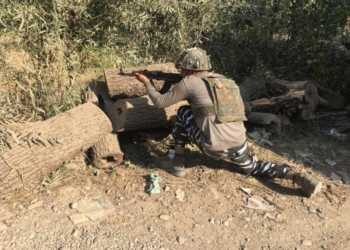
On the internal security front, the Union Home Minister Amit Shah reiterated the Indian government’s goal to make India “Maoist-free” by March 31, 2026.
It remains to be seen whether the deadline can be met, even as official records show that Maoist presence has shrunk from 125 districts in 2014 to just three in 2025.
Operations like ‘Operation Black Forest’ neutralised 270 Maoists last year, including top leaders Nambala Keshav Rao and Madvi Hidma, a resident of Chhattisgarh’s Maoist-infested Sukma district.
Data reveals that the surrender rates of Maoists surged to 1,225 nationwide in 2025, supported by state rehabilitation packages offering up to Rs 20 lakh in rewards.
Bihar, Jharkhand, Odisha, Andhra Pradesh, Telangana, Madhya Pradesh, and Maharashtra have been declared ‘Maoist-free’ by their respective governments, while Chhattisgarh has reclaimed strongholds such as Bijapur, Sukma, and Dantewada, leaving only three vulnerable districts in the tribal-dominated state.
Maoist violence has also declined sharply, with incidents falling by 53 per cent and security personnel fatalities dropping by 73 per cent between 2014 and 2024.
Security agencies reported a 95 per cent conviction rate in terror-related cases via the National Investigation Agency, but warned of “white-collar terrorism” involving professionals.
This follows the November 10 Delhi car blast near the Red Fort in which 15 persons were killed and several hurt.
Following the Delhi terror blast, a Jaish-e-Mohammed–linked network, including doctors from a Faridabad-based Al Falah University, was dismantled.
The bomber, Umar Un Nabi, an assistant professor at the Al-Falah Medical College and a native of Pulwama in Jammu and Kashmir, was also killed in the car bomb blast.
The doctors along with other aides allegedly planned the terror plot and raised Rs 26 lakh to fund terror activities.
Investigations have traced their funding networks and shell fronts, resulting in at least eight arrests so far including Al-Falah University founder Jawad Ahmad Siddiqui, with several other suspects currently under surveillance.
Cyber fraud and so-called “digital arrest” scams witnessed a sharp rise in 2025, with India losing nearly Rs 1,000 crore every month to online fraud.
Nearly 18,000 such cases were reported within just two months, leading to the arrest of more than 16,000 accused across the country through coordinated action by the state cyber police and the National Cybercrime Reporting Portal.
Addressing the Parliament, President Droupadi Murmu warned that cybercrime, digital fraud, and deepfakes pose serious threats to social, economic, and national security, underscoring the need for robust cyber defences.
The Supreme Court termed digital arrest scams an organised national menace, granting the Central Bureau of Investigation nationwide jurisdiction and directing close coordination with the Reserve Bank of India, Department of Telecommunication, banks, and state cyber units to track money trails, strengthen KYC norms, and swiftly freeze suspicious accounts.
Diplomatic experts emphasise that 2026 requires a “cautious reset” with China.
Despite a 2025 meeting between the Prime Minister Narendra Modi and Chinese President Xi Jinping at the Shanghai Cooperation Organisation Summit, where both agreed the Line of Actual Control (LAC) must remain peaceful, more than 60,000 troops remain deployed.
India continues a dual approach of firm military posture and calibrated economic de-risking.
The threat from Pakistan continues to persist after the Pahalgam attack and India’s subsequent response against its neighbour in May last year.
Although infiltration and domestic terror incidents have declined significantly, India cannot afford to lower its guard along the north-western frontier.
While Bangladesh does not pose a direct strategic threat to India like China or Pakistan, rising domestic unrest and attacks on minorities, including Hindus, remain a serious concern for India.
This has become particularly significant following the removal of former Bangladesh Prime Minister Sheikh Hasina last year.
(IANS)