





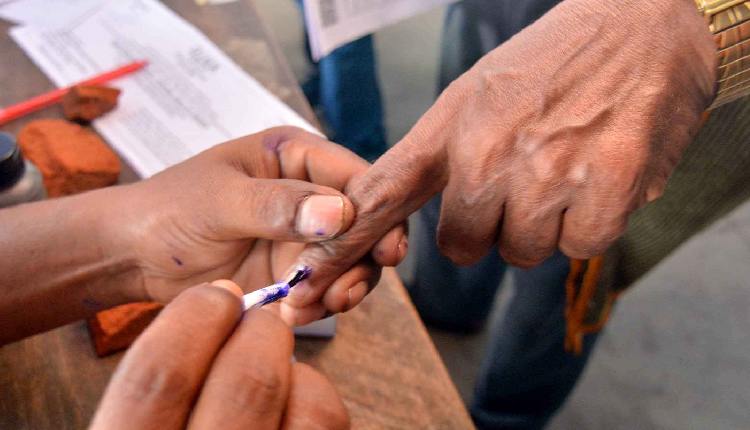
Mumbai: Even as the fervour for Municipal Corporation elections sweeps the state, the Maharashtra State Election Commission (SEC) will hold a press conference at. 4 pm on Tuesday to announce the schedule for elections to the 12 zilla parishads and 125 panchayat samitis.
As the state Board examinations for grade 12 are starting from February 10, the voting for these local bodies is expected to take place on February 5.
The SEC’s move comes after the Supreme Court on Monday admitted the SEC’s plea seeking extension for holding these elections beyond the January 31 deadline set by the apex court.
The SEC had sought extension up to February 10 but the SC gave it up to February 15 asking the former to complete the polls to 12 zilla parishads and 125 panchayat samitis before that.
While the state is currently in the thick of municipal election campaigning — with only voting and counting remaining — the SEC has finalised its preparations for Zilla Parishads and Panchayat Samitis.
In the first phase, the Commission plans to hold elections for 12 Zilla Parishads and 125 panchayat samitis where the 50 per cent reservation limit has not been breached. Currently, elections for 32 Zilla Parishads and 336 Panchayat Samitis remain pending across Maharashtra.
Out of these, 20 Zilla Parishads and 211 Panchayat Samitis exceed the 50 per cent reservation cap and their elections will take place depending on the SC order.
Consequently, the SEC has prioritised the 12 districts and 125 panchayat samitis that fall within the permissible legal reservation limits.
The revenue division wise districts where the elections will take place are Pune Division: Pune, Satara, Sangli, Solapur, and Kolhapur, Konkan Division: Raigad, Ratnagiri, and Sindhudurg and Chhatrapati Sambhaji Nagar Division: Chhatrapati Sambhaji Nagar, Parbhani, Dharashiv, and Latur.
The primary reason for the delay has been the legal battle over Other Backward Classes (OBC) quotas. In 2021, the top court struck down the 27 per cent OBC reservation in local bodies because it pushed the total reservation beyond the 50 per cent ceiling set by the Indra Sawhney judgment.
The court mandated a “triple test” (setting up a commission, collecting empirical data, and ensuring reservations don’t exceed 50 per cent total) before the quota could be restored.
This led to a long-drawn process of data collection and legal challenges.
These elections are often called “Mini Assemblies” because they reflect the ground-level pulse of rural and semi-urban voters.
For the major alliances in Maharashtra, these results are crucial for momentum heading into state-level contests.
(IANS)