





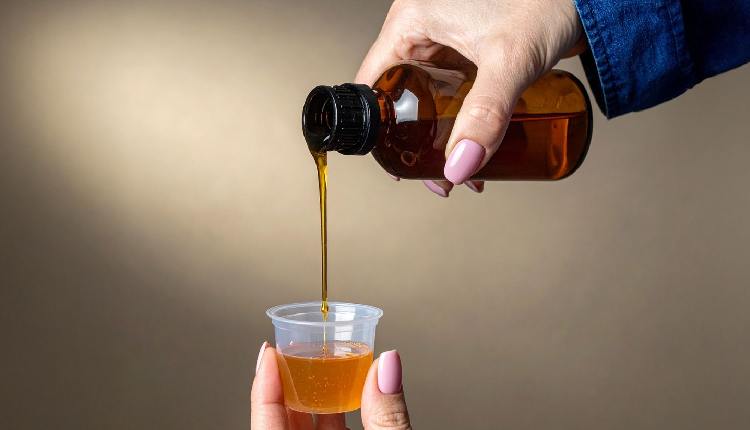
Chennai: The Tamil Nadu government has banned the manufacture, sale, distribution and consumption of the cough syrup ‘Almond Kit’ after laboratory tests confirmed the presence of the highly toxic chemical ethylene glycol, the state’s drug control body said in a press release.
According to officials, the syrup, which is manufactured in Bihar, was found to be contaminated with ethylene glycol, a substance known to cause severe and sometimes fatal health complications.
The Tamil Nadu Drug Control Directorate warned that consumption of the syrup could lead to acute kidney failure, damage to the brain and lungs, and, in extreme cases, death.
In light of the findings, the Drug Control Directorate has directed all medical shops, distributors, hospitals and pharmacies across Tamil Nadu to immediately withdraw the product from sale.
Any entity that has supplied or sold the syrup has been instructed to report the matter to authorities without delay.
Consumers have been specifically advised to check the batch number AL24002 and strictly avoid using the syrup.
Those in possession of the drug have been urged to contact officials for guidance on safe disposal.
The Directorate has also intensified inspections and surveillance in pharmacies and hospitals across the state to ensure that the contaminated syrup is completely removed from circulation.
For clarifications, complaints or further instructions, the public has been asked to contact the Directorate via WhatsApp at 94458 65400.
The latest ban comes against the backdrop of earlier tragedies linked to contaminated medicinal syrups in India.
In recent years, several deaths — particularly of children — were reported after the consumption of syrups containing ethylene glycol or diethylene glycol, including incidents involving medicines manufactured within Tamil Nadu.
Those episodes triggered nationwide concern over quality control in pharmaceutical manufacturing and led to stricter regulatory scrutiny.
Health experts note that ethylene glycol, commonly used in industrial antifreeze, has no place in medicinal formulations.
Even small quantities can be lethal, especially for children, making swift regulatory action critical.
State authorities reiterated that patient safety remains their top priority and warned of strict legal action against anyone found violating the ban.
The Drug Control Directorate also appealed to the public to remain vigilant while purchasing medicines, carefully verify labels and batch numbers, and report any suspicious or substandard drugs immediately.
The government has said that it will continue to strengthen monitoring mechanisms to prevent repetition of past tragedies and ensure that only safe, quality-assured medicines reach patients.
(IANS)