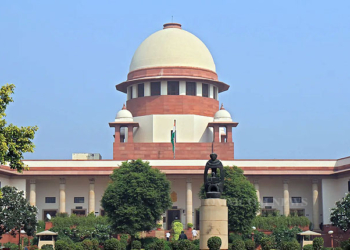







New Delhi: The Supreme Court on Monday agreed to examine a Public Interest Litigation (PIL) seeking a separate earmarked reservation quota and concessional Railway fare for acid attack victims (AAVs), who are currently excluded from existing benefits available to Persons with Disabilities.
A Bench headed by Chief Justice of India (CJI) Surya Kant issued notice to the Ministry of Railways, the Department of Empowerment of Persons with Disabilities, the National Commission for Women (NCW) and the Indian Railway Catering and Tourism Corporation (IRCTC) on the writ petition filed by Atijeevan Society under Article 32 of the Constitution.
The petition, filed through advocate Anandh Venkataramani, contended that despite being recognised as persons with specified disabilities under the Rights of Persons with Disabilities (RPwD) Act, 2016, acid attack victims are excluded from concessional fare benefits under the Railways’ Coaching Tariff No. 26 and from the earmarked quota for Persons with Disabilities.
The PIL highlighted that acid attack victims suffer lifelong bodily and facial disfigurement, often leading to blindness and severe physical disabilities, and require repeated reconstructive surgeries and specialised medical treatment available only at a handful of tertiary institutions in metropolitan cities.
“Due to the nature of their burn injuries, persistent itching, and especially after undergoing surgery, acid attack victims often need to travel by train in air-conditioned coaches. However, the cost of AC tickets for frequent travel is extremely high and often becomes unaffordable for them,” the petition stated.
It further contended that the exclusion of AAVs from concessional fare facilities is “ex-facie arbitrary” and violates Article 14 of the Constitution, particularly when other categories of specified disabilities are granted such benefits.
“This regulatory lacuna results in a de facto denial of the quota to acid attack victims, rendering the policy manifestly arbitrary, unreasonable, and violative of Article 14,” the petition said.
The petitioner, Pragya Prasun, founder of Atijeevan Foundation, also referred to Section 41(2) of the RPwD Act, which casts a mandatory duty on the government to promote personal mobility of Persons with Disabilities at an affordable cost through incentives and concessions.
She further contended that denial of concessional fare and reservation quota adversely impacts the right to live with dignity, which forms an integral part of the right to life under Article 21 of the Constitution.
(IANS)