





Islamabad/New Delhi: Pakistan faces structural economic problems under its latest $7 billion International Monetary Fund (IMF) arrangement, which analysts argue cannot be resolved by revenue raised from arms exports alone.
Defence sales, particularly of aircraft, hinge on robust production capacity, proper training and a guaranteed post-delivery of spare parts, yet the Chinese-made JF-17 aircraft, at the heart of Pakistan’s push for defence exports, has proven fallible, an India Narrative report detailed on Tuesday.
“Myanmar grounded its JF-17 aircrafts it bought from Pakistan and China in 2015 over technical issues and spare parts availability. Besides, the aircraft encountered a slew of crashes and was grounded several times due to issues like cracks in guide vanes, exhaust nozzles, and flame stabilisers. Moreover, Pakistan’s economic challenges and foreign exchange limitations might create obstacles for long-term commitment of spare part exports, maintenance infrastructure, and operational support,” the report mentioned.
“Also, the sustainability of this defence business is questionable. Details of potential contracts are not disclosed, with most information emerging through unnamed official sources rather than signed agreements. Further, robust defence export capacity requires a strong indigenous defence industry capable of developing complex weapons systems. Pakistan is yet to reach that stage of maturity. The defence production sector of Pakistan never focused on research and development, relying mostly on foreign technology,” it added.
According to the India Narrative report, Pakistan’s unemployment rate of 7.1 per cent and faltering poverty alleviation programmes, compounded further by the Covid-19 crisis and devastating floods in 2022, have placed immense pressure on the fragile economy. In addition, the report said, the IMF loans Pakistan receives come with conditions requiring expenditure to be streamlined. Nevertheless, the ‘ageing’ civil-military rulers of Pakistan continue to operate in a bubble, “fantasising” about economic revival, boosting arms sales without proper preparation.
“However, more than reviving the economy, the ‘project JF17’ seems to carry a strategic connotation. For a decade, China tried, in vain, to promote the sale of the aircraft as a low-cost, multi-role fighter to countries of the Global South. Now, its ‘all-weather friend’ Pakistan seems to be taking the baton, which is suspected as China’s ‘backdoor’ strategy to promote its sale to ‘neutral’ countries,” the report mentioned.
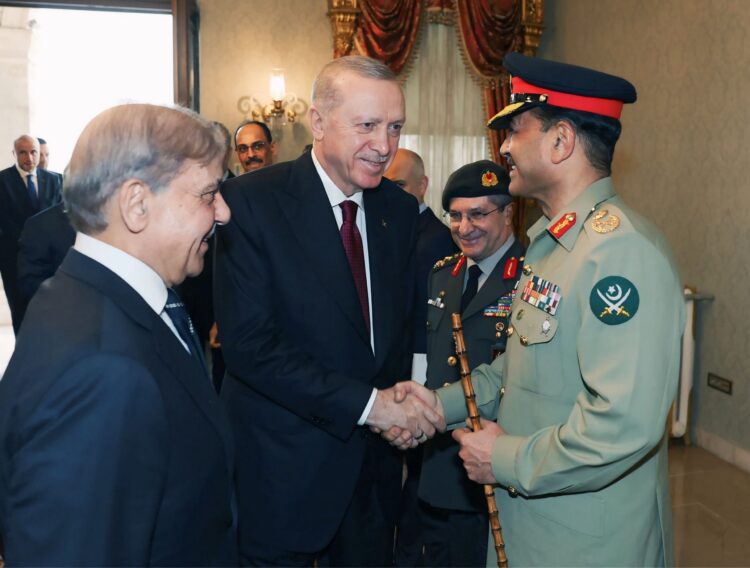
“In this context, Field Marshal Asim Munir’s insistence on a propaganda base around JF-17 fighters is understandable. Pakistan military’s malleability towards any Chinese ‘wishes’ is obvious. Also, this defence sale mission helps the military to feign salvaging Pakistan’s ailing economy, which, anyway, it does not give a hoot. This more seems to pull the wool over the eyes of the disgruntled public rather than a result of any serious deliberation to revive the country’s economy,” it noted.
(IANS)