





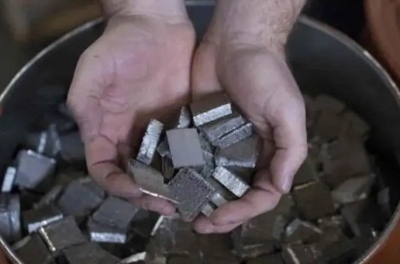
New Delhi: The Donald Trump administration has unveiled ‘Project Vault,’ a $12 billion critical mineral reserve building exercise to challenge China’s dominance, which includes a $1.3 billion investment in Reko Diq mines in Balochistan.
This is the only international project financed under the initiative, operated under the Export-Import Bank (EXIM).
Reko Diq contains some of the world’s largest untapped copper and gold deposits.
As per industry estimates, the site’s reserves at around 5.9 billion tonnes of ore, including roughly 41.5 million ounces of gold.
The US State Department said the investment is intended to “reshape the global market for critical minerals and rare earths”, which directly challenges China’s dominance in the rare earths sector.
China currently controls more than 90 per cent of global refined rare earth output.
However, Balochistan has long been affected by insurgency and is currently witnessing heightened violence against the state.
Reko Diq sits at the centre of this unrest, with security risks worsening since the US withdrawal from Afghanistan in 2021.
For the Baloch population, it feels like yet another moment when the world chooses minerals over human lives, according to a recent article in EU Today.
The article points out that Balochistan remains one of the most militarised and politically suppressed regions in South Asia. For decades, Balochistan has witnessed enforced disappearances, extrajudicial killings, torture, mass arrests, and operations carried out by Pakistan’s armed forces that have devastated entire communities.
In an environment where human rights are trampled, the claim of consent for large-scale mining projects by the “so-called provincial government” becomes deeply questionable, the article stated.
The article highlighted that any talk of development has no meaning when people do not have any democratic rights and have to live under the surveillance of a repressive regime. “This is why US and other foreign investments in Reko Diq raise serious ethical concerns. Without binding human rights conditions, transparency, and independent monitoring, such financing risks turning international actors into silent partners in repression,” it stated.
(IANS)