




New Delhi: Leader of Opposition in the Lok Sabha Rahul Gandhi could have flipped through a few pages of a historical account purporting to recount the Congress and Nehru-Gandhi legacy in collaborating with Western agencies before criticising the government for selling the country over the trade and tariff agreement with the United States.
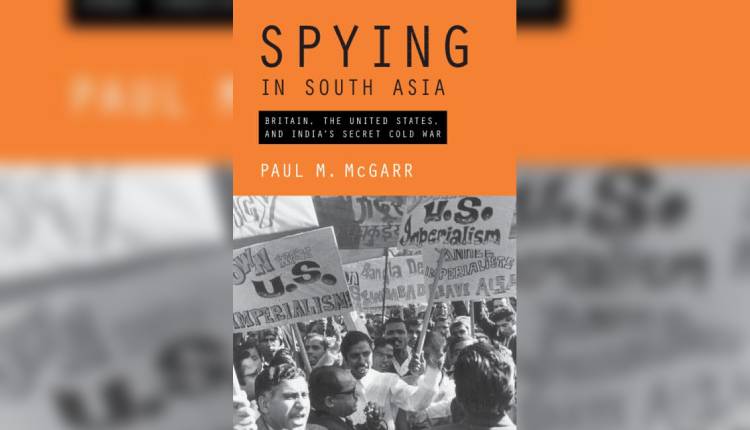
“As one of (US President Richard M.) Nixon’s ambassadors to India, Daniel Patrick Moynihan, pointed out, (then Indian Prime Minister Indira) Gandhi had few qualms about cooperating foreign intelligence agencies, including those of the United States when it suited her interests to do so,” wrote Paul M. McGarr in his book, “Spying in South Asia: Britain, the United States, and India’s Secret Cold War”, published in 2024.
The book quoted Moynihan’s 1978 memoir, “A Dangerous Place”, having confirmed that to his knowledge, the CIA had twice intervened in Indian politics.
“On both occasions, the agency had funnelled money to the ruling Congress party in a bid to head off the election of communist governments in Kerala and West Bengal. In one instance, the ambassador charged, CIA money had been passed directly to Gandhi in her capacity as Congress party President,” it revealed.
Thus, even as Western intelligence agencies were helping the government of the day in keeping track of Left forces back home, in its foreign policy, New Delhi continued to maintain good relations with communist countries.
McGarr’s book is a comprehensive history of ‘India’s Secret Cold War’, where he recounts the roles of the country’s politicians, activists, and journalists in their stand for or against Western intelligence agencies.
The author, a lecturer in Intelligence Studies, now at King’s College London, was Principal Investigator of a British Academy-funded research project from 2017-19 that assessed the role of psychological influences alongside material factors in determining British policymaking in post-colonial South Asia.
“Spying in South Asia” also contended that though Prime Minister Jawaharlal Nehru was suspicious of the CIA’s role and its degree of involvement in India, he chose to work with the US secret agency on some occasions at least.
“Nehru was sceptical that India needed, and could afford, a geographically diffuse intelligence infrastructure,” the author mentioned regarding China.
He quoted India’s first Prime Minister as saying: “I do not think that we should go in a big way to expand our intelligence services,” adding, “That is beyond our capacity.”
The book referred to the “challenge of gathering reliable and timely information on an effectively closed society in China had defeated intelligence services that were far larger and better resourced than the IB.”
It observed: “Efforts that were undertaken by the IB to enhance its coverage of China were hampered by structural and cultural obstacles as much as financial considerations. The study of Chinese linguistics, culture, politics, and history were neglected in the Indian academic system until the middle of the 1950s.”
On Indira Gandhi, the author stressed: “Having served as Nehru’s political confidante and, after 1964, a cabinet minister in her own right, it is hard to conceive that Gandhi was unaware of, if not complicit in, joint initiatives with the CIA that was sanctioned by the Indian government.”
“Spying in South Asia” has probed the nexus between intelligence and statecraft in South Asia, tracking the relationship between Western spying agencies and the government. Though at the time of independence and thereafter, India’s leaders were anti-imperialist and suspicious of the West, foreign policy has been maintained as officially nonaligned. However, this posture did not prevent extensive collaboration between Indian intelligence agencies and their Western counterparts, as implied by the book.
(IANS)