
Washington: Two top American Senators have written to the Department of War Secretary Pete Hegseth seeking details on vulnerabilities in America’s pharmaceutical supply chain, warning that heavy reliance on foreign sources — particularly Communist China and India — could threaten military readiness and national security.
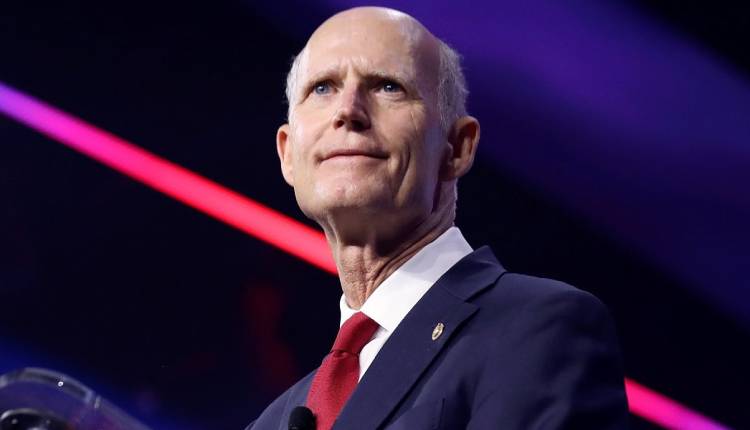
The letter, sent by the US Senate Special Committee on Aging Chairman Rick Scott and Ranking Member Kirsten Gillibrand, asks the Department to outline how it is addressing risks associated with key starting materials (KSMs), active pharmaceutical ingredients (APIs), and generic drugs used by service members and veterans.
“The US Senate Special Committee on Aging is examining how vulnerable pharmaceutical supply chains present a risk to public health and national security,” the senators wrote. “The Department is the primary agency responsible for the health, safety, and readiness of our service members. It plays an essential role in ensuring access to lifesaving medicines.”
The lawmakers noted that an estimated 91 per cent of prescriptions filled each year in the United States are generic drugs. “It is clear that many Americans, including our active duty, reserve, veteran, retired service members, and their family members rely on generic drugs to maintain health, control chronic diseases, or recover from illnesses,” they said.
China and India, they added, “play a significant role in producing the KSMs and APIs crucial to domestic drug manufacturing and distribution”. The United States’ “limited operational oversight and control over foreign sourcing and manufacturing of these foundational materials represents a vulnerability in the supply chain”.
The senators also pointed to “recent reporting” showing that the Food and Drug Administration has granted exemptions for certain drugs or ingredients subject to import bans imposed on foreign factories found to operate under substandard conditions. They said exempting such facilities “allows for substandard and potentially unsafe drugs to enter the U.S. market” and identified more than 150 drugs and ingredients that have received exemptions since 2013, many linked to factories in China and India.
Geopolitical instability, they argued, adds another layer of risk. Despite a bilateral trade agreement on rare earth elements in April 2025, China imposed new export restrictions in October. “This raises the unsettling possibility that China could similarly restrict exports of pharmaceutical products in future diplomatic or trade conflicts,” the letter said, warning that disruptions could “jeopardize patient care and public health”.
The senators urged the Department to prioritise domestic procurement. “Reliance on China for essential medications, particularly antibiotics, poses an existential risk to the operational capacity of our military,” they wrote, calling for “preferential purchasing of domestically manufactured medications”.
They also pressed for transparency. “Country of origin labeling for pharmaceuticals and APIs must be implemented to provide transparency to purchasers, providers within the TRICARE system, such as physicians and pharmacists, and end-users who rely on medications. Americans deserve to know where their medications come from.”
The two Senators requested a detailed briefing by February 28 on drug acquisition plans, inventory levels in the event China halts exports, exposure to FDA-exempted manufacturers, compliance with the FY 2026 NDAA requirement for pharmaceutical supply chain mapping, and safeguards against sourcing from China’s Xinjiang region.
For India, which is one of the world’s largest suppliers of generic medicines and APIs, the debate in Washington reflects a broader push to reshore critical manufacturing amid US–China tensions. In recent years, successive administrations have highlighted supply chain security — from semiconductors to pharmaceuticals — as central to economic resilience and national security policy.
(IANS)