





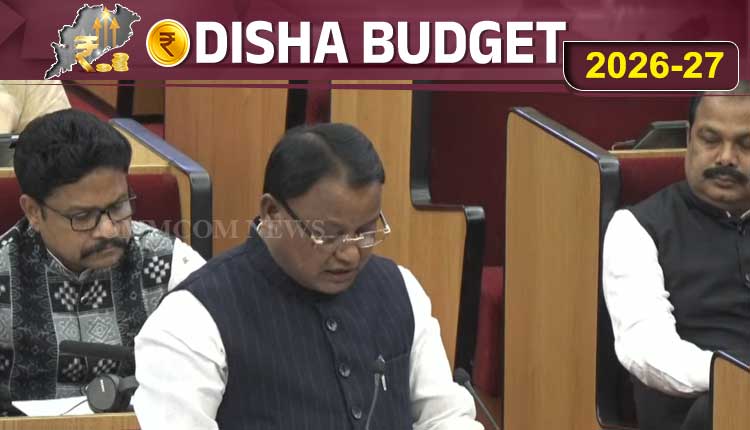
Bhubaneswar: Chief Minister Mohan Charan Majhi on Friday presented a ₹3,10,000 crore Annual Budget for 2026-27 in the Odisha Legislative Assembly, outlining an ambitious roadmap anchored on six pillars — People First, Rural Empowerment, Prosperity for All, Our Legacy Our Pride, Technology Leading the Way, and People-Centric Governance.
The budget marks an increase from ₹2,90,000 crore in 2025-26 (BE) to ₹3,10,000 crore in 2026-27 (BE), with programme expenditure pegged at ₹1,80,000 crore, accounting for over 58 per cent of the total outlay. Administrative expenditure stands at ₹1,14,000 crore, while ₹5,375 crore has been earmarked for disaster risk management and ₹10,625 crore for transfers from the State.
The capital outlay has been fixed at ₹72,100 crore, amounting to 6.5 per cent of the Gross State Domestic Product (GSDP), one of the highest capital expenditure ratios among major states. The state projects a revenue surplus of 3 per cent of GSDP and a fiscal deficit of 3.5 per cent, with year-end debt stock estimated at 14.1 per cent of GSDP, ensuring full compliance with FRBM norms.
Major New Initiatives
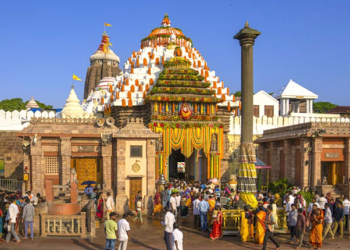
A key highlight of the budget is the proposed Jagannath Interpretation Centre at Puri with an estimated cost of ₹1,000 crore along with a World Tourism Centre. An online donation platform titled “Digital Hundi – SAMARPAN” will also be introduced for the Shree Jagannath Temple.
The government announced the launch of Mukhyamantri Kanya Sumangal Yojana, under which ₹20,000 will be deposited in the name of a girl child born in economically weaker families, maturing to ₹1,00,001 upon graduation. Six lakh additional beneficiaries will be brought under Madhubabu Pension Yojana.
In higher education and technical expansion, four new universities will be set up at Kendrapada, Jagatsinghpur, Bhadrak and Jharsuguda. New government engineering colleges will come up at Paradeep and Balangir, alongside new agriculture, veterinary, fisheries and Ayurvedic colleges across multiple districts.
The state has also proposed the Odisha AI Mission with an allocation of ₹23 crore and a Rare Earth Corridor with ₹10 crore to position Odisha as an early mover in strategic mineral investments.
Infrastructure push remains strong with three new expressways: the Berhampur–Jeypore corridor (287 km) estimated at ₹9,000 crore, the NaMo Expressway connecting Paralakhemundi to Ambahona, and the 969-km Atal Expressway linking Motu in Malkangiri to Tiring in Mayurbhanj as part of north-south connectivity.
Additionally, Bhubaneswar will see major infrastructure development, including a new State Legislative Assembly, new Secretariat, Jana Ashraya Bhavan, a world-class museum, Odisha Mandap Convention Centre and a Science City.
Agriculture and Rural Economy
The Agriculture and Allied sector has received ₹42,492 crore — a 12.3 per cent increase over the previous year. Under Samrudha Krushaka Yojana, ₹6,088 crore has been allocated to ensure paddy procurement at ₹3,100 per quintal, supported by a ₹5,000 crore revolving fund to strengthen procurement systems.
A modern storage capacity of 11 lakh metric tonnes will be created, while ₹2,030 crore has been earmarked for CM-KISAN. Climate-resilient agriculture under Shree Anna Abhiyan receives ₹400 crore. Fisheries and animal husbandry development has been allocated ₹2,019 crore, with Odisha Shrimp Mission targeting expanded aquaculture and export growth.
Irrigation, flood control and water use efficiency together receive ₹17,855 crore, including allocations for in-stream storage structures, canal lining, river rejuvenation and flood management strengthening.
Health and Education
Public healthcare has been allocated ₹23,182 crore, nearly 8 per cent of the state budget. Major schemes include Mukhyamantri Swasthya Seva Mission (₹5,008 crore), Gopabandhu Jan Arogya Yojana (₹6,309 crore) and National Health Mission (₹1,958 crore). The state also plans expansion of cancer care, emergency ambulance services and blood bank infrastructure.
The Education sector has received ₹42,565 crore. Samagra Shiksha gets ₹3,805 crore, Odisha Adarsh Vidyalayas ₹1,224 crore and PM-SHRI ₹536 crore. Investments have also been made in heritage schools and model school programmes.
Women, Social Security and Welfare
Women and Child Development schemes together receive ₹18,957 crore, including ₹10,145 crore under Subhadra Yojana. Social security allocations stand at ₹25,208 crore, with ₹5,837 crore earmarked for Madhubabu Pension Yojana.
For SC, ST, OBC and minority welfare, ₹6,649 crore has been allocated, with substantial support for scholarships, livelihood missions and tribal development schemes.
Urban Development and Connectivity
Urban development outlay stands at ₹10,738 crore, including ₹1,161 crore under CM Sahari Vikash Yojana and ₹373 crore under PM-e-Bus Sewa Scheme.
Rural Development receives ₹44,309 crore, marking a 13 per cent rise. Road development alone has an outlay of ₹7,500 crore, while ₹511 crore is allocated to improve air connectivity and ₹450 crore to strengthen the rail ecosystem.
The housing sector receives ₹5,160 crore, and ₹7,000 crore has been provided under Jal Jeevan Mission for rural drinking water.
Future Growth and Industry
Industrial and MSME promotion schemes have been allocated ₹207 crore under new industrial promotion initiatives, ₹150 crore for Industrial Infrastructure Development Fund and ₹288 crore for MSME grants and assistance.
The Energy sector sees allocations for renewable initiatives and infrastructure strengthening, while environment and climate change programmes receive funds for green cover expansion, wildlife conservation and afforestation.
With a strong capital expenditure push, welfare expansion, and ambitious infrastructure roadmap, the 2026-27 Budget aims to balance fiscal prudence with accelerated development, positioning Odisha for sustained economic growth and inclusive progress.