





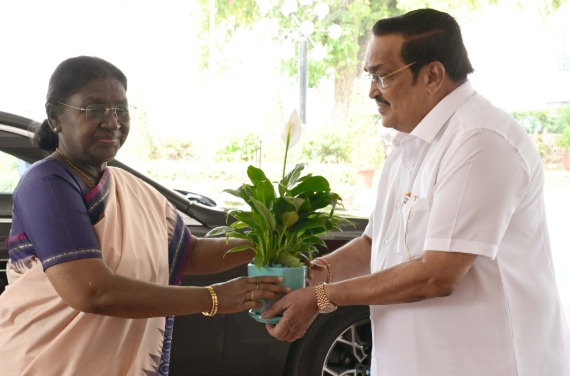
New Delhi: President Droupadi Murmu, attending the ‘Jal Mahotsav 2026’ here on Wednesday, emphasised the importance of water conservation and community participation in ensuring sustainable water management across the country.
In her address, the President said that in India, water is not merely a basic necessity but is deeply connected with the nation’s culture, traditions, livelihoods and community life. She noted that for many years, particularly in rural areas, villagers, especially women and children, had to travel long distances to collect drinking water.
“Providing clean water is not only a matter of convenience; it is also related to time, health, and dignity,” she said. To address these challenges, the Centre launched the Jal Jeevan Mission, which aims to provide safe and adequate drinking water to rural households through functional tap connections, she added.
The President observed that the mission has significantly improved access to safe drinking water in villages.
“People who once struggled to obtain drinking water now have access to clean and safe water in their homes,” she said.
Highlighting the importance of collective responsibility, President Murmu said that conservation of natural resources becomes more effective when both the government and society take ownership of them. She stressed that community participation plays a vital role in the management and conservation of water resources.
She expressed confidence that initiatives like ‘Jal Arpan Diwas’, which involves the formal handover of water supply infrastructure to gram panchayats, will strengthen community ownership and encourage better management of water resources at the grassroots level.
The President also appreciated the role of Self-Help Groups (SHGs) in supporting water-related initiatives. She noted that SHGs are actively involved in water testing, operation and maintenance activities in many areas.
“There are many examples where the dedication and commitment of Self-Help Groups have brought positive changes in the lives of women and society. Harnessing the potential of women through such groups will be extremely beneficial in addressing water security challenges,” she said.
Murmu further stressed that a multi-pronged and coordinated approach is essential to strengthen water security. She noted that greywater management is being promoted in rural areas in coordination with the Clean India Mission. Efforts are also being made to ensure the sustainability of water resources through groundwater recharge and conservation measures in collaboration with the Central Groundwater Board and other institutions.
She also highlighted national campaigns such as “Catch the Rain” and “Jal Sanchay Jan Bhagidari”, which encourage rainwater harvesting and community participation in water conservation.
“These coordinated efforts will play a crucial role in ensuring water security for the country,” she said.
The President underlined that water conservation is a shared responsibility and urged citizens to treat water not merely as a commodity but as a precious resource for future generations.
“To secure our future, water conservation must become an integral part of our daily lives. Awareness among the younger generation about water management and conservation will ensure the country’s water security in the years to come,” she said.
Murmu also expressed confidence that ‘Jal Mahotsav’ would evolve into a mass movement for water conservation in India.
The Ministry of Jal Shakti is organising Jal Mahotsav 2026 as a nationwide campaign from March 8 to March 22, aimed at strengthening public participation and community ownership in rural drinking water services under the Jal Jeevan Mission.
(IANS)