





Washington: US lawmakers warned that China may be exploiting American universities to gain access to sensitive research and technology, as a Senate hearing examined billions of dollars in foreign funding and academic partnerships involving US campuses.
The Senate Health, Education, Labor, and Pensions Committee held the hearing to examine what lawmakers called “malign foreign influence” in higher education, with testimony focusing largely on China’s research ties with US universities and the risks of intellectual property theft, technology transfer, and undisclosed foreign funding.
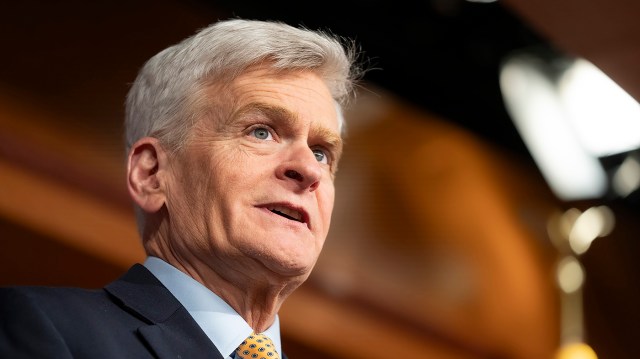
Committee chairman Sen. Bill Cassidy said American universities are among the country’s greatest strategic assets but warned that their openness can also create vulnerabilities.
“Our country has the best universities in the world and major breakthroughs in cancer research, artificial intelligence, military technology, biomedical engineering, and more happens at our universities,” Cassidy said.
He said the scale of foreign funding entering US campuses has raised national security concerns.
“$9.7 billion in foreign gifts and contracts were reported last year,” Cassidy said, adding that the figure reflects only funds that were disclosed.
“But that only accounts for dollars that have been reported, and there’s been zero accountability,” he said.
Cassidy said Congress must strengthen transparency requirements for foreign gifts and contracts involving universities.
“You’ve heard the old adage follow the money — well that’s what we would like to do,” he said.
Craig Singleton, a senior fellow at the Foundation for Defense of Democracies, told the panel that US universities sit at the center of America’s innovation system and are therefore attractive targets for foreign adversaries.
“US universities anchor the world’s most dynamic research environment,” Singleton said.
“At the same time, those strengths have made American universities attractive targets for exploitation by foreign adversaries, especially China.”
Singleton cited federal reporting data showing that China has contributed about $6.8 billion in gifts and contracts to American universities over time.
He also said the Department of Education’s foreign funding portal shows roughly $400 million in transactions involving entities that appear on US government watch lists or restricted entity lists.
“These include firms tied to export control violations, national security concerns, and China’s military civil fusion program,” Singleton said.
Peter Wood, president of the National Association of Scholars, said foreign donations to universities often lack transparency and raise questions about influence and intent.
He cited examples of large foreign contributions, including billions of dollars from Qatar to American universities.
“Where is the money really coming from? What is it being spent on?” Wood asked. “As with Qatar for the most part, we don’t know.”
Wood also said China had previously used Confucius Institutes on American campuses to expand its influence.
He described the program as “an agent of influence operation run by the Hanban, the propaganda agency of the Chinese Communist Party.”
Robert Daley, a senior fellow at the Asia Society, said concerns about foreign influence are legitimate but warned against exaggerating the scale of the threat.
“American suspicion about foreign malign influence on our campuses and especially Chinese influence is both reasonable and necessary,” Daley said.
At the same time, he said universities and government agencies have strengthened cooperation to address security risks.
“American universities have taken on Washington’s concerns, and they now work diligently and at considerable expense to anticipate and counter the actions of countries of concern,” Daley said.
Daley also noted that despite concerns about Chinese influence, there have been no espionage convictions involving university personnel.
“To date, there have been no convictions of university persons for conducting espionage on American campuses on behalf of China,” he told the committee.
Lawmakers said the challenge for policymakers is to protect sensitive research while preserving the openness that has long made American universities global leaders in science and innovation.
The hearing also examined proposals to strengthen disclosure requirements for foreign gifts and contracts under Section 117 of the Higher Education Act, which requires universities to report major foreign donations.
Witnesses said stronger transparency and oversight could help address national security risks without undermining international academic collaboration.
(IANS)