





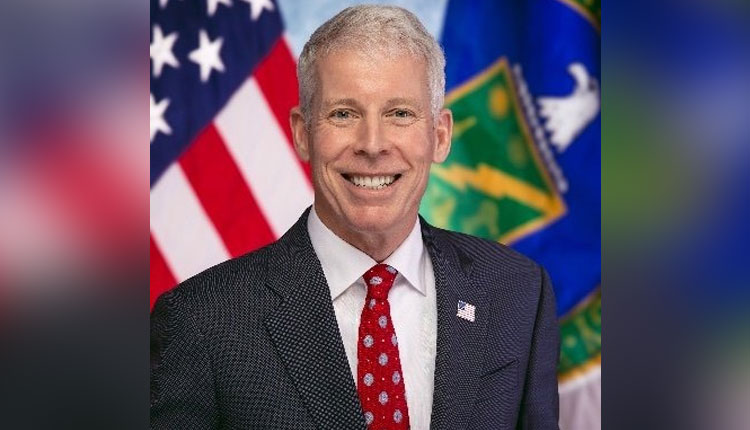
Washington: The world is facing a “significant disruption in the short term” to secure global energy flows in the long run, US Energy Secretary Chris Wright said, defending Washington’s decision to release oil reserves amid the war involving Iran.
“We’re in the midst of a significant disruption in the short term to fix the security of energy flow for the long term,” Wright said in an interview with CNN.
The United States has announced plans to release about 172 million barrels of oil from its Strategic Petroleum Reserve (SPR) as part of a coordinated international effort aimed at stabilising global markets.
Around 30 countries are participating in the emergency move, which could release roughly 400 million barrels of oil into the global system to offset disruptions triggered by the conflict.
Energy markets have been rattled by tensions in the Strait of Hormuz, one of the world’s most critical oil shipping routes.
Tankers have faced attacks and security threats in the region, raising fears that oil supplies could be disrupted for an extended period.
Speaking in separate interviews with Fox News, CNBC, and CNN, Wright said the reserve release was meant to ensure oil supplies continue flowing to global markets, particularly Asia.
“The release certainly helps fill the hole,” he said during an interview with Fox News, referring to supply disruptions.
Washington moved after signs that refineries in Asia — including those in India, South Korea, Japan, and Thailand — were considering reducing operations because of uncertainty about oil supplies.
“Late last week, we started to see Asian refineries talk about turning down the throughput of their refineries in India, in Korea, in Japan, in Thailand,” Wright said.
“And we really want to keep the refineries running so they can deliver jet fuel and diesel and all the products that keep the Asian economy running.”
Japan is releasing oil at a higher rate than its proportional share of the global emergency stockpile to help stabilise supplies to Asian markets.
The United States currently holds about 415 million barrels in its Strategic Petroleum Reserve.
Officials say the emergency release is designed to bridge supply gaps until normal shipping resumes through the Strait of Hormuz.
Wright said the United States military is focused on weakening Iran’s military capabilities that threaten regional shipping routes and global energy flows.
“All of our military assets right now are focused on destroying Iran’s ability to wage war and terrorize the neighborhood,” he said in the CNN interview.
Naval escorts for oil tankers passing through the Strait of Hormuz could begin once security conditions improve.
“This is an operation that will take weeks, not months,” Wright said during an interview with CNBC.
Despite the disruption, Wright argued that the United States is better positioned than many countries because it now produces more oil than it consumes.
“The United States… we’ve produced more oil than we consume. We’re a net oil exporter,” he said in the Fox News interview.
The Strategic Petroleum Reserve was created after the oil shocks of the 1970s to protect the US and global markets during supply disruptions.
The Strait of Hormuz remains one of the world’s most important energy chokepoints, with roughly one-fifth of global oil trade passing through the narrow waterway.
Any prolonged disruption could significantly affect global prices and supply chains, particularly for major oil importers such as India and other Asian economies.
(IANS)