





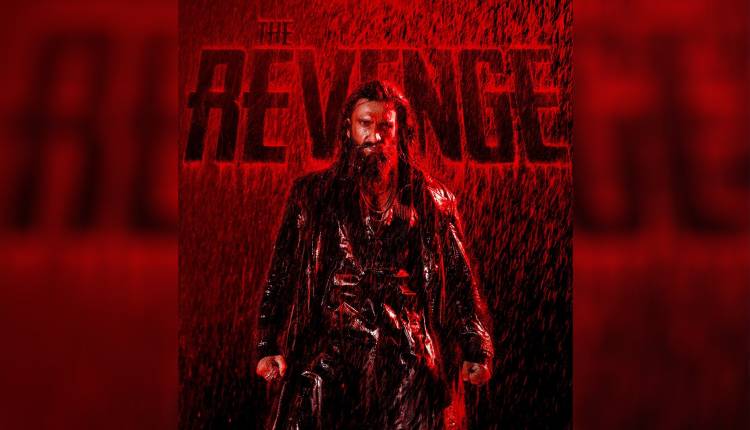
New Delhi: ‘Dhurandhar’ is not the kind of film you watch and move on from. It lingers. It provokes. And more importantly, it says something which a majority of Indians have felt for years but were rarely encouraged to articulate openly.
At its core, the film taps into a sentiment that has existed for decades — that Pakistan’s continued use of terrorism as state policy cannot be met with half-measures, diplomatic niceties, or intellectual hedging. The urge to see its institutions — ISI, military establishment — held accountable, crushed, and rendered incapable of bleeding India any further is not fringe sentiment. It is mainstream, real, and ‘Dhurandhar’ is the voice.
Somewhere along the way, a certain version of “secularism” took root — one that often translated into silence on uncomfortable issues. Speaking plainly about terrorism, religious fault lines, or historical grievances was quickly labelled as regressive or worse. The result was a kind of self-censorship, where outrage had to be moderated and facts carefully packaged. This didn’t happen overnight. It was built over decades.
Whether it was the hesitation in addressing long-pending issues like Ayodhya, Kashi or Krishna Janmabhoomi, or the discomfort in acknowledging targeted violence, the pattern was visible. Even policy-level statements — like former Prime Minister Manmohan Singh’s 2006 remark about the Muslim minority having the “first claim on resources” — reinforced a perception of selective prioritisation.
And in that space of hesitation, Pakistan found confidence. From cross-border terrorism to covert destabilisation, its strategy remained consistent. What also remained consistent was India’s tendency to respond cautiously — not just on the ground, but in the narrative space also. There were always voices ready to contextualise, to explain away, or to urge restraint, even when the provocation was undeniable.
This is precisely the space Dhurandhar walks into and disrupts.
The film doesn’t pretend to be neutral. It doesn’t try to balance outrage with diplomatic correctness. Instead, it leans into a sentiment that has been building quietly.
It also calls out, quite directly, the ecosystem that shaped public discourse for years — one that often found moral complexity where many saw none. The same ecosystem that mobilised outrage in selective cases — for instance, on Afzal Guru and Yakub Memon — but remained conspicuously muted when it came to victims of terrorism.
It is this film’s power that lies in its refusal to sanitise this reality. It does not pretend that anger is illegitimate. It does not dilute the brutality of terrorism. Instead, it channels a sentiment that has long existed beneath the surface — the desire for accountability, for clarity, and yes, for retribution.
And this is where Aditya Dhar’s voice becomes significant. Discomfort to some is definitely there because ‘Dhurandhar’ does not shy away from anything.
There is also a personal layer to all of this.
Aditya Dhar’s background as a Kashmiri Pandit is not incidental to his storytelling. His community’s experience since the late 1980s — marked by violence, fear, and the eventual exodus from the Valley — remains one of the most under-discussed chapters in India’s recent history. For years, that story existed on the margins. Acknowledged, but not fully confronted.
Dhar’s films — from ‘Uri: The Surgical Strike’ to ‘Article 370’ and now ‘Dhurandhar’ series — seem to be part of an attempt to bring those narratives back into the mainstream. Not subtly, not cautiously, but directly. Predictably, critics have labelled this as propaganda.
But that raises a fair question: when one set of narratives dominates for decades, it is called balance. When another perspective emerges — especially one that is blunt and uncomfortable — it is quickly dismissed.
Perhaps the real issue is not the film itself, but the fact that it refuses to stay within familiar boundaries.
‘Dhurandhar’ also reminds us of the legacy of R.N. Kao, the architect of India’s external intelligence agency, Research & Analysis Wing (RAW). Within a few years of its creation, it played a decisive role in the events leading to Bangladesh’s liberation in 1971 — a moment when India combined strategy with resolve. Dhaka may have forgotten the struggle today, but they owe it to him. Pakistan despised Kao and blamed the Kashmiri Pandits for its 1971 debacle.
It is said that Islamabad always wanted revenge on the community, and it was executed in the late 1980s when its terrorists targeted Kashmiri Pandits, abducting, torturing and killing many men, including leaders, doctors, engineers, businessmen, teachers, government employees, judges, and lawyers, by labelling them as ‘Indian Intelligence Bureau agents’.
Many critics are claiming that the movie is propaganda, but those who have suffered directly or indirectly from terrorism know that it is true. ‘Dhurandhar’ is the truth that has been kept under wraps for decades, especially after terrorism in Punjab and Kashmir.
‘Dhurandhar’ doesn’t claim to be subtle, and maybe that’s the point. It reflects a shift — especially among younger Indians — towards questioning older narratives and asking uncomfortable questions. Why were certain truths downplayed? Why were some tragedies pushed aside? And why was anger, even when justified, treated as something illegitimate?
Because anger, when it comes from repeated provocation and unresolved history, doesn’t simply disappear. It builds.
And sometimes, it finds expression — not in policy papers or debates — but in cinema. ‘Dhurandhar’ is that expression. And, it showcases what a government and its system can do, provided the leadership is strong and clear in thoughts and actions.
(IANS)