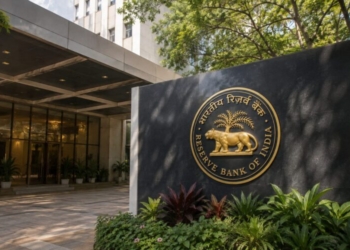






Mumbai: The second advance estimates of GDP for 2025–26 indicate sustained resilience of the Indian economy even as the conflict in the Middle East and fresh trade investigations by the US have resulted in increased volatility in the global markets, according to the RBI’s monthly bulletin released on Monday.
High frequency indicators signal towards India’s economic activity gaining momentum in February. CPI headline inflation picked up in February on account of food and beverages. System liquidity has remained comfortable, and the total flow of financial resources to the commercial sector rose, with a rise in financing from both the bank and nonbank sources. India’s foreign exchange reserves remain adequate to provide a cushion against external shocks, the bulletin stated.
The renewed conflict in the Middle East and the US investigations into trade practices of key trading partners have brought uncertainties regarding global energy security, US import tariffs and global supply chains back to the centre stage. A prolonged period of war and high uncertainty would be detrimental to the broader global outlook, which was already in a state of flux prior to the recent events, it pointed out.
For the domestic economy, given India’s external dependence on crude oil, the evolving situation requires close monitoring and proactive measures to limit adverse spillovers even though it is mention worthy that the capacity and resilience of the Indian economy to absorb external shocks have strengthened over time, buttressed by its strong growth, sound macroeconomic fundamentals and robust external sector buffers, the RBI bulletin observed.
It also pointed out that in terms of energy security, India has progressively diversified its crude oil import sources and augmented its domestic refining capacity. Since the start of the conflict, several policy measures have been implemented to blunt the immediate impact of the disruptions in global fuel supply chains and to achieve more effective use of domestic capacity.
The creation of an Economic Stabilisation Fund would further provide fiscal headroom and buffer to proactively respond to global headwinds, the bulletin observed.
The second advance estimates of GDP for 2025-26, with the new base year 2022-23, indicate sustained resilience in the Indian economy. The growth was driven by strong domestic demand, with private final consumption expenditure and investment activity remaining robust. The quarterly growth also remained high at 7.8 per cent in Q3:2025-26.
High frequency indicators signal towards economic activity gaining momentum in February. Both urban and rural markets supported strong demand, aided by lower income tax and GST rates, cash flows from the kharif harvest, and the wedding season. Retail sales of two-wheelers, passenger vehicles, and tractors reached their highest-ever levels for February. Agriculture remained on a strong footing, with the second advance estimates placing foodgrain production at a record level in 2025-26.
The bulletin noted that global uncertainty, after retreating for four consecutive months, rose again in February as geopolitical tensions in the Middle East intensified into a major conflict, causing significant disruption to key oil infrastructure and critical energy corridors due to the closure of the Strait of Hormuz. Alongside, the US administration has also launched fresh probes into trade practices by major trading partners. All these factors have resulted in increased volatility across the various commodity and financial markets.
Global commodity markets came under intense pressure from supply disruptions across trade in oil, natural gas, and fertilisers. The International Energy Agency categorised it as “the largest supply disruption in the history of the global oil market”. Brent crude oil prices exhibited volatility, with prices moving from $78 per barrel to $112.2 per barrel in March.
Besides the markets for fuel products and LNG, critical industrial inputs like aluminium and urea were also adversely affected.
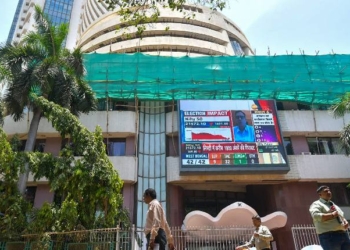
Reverberations of the energy shock are transmitted rapidly to the financial markets. Equity markets came under selling pressure in March, with the decline more pronounced in energy-importing economies, particularly in Europe and Asia. Bond markets repriced, with US sovereign yields hardening. Emerging market currencies came under pressure amidst heightened risk aversion, while the US dollar strengthened on safe-haven demand. In this environment of heightened uncertainties, major systemic central banks kept policy rates unchanged during February–March, the RBI bulletin added.
(IANS)