
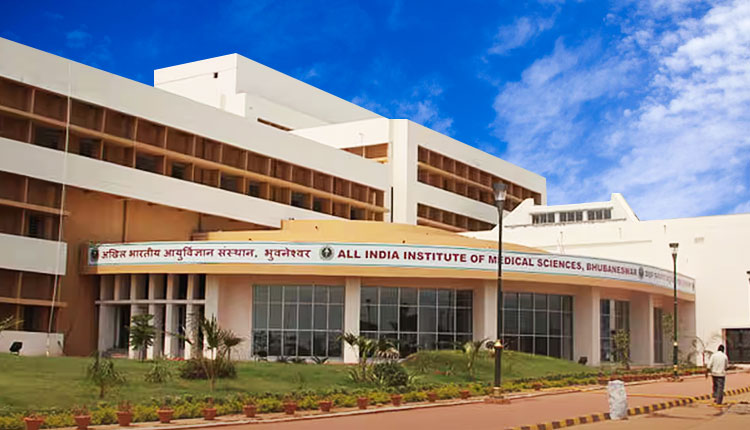
Bhubaneswar: In view of the growing demand for organ transplants across India and the urgent need to boost awareness, strengthen institutional preparedness, and expand the donor pool, the All India Institute of Medical Sciences (AIIMS), Bhubaneswar, in collaboration with the National Academy of Medical Sciences (NAMS), will organise a Dissemination Workshop-cum-Regional Continuing Medical Education (CME) programme on “Organ Transplantation and Artificial Intelligence (AI) in Healthcare” on March 30.
Announcing the initiative, Prof. (Dr.) Ashutosh Biswas, Executive Director & CEO, AIIMS Bhubaneswar, said the workshop aims to accelerate the adoption of AI-driven tools in clinical practice and research while addressing critical challenges related to organ transplantation, including ethics, implementation, and scalability.
More than 300 doctors from premier medical institutions across four states — Odisha, West Bengal, Bihar, and Jharkhand — are expected to participate. Delegates will include faculty and specialists from AIIMS Patna, AIIMS Deoghar, AIIMS Kalyani, and AIIMS Bhubaneswar, among others.The programme will feature distinguished experts from IIT Bhubaneswar, PGIMER Chandigarh, NISER Bhubaneswar, OTTET, IISER Berhampur, IGIMS Patna, and national transplant organisations such as ROTTO and SOTTO.
The one-day academic event is structured into two high-impact sessions. The first session will focus on Organ Transplantation, covering policy frameworks, ethical and legal issues, strategies to expand the donor pool through Donation after Brain Death (DBD) and Donation after Circulatory Death (DCD), infrastructure development, and multidisciplinary practices in cardiac, renal, hematopoietic, and critical care transplantation.
The second session will delve into the transformative role of Artificial Intelligence in Healthcare, highlighting its applications in clinical decision-making, digital pathology, genomics, telemedicine, and emerging technologies like human digital twins.
Prof. Biswas emphasised that organ transplantation remains one of modern medicine’s greatest achievements, offering hope to patients with end-stage organ failure. However, persistent challenges such as severe donor shortages, ethical dilemmas, and logistical barriers continue to hinder its full potential.
“In parallel, artificial intelligence is ushering in a new era of healthcare by enhancing diagnostic accuracy and enabling personalised medicine. This workshop seeks to bridge these two vital domains through meaningful dialogue, evidence-based sharing, and interdisciplinary collaboration,” he added. The CME is expected to foster stronger collaboration among policymakers, clinicians, researchers, and technologists, ultimately contributing to better patient outcomes, innovative healthcare solutions, and the development of future-ready medical professionals in eastern India.