





Bhubaneswar: The Odisha Government has announced a hike in excise duty on Indian Made Foreign Liquor (IMFL) and Country Liquor (CL), a move that is set to push up retail liquor prices across the state from April 1, 2026.
The revised excise duty structure was notified on March 26 and will remain in force for a three-year period till March 31, 2029.
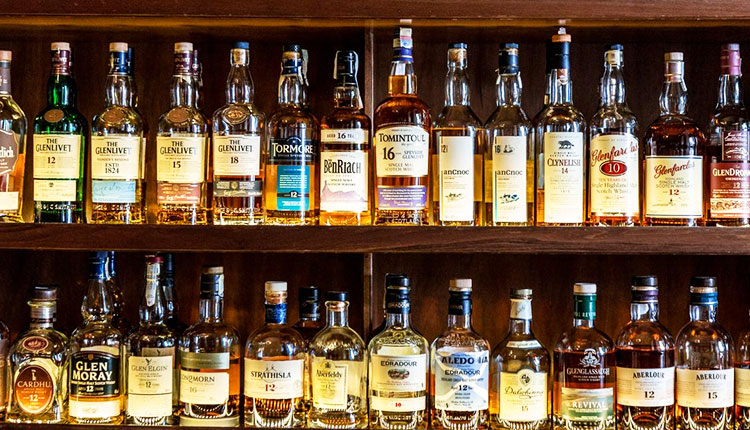
Under the new policy, the value-based product duty on IMFL — including whisky, gin, rum, brandy, and vodka — has been increased from 55 per cent to 65 per cent. In contrast, excise duty on beer and imported foreign liquor remains unchanged at existing rates.
A significant hike has also been introduced for country liquor supplied by manufacturers other than Aska Co-operative Sugar Industries Ltd, (ACSIL ) with duty increased from 40 per cent to 65 per cent. However, duty on liquor produced by ACSIL remains unchanged.
In a new public health-oriented measure, the state has imposed a 0.5 per cent Health Cess, termed ‘Nishamukti Upakar’, on excise duty. The proceeds from this cess will be utilised for establishing and operating de-addiction centres across Odisha.
The policy also places restrictions on the expansion of liquor retail and manufacturing infrastructure. No new country liquor shops or manufacturing units will be permitted in the state for the next three years. Additionally, opening of liquor shops in rural areas has been prohibited.
However, exemptions have been granted to three-star and above hotels and clubs located in industrial zones. The government has also barred the establishment of liquor outlets near sensitive religious locations, including the vicinity of the Shri Jagannath Temple and Puri’s Grand Road (Bada Danda). Home delivery of liquor will also not be allowed in such areas.
Among other changes, application fees for excise licences have been increased by 10 per cent, while annual licence fees will see a hike ranging between 10 and 20 per cent.
In a structural reform, the government has replaced the existing Minimum Guaranteed Quantity (MGQ) system with a Minimum Guaranteed Excise Duty Revenue (MGER) model. The shift is aimed at ensuring steady revenue generation while reducing pressure on traders to boost liquor sales through heavy discounting.
To strengthen regulation and transparency, a ‘Track and Trace’ system will be introduced to monitor the movement of Extra Neutral Alcohol (ENA) and track liquor bottles from production to retail points. All manufacturing units and retail outlets will be brought under CCTV surveillance, with live feeds accessible to the Excise Commissioner’s office and district authorities.
Further, out-still (OS) units have been directed to modernise operations, improve packaging standards, and install enhanced quality control mechanisms.
The government maintains that the revised policy aims to balance revenue generation with public health concerns, while tightening regulatory oversight of the liquor trade in the state.