





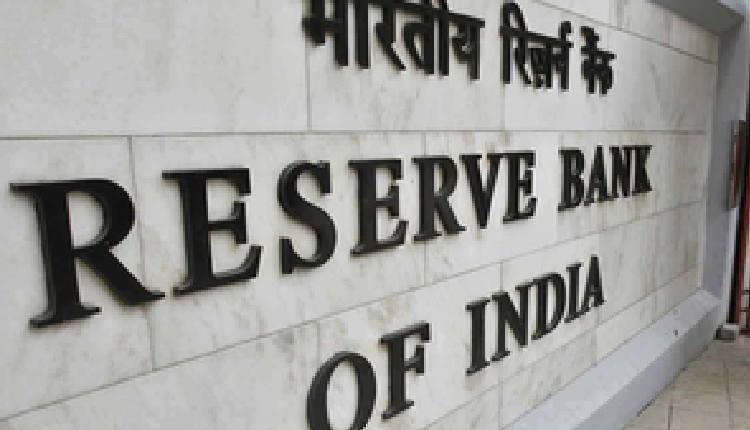
New Delhi: The Reserve Bank of India’s three-day Monetary Policy Committee (MPC) meeting began on Monday, with analysts widely expecting the central bank to keep the repo rate unchanged amid heightened uncertainty due to the West Asia conflict.
The meeting — scheduled from April 6 to April 8 — comes at a time when rising crude oil prices and global geopolitical tensions have clouded the inflation outlook.
While the RBI is likely to maintain the status quo in the upcoming policy, experts said the central bank’s commentary on inflation, growth and future rate trajectory will be closely watched.
“We do not expect any immediate liquidity or currency management measures, as the RBI has been acting as and when required,” said Madan Sabnavis, Chief Economist at Bank of Baroda.
Analysts noted that the focus will be on the RBI’s revised GDP growth and inflation projections, especially as Brent crude hovered around $100 per barrel in March due to the ongoing energy shock.
Some experts cautioned that while the rate cut cycle appears to have ended, the possibility of a rate hike later in the fiscal year cannot be ruled out if inflation breaches the upper tolerance band of 6 per cent.
According to HSBC Global Investment Research, the policy will be largely about communication to address concerns arising from the oil price surge. Despite the current shock, the investment bank’s economists said they do not expect rate hikes in the near term, as the RBI is likely to focus on the one-year ahead inflation trajectory, which may remain relatively benign.
Meanwhile, a report by SBI Research said the central bank may need to explore tools such as “Operation Twist” to manage yields and maintain stability in financial markets, while also addressing external sector pressures.
“India is not insulated from the current crisis, with the rupee weakening and crude oil prices staying elevated, leading to imported inflation pressures,” said Soumya Kanti Ghosh, Group Chief Economic Adviser at State Bank of India.
He added that liquidity conditions may need to be carefully managed to support the rupee amid ongoing volatility.
The central bank has been active on the liquidity front in recent months, conducting Open Market Operations (OMO) purchases of government securities and Variable Rate Repo (VRR) auctions to inject rupees into the banking system.
The RBI cut rates by a cumulative 25 basis points to 5.25 per cent in December 2025, a stimulus that most economists now believe has run its course.
(IANS)