





Bhubaneswar: Every day, thousands of devotees visit temples across Bhubaneswar carrying flowers as offerings of faith, gratitude, and devotion. After the prayers end, these flowers often lose their purpose and are thrown away. Many find their way into drains, rivers, and temple ponds, creating waste and polluting the environment.
But in the Temple City of India, these sacred flowers are now beginning a new journey.
For centuries, temples have been at the heart of life in Bhubaneswar. The city’s ancient shrines are not just places of worship; they are centres of culture and community life. Many of these temples stand beside ponds and water bodies that have long been considered sacred. These water bodies have witnessed generations of prayers, festivals, and social gatherings.
Over time, however, a silent problem began to grow. The flowers and garlands offered to the deities were often discarded in these ponds and surrounding areas. What started as an expression of devotion gradually became a source of pollution. Temple tanks became clogged with waste, water quality deteriorated, and several heritage ponds began losing their beauty and ecological value.
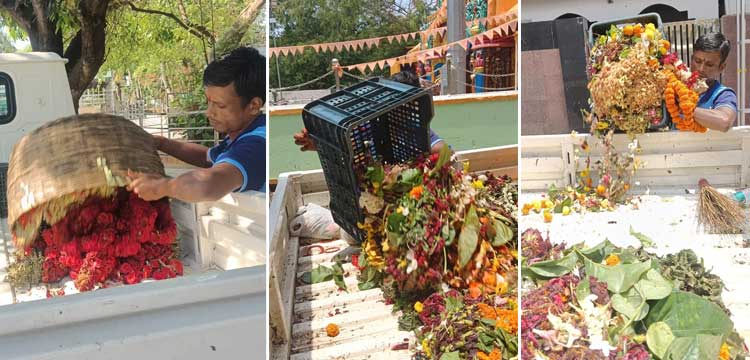
Recognising the need to protect these cultural and environmental assets, the Bhubaneswar Municipal Corporation (BMC) took an innovative step. Under the AMRUT scheme, temple tanks and urban ponds were cleaned and rejuvenated. Alongside this effort, the civic body introduced an eco-friendly way of managing flower waste.
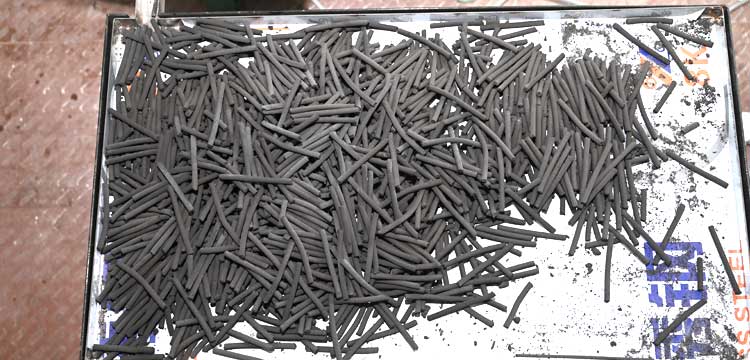
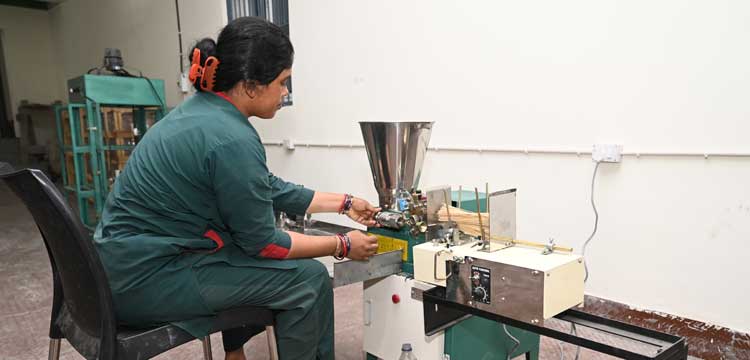
Today, at the flower waste processing unit in Pokhariput, discarded flowers from temples and other places are carefully collected. The flowers are first dried and then processed into powder, which is used to make incense sticks (agarbathis).
For every 20 kilograms of flowers, nearly four kilograms of powder are produced. The incense sticks are then sold through temple kiosks, self-help group stalls, and BMC markets. In this way, flowers that were once considered waste return to devotees in a new form.
The initiative is also creating opportunities for many people. Women-led self-help groups, sanitation workers, and members of marginalised communities are actively involved in the process. For many of them, the project has become a source of income and self-reliance.
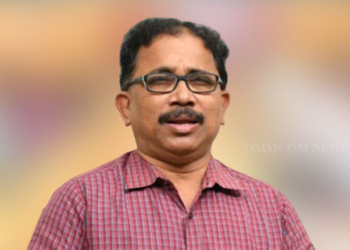
Project Manager of the Flower Waste Project, Preyan Kumar Sahu, said that discarded flowers earlier ended up in rivers and ponds, causing pollution, and often lay scattered on roads where they were trampled upon.
“Flowers offered to the deity deserve respect. By converting them into incense sticks, we are preserving their sanctity while also protecting the environment. The agarbathis have a pleasant fragrance and produce very little smoke, helping keep the city clean,” he said.
BMC Commissioner Chanchal Rana said that the initiative demonstrates how traditional practices can be aligned with modern environmental goals.
“Every flower offered in devotion deserves a dignified second life, not a landfill. Through this initiative, the Bhubaneswar Municipal Corporation is transforming temple flower waste into eco-friendly incense sticks at the Pokhariput Micro Composting Centre (MCC) under a public-private partnership (PPP) model, promoting a circular economy and sustainable waste management. This is a simple yet powerful example of how faith and environmental responsibility can go hand in hand,” Commissioner Rana told Ommcom News.
BMC Deputy Commissioner of the City Sanitation and Sustainability Cell, N. Ganesh Babu, said that the project was designed with three goals in mind—protecting the environment, respecting religious sentiments, and fulfilling people’s aspirations.
“This initiative brings together faith, sanitation, and sustainability. The flowers offered to the deity are transformed into products that can once again be used in worship,” he said.
For Sangeeta, who works at the Pokhariput processing unit, the initiative has brought financial independence and confidence. She said the work had enabled her to support her family while pursuing her dreams.
Similarly, Rekha Gochhayat, a member of a self-help group, said she had no employment opportunities earlier. Since the processing unit was set up near her home, she joined the project and now earns a regular income.
The flower waste project is more than a recycling initiative. It is a beautiful example of how tradition and modern environmental practices can work together. In Bhubaneswar, flowers that once adorned the feet of the gods return as fragrance and prayer.
The initiative sends a simple but powerful message: sustainability can begin with faith, and even what is discarded can be transformed into something meaningful and sacred once again.