
Bhubaneswar: The Odisha government has rolled out the Standard Operating Procedure (SOP) for its ambitious Gyanodaya-Shiksharu Samruddhi Scheme, paving the way for the implementation of the KG-to-PG free education programme from the current academic session.
The guidelines, issued by the Higher Education Department, detail the eligibility criteria, reimbursement mechanism, fee exemptions and other operational aspects to ensure that financial constraints do not prevent students from pursuing higher education.
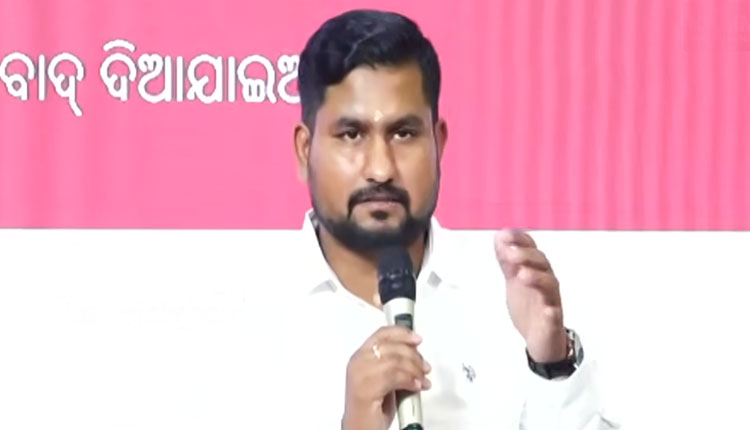
Higher Education Minister Suryabanshi Suraj on Tuesday said the SOP would bring transparency to the implementation process and ensure that no eligible student is deprived of education due to economic hardship. He also clarified that colleges covered under the scheme would not be allowed to increase fees arbitrarily.
The scheme, which extends free education support beyond the existing coverage of KG to Class VIII, will now include students from Classes IX to XII as well as those enrolled in regular undergraduate and postgraduate programmes in government universities, government colleges and government-aided colleges.
According to the state government, more than 32 lakh students are expected to benefit from the initiative every year.
As per the SOP, students who have already paid admission fees during the first phase of admissions will receive a full refund. The amount will be credited directly to the bank account from which the payment was made.
The move aims to ensure that students who paid fees before the implementation of the scheme are not disadvantaged.
To provide financial support to institutions, the government has introduced a phased reimbursement mechanism. Colleges will receive 10% of the approved amount after admissions, followed by another 15% in the second instalment.
The remaining 75% will be released in three equal instalments of 25% each during the academic year, ensuring that institutions have adequate funds to meet their operational requirements.
The SOP has also prescribed attendance requirements for students seeking benefits under the scheme. Students must maintain a minimum of 75% attendance to remain eligible.
However, the attendance requirement may be relaxed up to 65% in exceptional circumstances. Students failing to meet the minimum attendance criteria will not be eligible to avail the benefits of the scheme.
Under the programme, students will not be required to pay admission fees, re-admission fees or other institutional charges imposed by eligible institutions.
However, examination fees will continue to be borne by students. The government has also clarified that hostel charges will not be covered under the scheme, and students opting for hostel facilities will have to pay those expenses separately.
The SOP states that professional and technical courses, self-financing programmes, private unaided institutions and institutions operating under the Public-Private Partnership (PPP) model will not be covered under the scheme.
The government has also barred state universities, government colleges and government-aided colleges from revising fees for regular courses covered under the programme. Any proposal for fee revision will require approval from the designated Fee Regulation Committee.
The Gyanodaya-Shiksharu Samruddhi Scheme is part of the state government’s efforts to expand access to affordable education and remove financial barriers for students.
With the new guidelines in place, the government expects the scheme to create greater educational opportunities across Odisha, particularly for students from economically weaker sections, by ensuring access to free education from the school level to postgraduate studies.