





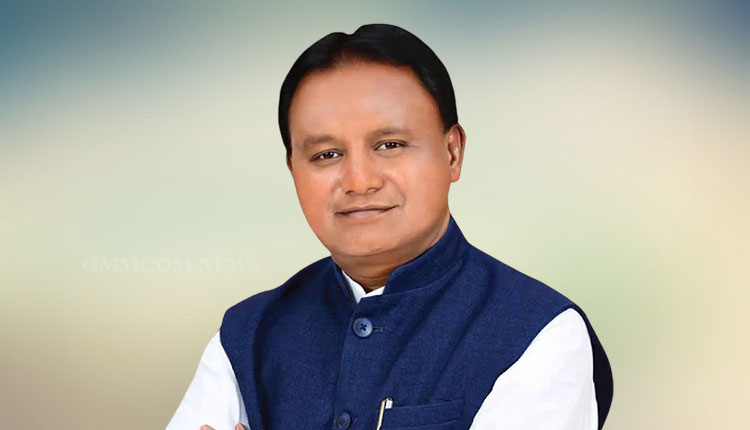
Bhubaneswar: Odisha Chief Minister Mohan Charan Majhi on Wednesday welcomed the Union Cabinet’s approval of the Paradip–Haridaspur railway line doubling project, describing it as a major step towards strengthening the state’s railway infrastructure and accelerating industrial and economic growth.
Expressing gratitude to Prime Minister Narendra Modi and Union Railway Minister Ashwini Vaishnaw, Majhi said the project would significantly improve rail connectivity to Paradip Port, enhance freight movement, reduce congestion on the existing route, and facilitate smoother transportation of both passengers and goods.
In a post on X, the Chief Minister said the Cabinet’s decision marked another milestone in expanding Odisha’s railway network and improving logistics efficiency. He added that the project would reinforce Odisha’s role as a key logistics and industrial hub under the PM Gati Shakti National Master Plan while generating new avenues for investment, employment and economic development.
“On behalf of the people of Odisha, I express my heartfelt gratitude to Prime Minister Narendra Modi and Union Railway Minister Ashwini Vaishnaw for their continued support and commitment to strengthening Odisha’s railway infrastructure and accelerating the state’s development,” Majhi said.
Earlier in the day, the Cabinet Committee on Economic Affairs (CCEA), chaired by Prime Minister Modi, approved two railway infrastructure projects of the Ministry of Railways—the doubling of the Paradip–Haridaspur railway line in Odisha and the construction of a fourth rail line between Rajkharsawan and Dangoaposi in Jharkhand and Odisha—at an estimated cost of around Rs 3,907 crore.
According to official estimates, the two multi-tracking projects will expand the Indian Railways network by nearly 145 km across four districts in Odisha and Jharkhand. The enhanced rail infrastructure is expected to improve connectivity for around 1,526 villages with a combined population of about 14 lakh.
The projects will also strengthen access to major tourist destinations, including the Lalitgiri Buddhist Complex, Shree Baladevjew Temple and Meghahatuburu Hills.
Officials said the additional rail capacity would support the transportation of bulk commodities such as coal, iron ore, dolomite, limestone and gypsum, while enabling an estimated increase in freight handling capacity of 44 million tonnes per annum.
The Railway Ministry also noted that the projects would contribute to environmental sustainability by reducing logistics costs, cutting oil imports by an estimated six crore litres, and lowering carbon dioxide emissions by nearly 29 crore kilograms, equivalent to planting around one crore trees.