





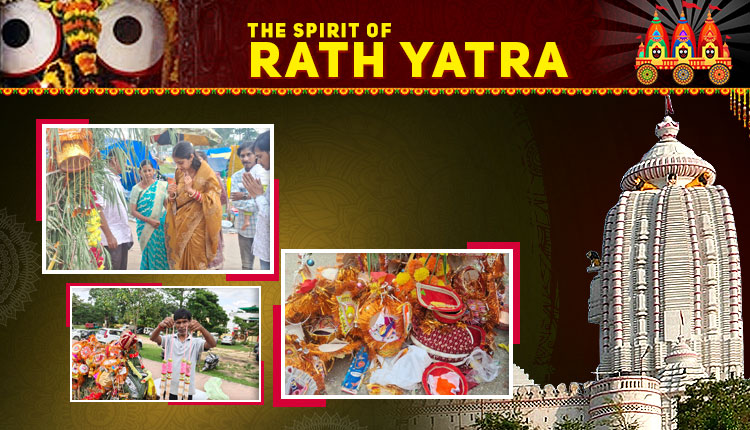
Bhubaneswar: Every year during Rath Yatra, thousands of newly married couples and their families converge at the historic Jagannathpur Jagannath Temple in Ranchi to observe a centuries-old ritual that sets the shrine apart from other Jagannath temples across the country. Known as ‘Mauri Dan’, the 335-year-old tradition centres on offering the groom’s ceremonial wedding headgear, or Mauri, to Lord Jagannath as a prayer for family prosperity, marital harmony and the continuation of the family lineage.
The tradition is observed at the Jagannathpur Temple in Ranchi’s Dhurwa area, which was established in 1691 by Nagavanshi ruler Thakur Ani Nath Shahdeo. The annual Rath Yatra at the temple follows the traditions associated with the world-famous festival in Puri, but it also preserves a distinctive local custom that has been passed down through generations.
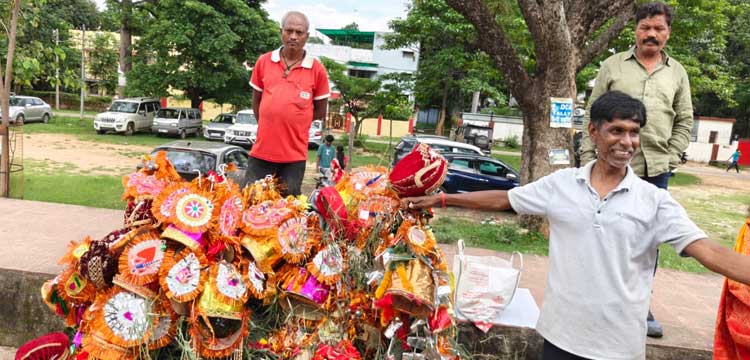
In Jharkhand, the ornate headgear worn by a groom during his wedding is known as a Mauri. Soon after marriage, the groom or his family offers it to Lord Jagannath during the nine-day Rath Yatra festival, a practice that continues until the Bahuda Yatra, the return journey of the deities.
Families from Ranchi and neighbouring districts, including Khunti, Gumla, Lohardaga, Ramgarh and Simdega, make the pilgrimage each year to fulfil what many regard as an essential post-marriage religious obligation. According to local belief, offering the Mauri invokes divine blessings for a happy married life, prosperity and the growth of future generations.
The ritual follows a hereditary system that has remained largely unchanged for centuries. Instead of placing the Mauri directly before the deity, devotees hand it over to a designated Malakar family, traditional artisans associated with floral decorations and ceremonial offerings. Much like hereditary family priests, specific Malakar families have served the same devotees across generations, receiving the Mauri and presenting it before Lord Jagannath according to established temple customs.
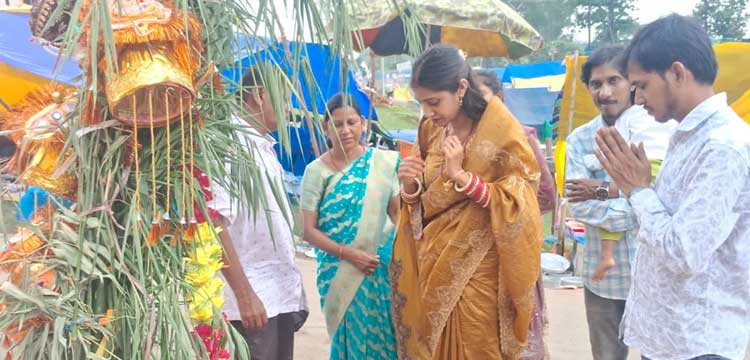
Local priests and devotees say the ritual carries deep symbolic meaning. Traditionally, the offered Mauris were placed near bamboo groves, reflecting the belief that, just as bamboo grows rapidly and multiplies, the family too would be blessed with prosperity, children and the flourishing of its lineage. Although the method of disposal has evolved over time, bamboo continues to remain an enduring symbol of fertility, continuity and family welfare in the ritual.
Beyond its religious significance, Mauri Dan also sustains a traditional artisan community. Devotees offer voluntary dakshina to the Malakars, who carefully dismantle the ceremonial headgear after the ritual. Decorative elements such as pearls, fabric, flowers and ornamental paper are reused to create new Mauris that are later sold in local markets, making the practice an example of resource conservation while providing a steady source of livelihood.
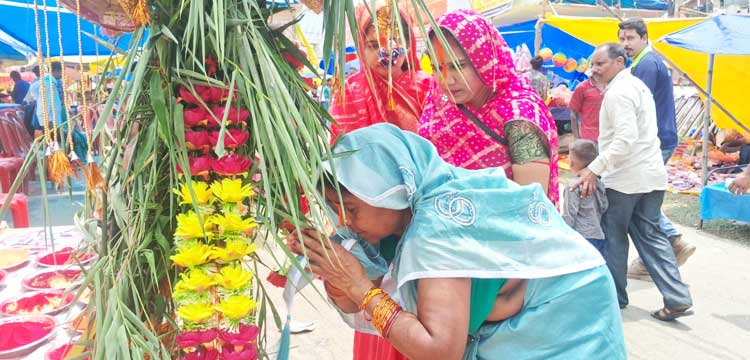
Collectors associated with the tradition recall that the Mauris were once tied to bamboo groves where they naturally decomposed over time. While changing circumstances have altered that practice, the beliefs linked to bamboo and family prosperity continue to be observed with unwavering faith.
For many devotees, the offering is more than a ritual. It represents a sacred bond between family tradition, local culture and devotion to Lord Jagannath. As rapid urbanisation and changing lifestyles have led to the decline of many folk customs, the centuries-old Mauri Dan tradition at Ranchi’s Jagannathpur Temple continues to thrive, preserving a unique blend of faith, hereditary customs and cultural heritage during the annual Rath Yatra celebrations.