





New Delhi: The Shahzad Bhatti network, tasked by Pakistan’s Inter-Services Intelligence (ISI) with recruiting Indian youth for a range of anti-India activities, has concentrated much of its efforts in Uttar Pradesh.
Although investigations into the network have extended to Delhi and Maharashtra, Uttar Pradesh remains Bhatti’s primary area of operation, officials said. Of the 20 people arrested so far in the case, nine are from the state.
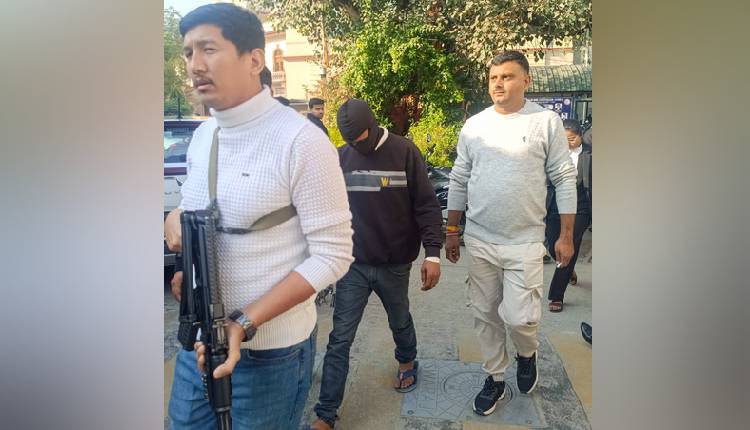
Earlier this week, the Uttar Pradesh Anti-Terrorist Squad (ATS) arrested 29-year-old Sharon Ahmad, a Class VII dropout, for his alleged role in the network. Investigators said he was promised financial rewards to collect sensitive information and was also tasked with recruiting and radicalising young people through social media.
An Intelligence Bureau official said that it has been found in recent weeks that the Bhatti network and its bandwagon of recruiters have been focusing mainly on Uttar Pradesh.
The network aims to create an army of youth on social media which would in turn recruit more people. Further, it wants a network in the state which would undertake various tasks such as targeted killings, surveillance and online radicalisation.
The official said that the Bhatti network has targeted UP’s western region with good reason. “There is high digital vulnerability and the region is strategic due to its geographical proximity to national targets,” the official said.
While setting up the UP module, the Bhatti syndicate has considered multiple factors. There is a clear pattern when it comes to recruitment, with head-hunters exploiting the massive youth demographic and also the expansion of the smartphone network in the region.
Another official said that the syndicate has been studying social media extensively. They have found many youth who are vulnerable, and these persons have been targeted with provocative and extremist content.
“The target audience is in the age group of 25 to 30,” the official said.
Another factor that the Bhatti network has exploited is that in this region of Uttar Pradesh, there are existing criminal networks who are ready to help. During the recruitment in UP, it has been found that those who join the network are not immediately assigned major roles. The job assigned to them is to record local infrastructure and map public facilities.
Recording such videos does not draw the attention of the security agencies. Over a period, these persons would be assigned bigger tasks, officials say.
Investigators said Bhatti has also exploited the economic vulnerability of many recruits. According to officials, members of the network were willing to carry out assigned tasks for as little as Rs 3,000 to Rs 5,000, highlighting how financial distress was used to facilitate recruitment.
While the assignments and payments may appear insignificant, officials said the network’s long-term objectives are far more serious. Videos of local infrastructure and the mapping of public facilities are allegedly intended to support the planning and execution of arms and ammunition smuggling operations, laying the groundwork for future anti-India activities.
The Bhatti network has focused much of its recruitment drive in Uttar Pradesh on the districts of Muzaffarnagar, Meerut, Ghaziabad and Noida. Officials said these areas were chosen because of their proximity to the national capital and their strong transport links, which make movement and coordination easier for operatives.
Investigators also found that the Uttar Pradesh module was tasked with gathering detailed information about the railway network, including infrastructure and other sensitive operational details, as part of the syndicate’s broader objectives.
They have been tasked with collecting information relating to railway signal systems. This is clearly aimed at disrupting operations in Delhi and the neighbouring areas, officials say.
(IANS)