





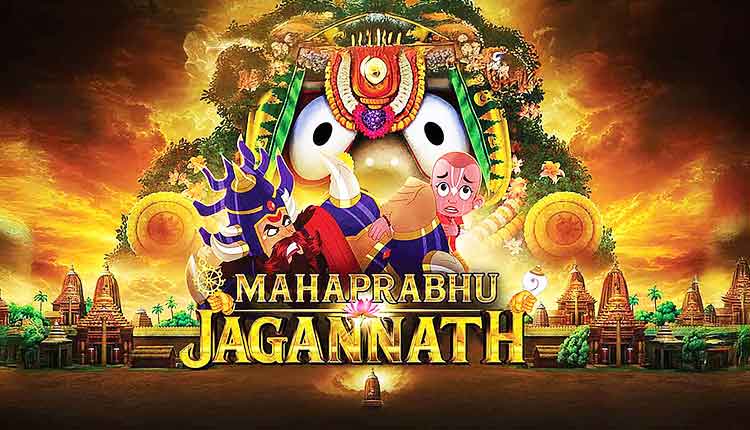
New Delhi/Bhubaneswar: The Supreme Court on Wednesday declined to modify its earlier order permitting the nationwide release of the animated film Mahaprabhu Jagannath, observing that artistic creativity and cultural expression cannot be restricted solely because certain sections are offended by the depiction of religious figures.
A Bench comprising Justices B V Nagarathna and R Mahadevan dismissed the Odisha government’s application seeking changes to the earlier order that had allowed the film’s release after the Rath Yatra festivities.
During the hearing, Justice Nagarathna remarked that curbing artistic freedom on the basis of religious sensitivities could have far-reaching consequences for creative works depicting Hindu deities. She observed that if such objections continued to prevail, it could eventually affect artistic representations of epics such as the Ramayana and limit creative expression in the country.
The Bench noted that animation is a creative medium, particularly aimed at engaging children, and observed that stories relating to deities have been narrated in different forms over generations. The court also remarked that such creative interpretations should not be stifled merely because some people disagree with them.
Representing the Odisha government, Advocate General Pitambar Acharya submitted that the certification granted to the film remained open to revision under the relevant legal provisions. He informed the court that both the state government and the Shree Jagannath Temple Administration had sought a review of the film.
Acharya told the Bench that a special screening had been organised for religious leaders, temple representatives, government officials and technical experts. According to him, concerns were raised regarding the animated portrayal of Lord Jagannath and certain aspects that were allegedly inconsistent with religious scriptures. He clarified that the state was not opposing the film’s release but wanted the government to independently examine the matter under its revisional powers.
Responding to the submissions, Justice Nagarathna said the court could not evaluate artistic choices or determine how deities should be portrayed. She observed that if any section of society found certain portions objectionable, it would be for the filmmakers themselves to decide whether any changes were necessary.
Appearing for the producers, senior advocate Devadatt Kamat opposed the state’s plea, maintaining that the film contained nothing derogatory. He also referred to the minutes of a meeting of the temple committee, which, according to him, had described the animated film as a commendable initiative.
Justice Mahadevan suggested that if the producers themselves believed any portion warranted correction, they could consider making suitable changes. Justice Nagarathna similarly observed that the filmmakers were free to voluntarily remove any part if their conscience so dictated.
After hearing both sides, the Bench said it was not inclined to interfere with its earlier order and dismissed the Odisha government’s application.
The Supreme Court had previously allowed the all-India release of Mahaprabhu Jagannath on or after July 28, noting that the film was based on a web series already available on YouTube and had received certification from the Central Board of Film Certification.