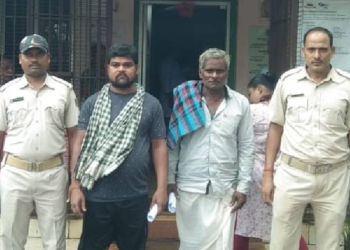






New Delhi/Bhubaneswar: A man from Odisha, who spent 22 years in prison after being convicted in a murder case, has been acquitted by the Supreme Court, which strongly criticised the denial of timely access to justice and directed authorities to facilitate his rehabilitation.
In a judgment delivered on August 4, a Bench of Justices J.B. Pardiwala and K. Vinod Chandran allowed the appeal filed by Arjun Jani alias Tuntun against his conviction in a murder case, observing that serious doubts existed over the prosecution’s case and that the conviction was based solely on an unreliable eyewitness account.
The apex court expressed concern that the appellant’s jail appeal had earlier been dismissed by the Orissa High Court solely on the ground of a delay of 3,157 days, despite his having already spent over 12 years in prison at that stage. The Supreme Court observed that constitutional courts should adopt a proactive approach in condoning delays in appeals filed by convicts, particularly those from marginalised backgrounds, as liberty is a fundamental right.
The Bench noted that a coordinate Bench had earlier condoned the delay of 3,703 days in filing the appeal before the Supreme Court, granted the appellant bail, and directed the District Legal Services Authority (DLSA), Koraput, to prepare a representation seeking remission under the applicable policy.
Examining the evidence, the court found significant inconsistencies in the testimony of the prosecution’s key eyewitness and observed that the investigation suffered from serious lapses. It pointed out that no site sketch had been prepared, the alleged recovery of stones used in the crime was unsupported by forensic evidence, and the investigating officer relied on an inadmissible confession allegedly extracted after the accused was subjected to third-degree methods.
The judgment also noted contradictions in witness statements regarding how the murders unfolded and questioned the credibility of the sole eyewitness, holding that the testimony did not inspire confidence and could not sustain the conviction.
While acquitting the appellant, the Supreme Court remarked that three lives had indeed been lost, but the investigation, trial and appellate process had cumulatively resulted in 22 years of a person’s life being taken away without reliable evidence. It directed the District Legal Services Authority, Koraput, to undertake the rehabilitation or resettlement of the appellant with assistance from the district administration headed by the Collector.
Read Here: Supreme Court Order