





Bhubaneswar: Two days of continuous heavy rainfall have caused water levels to rise sharply in several rivers across northern Odisha, raising the risk of flooding in Bhadrak, Mayurbhanj, Baleshwar and Kendujhar districts.
As per reports, the water level in the Baitarani River has risen due to continuous rain in Bhadrak. The Baitarani has been swelling continuously since yesterday. At Akhuapada, the flood water crossed the danger mark at 12 am. While the danger level is 18.33 meters, the flood water was flowing at 19.31 meters as of 7 am. This is the 4th flood of the Baitarani this year. Due to this, Bhandaripokhari Block, Dhamnagar Block, and Chandbali Block are likely to be affected. Flood water has already entered several panchayats of Bhandaripokhari Block. Flood water is slowly entering many areas through the escape channels on the left side of the Baitarani River. The district administration has issued an alert.
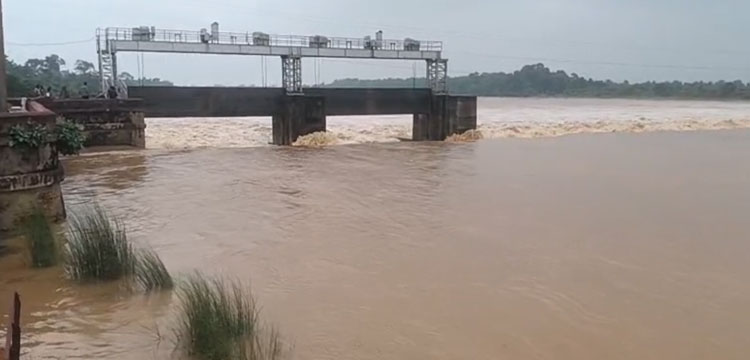
The water level in the Salandi River is also on the rise. According to officials, the river was flowing at 16.20 feet at Rajghat as of 7 AM, against the danger level of 17 feet. The water level of the Salandi is gradually increasing due to continuous rainfall in the upper catchment areas and the discharge of water from Hadagad Dam. Many low-lying areas have been affected. In Bhadrak block, flood water is flowing over the Rajmukundpur bridge of Annapaal Panchayat.
Meanwhile, the district administrations have shifted residents from vulnerable areas to flood shelters and remain on high alert. People living near riverbanks and in low-lying pockets have been advised to stay vigilant, as the situation could worsen with continued rainfall.
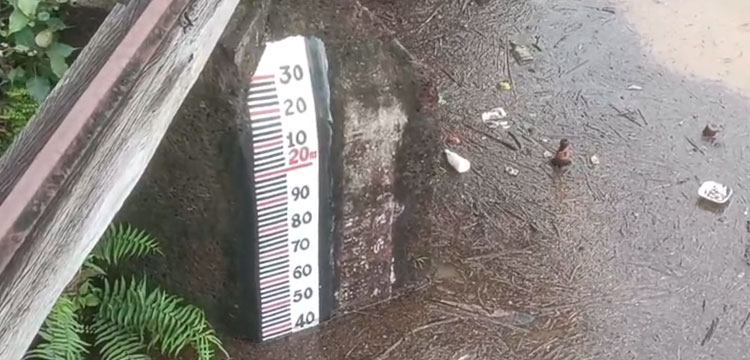
In Mayurbhanj, floodwaters have inundated parts of Baripada town, particularly low-lying riverbank areas in Wards 7 and 8 after the Budhabalanga river overflowed. Water has entered 22 blocks of the district. Around four feet of water is flowing over the bridge at Sarumula in Rasgovindpur, disrupting traffic, while the Baripada-Amarda road has also been affected. The Budhabalanga is flowing strongly over the Kaliaami bridge in Bangiriposhi.
Balasore district is similarly affected, with large areas turning into a waterlogged expanse. The Jalka river at Mathani in Basta block was flowing at 7.84 metres at 6 am, well above its danger level of 6.50 metres. With heavy rain continuing upstream, levels are expected to rise further.
As per reports, as many as 90 villages across 17 panchayats in Basta block — including Dudhahansa, Baharda, Natakata, Brahmandha, Mathani and Barungadia — face the risk of inundation if the rains persist.
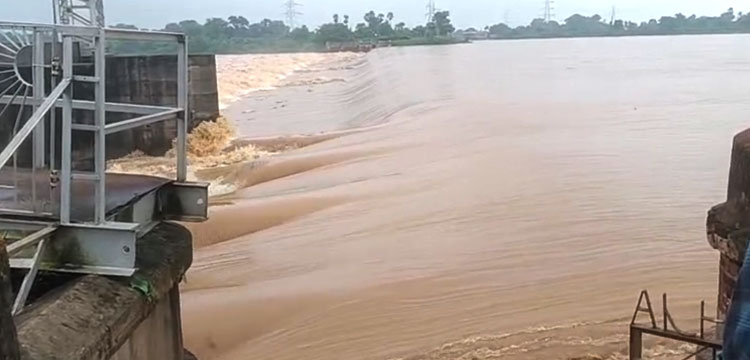
In Kendujhar, water levels have risen in the Baitarani and other rivers across Joda, Champua and Anandapur. The Baitarani is flowing above the danger mark at Anandapur, and water has begun entering through a breach in the Anandapur ring embankment where repair work remains incomplete.
Several areas of Joda municipality are waterlogged after the Suna river overflowed, with floodwater reaching roads near the riverbank market, Women’s College. Multiple wards in Barbil have reported waterlogging, and floodwater is flowing over the state highway near Serenda on the Bhadrasahi road. Many parts of Anandapur remain submerged, and water has been reported flowing over national highways in the region.
Since 2 am on Wednesday, continuous rainfall has led to a rise in the water level of the Suna River, causing flood-like conditions. In the low-lying areas of Joda, water is not draining from the municipal drains, and the road leading to Ward No. 3, Hudisasahi, has been completely submerged. Similarly, on NH-520, water is not draining and is flowing over the road. The Chairman of the Joda Development Council informed that some houses have collapsed.
Water levels in the Budhabalanga, Subarnarekha and Jalka rivers are also rising, raising concerns of further inundation in the affected districts.