





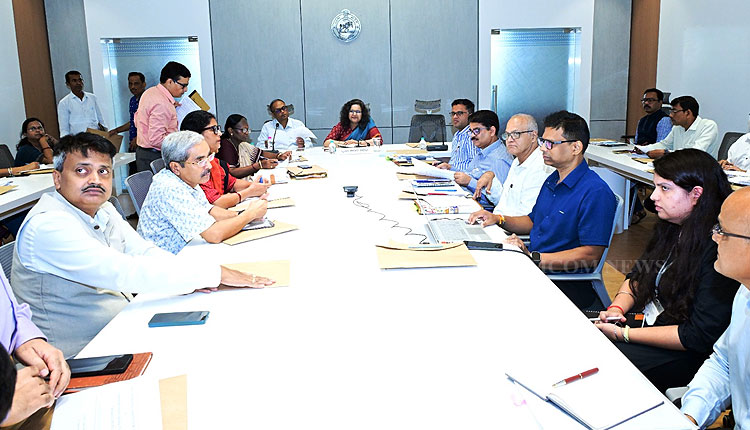
Bhubaneswar: The State-Level Steering Committee for the Godabarish Mishra Adarsh Prathamik Vidyalaya (GMAPV) scheme on Tuesday reviewed the progress of construction of 322 schools and discussed measures to ensure timely implementation of the programme across Odisha.
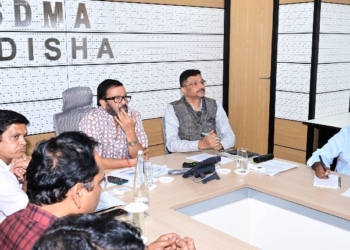
The first meeting of the committee, chaired by Chief Secretary Anu Garg at Lok Seva Bhawan, also reviewed issues related to school selection, infrastructure, monitoring, land availability and the deployment of manpower for effective implementation of the scheme.
Development Commissioner and Additional Chief Secretary Deoranjan Kumar Singh, Commissioner-cum-Secretary of the School and Mass Education Department Dr N. Thirumala Naik and other members of the committee attended the meeting.
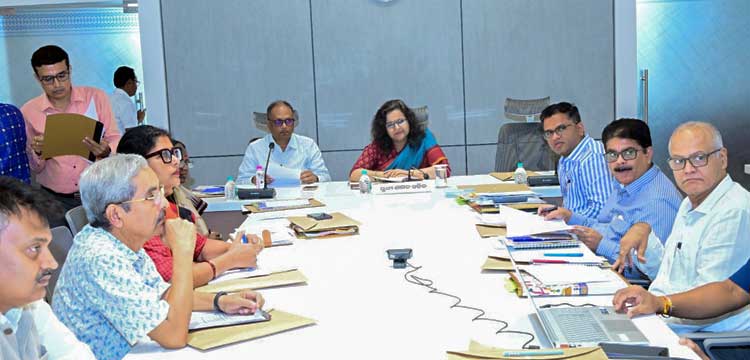
At the meeting, officials made a presentation on the role and responsibilities of the State-Level Steering Committee, implementation of the scheme and the functioning of the State-Level Special Cell set up for monitoring and supervision.
The committee stressed the need for inter-departmental coordination, regular review of progress and timely policy interventions to ensure smooth implementation of the scheme.
Of the 322 schools covered under the scheme, 118 were included in the first phase and 204 in the second phase. Garg reviewed the construction status of the schools being executed by various implementing agencies and directed officials to expedite the work while maintaining quality standards.
The committee also discussed proposed changes to the guidelines relating to school selection and infrastructure. Officials said the square-shaped building design approved earlier may not be feasible at some locations because of the size, width and shape of the available land.
A proposal was therefore discussed to allow a rectangular building design in such cases, depending on site conditions.
The meeting also discussed strengthening the GMAPV Cell by deploying technical, academic, administrative and financial personnel for better inspection, monitoring and quality supervision of the scheme.
Land availability emerged as another issue. Under the existing guidelines, the schools are to be established at Panchayat headquarters. However, where suitable land is not available there, a proposal has been made to allow the school to be established at the most populated location within the Panchayat.
The proposal also envisages acquisition of suitable government or private land near the proposed school, wherever required.
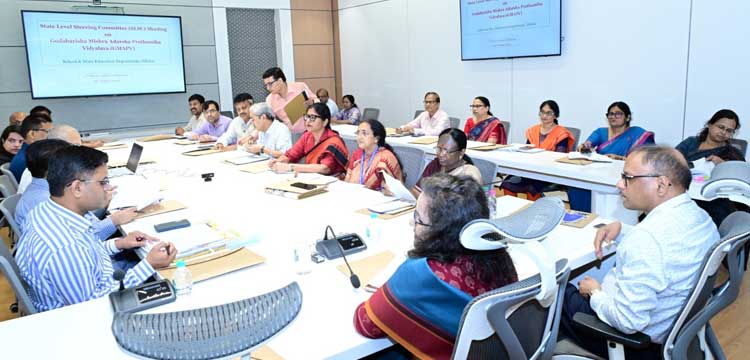
The GMAPV guidelines were approved by Chief Minister Mohan Charan Majhi in September 2025. The State-Level Steering Committee was constituted in March 2026 to oversee the effective implementation and monitoring of the scheme.
The committee will provide policy guidance and strategic direction and regularly review the progress of implementation. It will also oversee school selection, updates to curriculum and implementation criteria, coordination among departments, selection of implementing agencies and allocation of resources.
The proposed schools will have classrooms, nursery sections, entrance lobbies, principals’ rooms, staff rooms, store rooms, offices and other essential facilities aimed at creating a modern and child-friendly learning environment.
The building design will be modified, where necessary, according to site conditions while ensuring that educational and infrastructure standards are maintained.
Speaking at the meeting, Garg said the primary objective of the GMAPV scheme was to provide quality primary education supported by good school infrastructure.
She said that after completion of the infrastructure work, the government would focus on ensuring the availability of the required number of qualified teachers and other facilities for students.
Garg asked officials and other stakeholders to maintain high quality standards and adopt a long-term approach at every stage of the scheme.
The meeting emphasised that the programme should be implemented in a timely and quality-driven manner to provide children across the State with an improved learning environment and better access to quality primary education.