
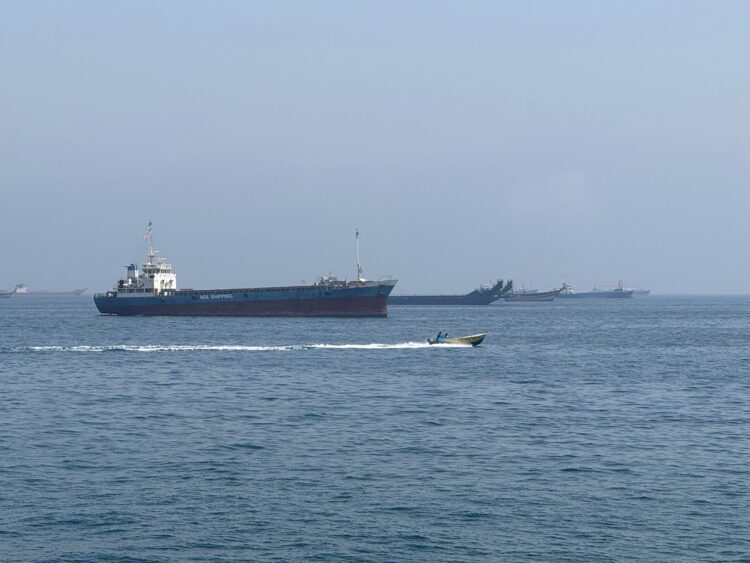
Doha: The Qatari and Iranian Foreign Ministers discussed on Thursday the establishment of a temporary shipping corridor through the Strait of Hormuz and the implementation of a joint project to clear the strait of mines, according to a statement by the Qatari Foreign Ministry.
Qatari Prime Minister and Foreign Affairs Minister, Sheikh Mohammed bin Abdulrahman bin Jassim Al Thani, held talks in Tehran with Iranian Foreign Minister Seyed Abbas Araghchi on a proposed interim framework for the strait, the Ministry said.
During the meeting, Sheikh Mohammed stressed “the need to respect the sovereignty of neighbouring countries and freedom of navigation”, while underscoring the importance of continuing diplomatic efforts to reduce tensions and address differences through dialogue, Xinhua news agency reported.
For his part, Araghchi expressed appreciation for Qatar’s continued diplomatic efforts aimed at de-escalating tensions and supporting dialogue, according to the statement.
The Qatari Prime Minister’s visit to Tehran came amid ongoing Iran-Oman talks over the Strait of Hormuz.
Iran’s Islamic Revolutionary Guard Corps (IRGC) said on Wednesday that Iran and Oman had reached agreements on their respective shares of the strait’s waters and revenues, according to Iranian media reports.
However, a senior Iranian source was quoted by media as saying that no final agreement between Iran and Oman concerning the strait had been reached so far.
Meanwhile, Iran’s President Masoud Pezeshkian on Thursday expressed his country’s readiness to establish joint security arrangements with neighbouring states.
Pezeshkian said Iran is reaching out to its neighbours to develop such arrangements “not from a position of weakness, but based on its war experience,” according to a statement published on the website of his office.
“We know what war is, and we know that when missiles and bombs land, they do not differentiate between the dreams of an Iranian mother and an Arab mother,” he told the 40th International Conference on Islamic Unity in Tehran.
He proposed that Muslim states conclude a mutual security and non-aggression treaty among themselves, stressing that Islamic countries must commit to respecting each other’s territorial integrity, refraining from using their soil, airspace, and facilities to invade another Muslim state, and avoiding supporting efforts to destabilise or disintegrate one another.
Pezeshkian also called on Muslim states to cooperate in managing regional security and form joint working groups to promote cooperation in areas, including infrastructure, trade, investment and clean energy.
(IANS)