
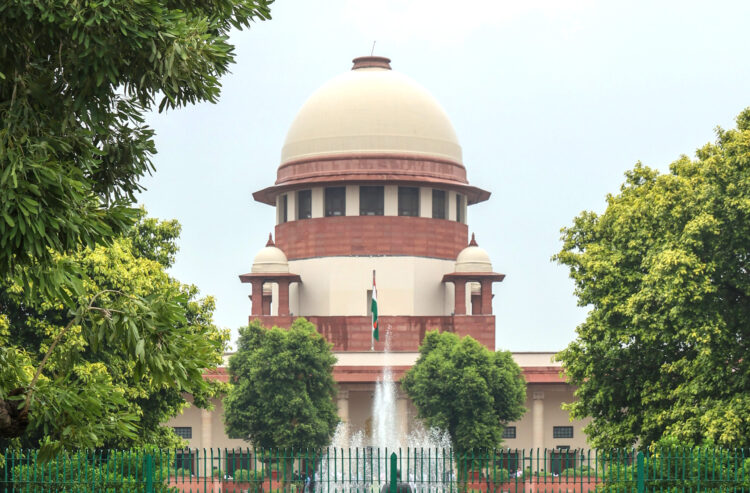
New Delhi: The Supreme Court on Thursday sought the response of the Central government on a Public Interest Litigation (PIL) seeking directions to deny perks, facilities, and other benefits to constitutional functionaries who resign mid-term allegedly to avoid proceedings for their removal.
A bench of Chief Justice of India (CJI) Surya Kant and Justices Joymalya Bagchi and V. Mohana issued notice to the Union of India and posted the matter for further hearing on September 17.
The PIL, filed by Mumbai-based petitioner Pratik Vira through advocate-on-record Sangramsingh R. Bhonsle, has raised a broader constitutional issue concerning resignations by high constitutional functionaries before completion of their prescribed tenure.
According to the plea, constitutional functionaries who are elected or appointed for a fixed tenure have a constitutional obligation to complete their tenure and discharge the responsibilities attached to their office, unless removed through the procedure prescribed under the Constitution.
The PIL contends that resigning midway to avoid a removal or no-confidence process defeats the purpose of the constitutional safeguards governing removal from high office. It states that “the high constitutional office necessarily imposes an unwritten constitutional obligation” upon such functionaries either to complete their tenure or face a transparent procedure of removal.
It further claims that the availability of post-resignation perks and benefits creates an incentive for constitutional functionaries to opt for resignation rather than face proceedings that could result in their removal.
The PIL argues that an “easy option of resigning to avoid removal is neither contemplated nor desirable” and that such conduct defeats the confidence placed by the Constitution in high constitutional functionaries.
The petitioner has sought a declaration that constitutional functionaries who tender their resignation mid-term specifically to avoid removal proceedings should not be entitled to perks, facilities or benefits that would otherwise accrue on completion of their tenure.
Such a measure would help promote “probity in public life, transparency, accountability and constitutional behaviour”, the plea argues. It has also drawn a comparison with non-constitutional functionaries, stating that service rules applicable to such employees generally restrict resignation where departmental proceedings are pending and could result in removal or other punishment.
According to the PIL, constitutional functionaries occupy a position higher than non-constitutional employees and should therefore demonstrate greater probity by completing their tenure or facing the constitutionally prescribed removal process. The plea alleges that treating constitutional functionaries differently in the matter of benefits after mid-term resignation amounts to “hostile discrimination” and is violative of Article 14 of the Constitution.
The petitioner has urged the Supreme Court to examine the issue as a pure question of constitutional law, contending that the PIL is not directed against any particular individual or based on any specific incident.
The petition further seeks appropriate directions to make rules relating to post-resignation or retiral benefits inapplicable to constitutional functionaries who resign mid-term for the purpose of avoiding proceedings for their removal.
The PIL has also raised concerns over the perception among citizens that constitutional functionaries can frustrate removal proceedings by resigning and nevertheless retain perks and facilities associated with their office. The petition describes such resignations as an “unprincipled device to avoid discharging constitutional duties” and contends that the practice is contrary to the rule of law, which forms part of the basic structure of the Constitution.
(IANS)