
New Delhi: India’s 2026 BRICS presidency is broadening historically strong oil-related ties with the Gulf into a wider partnership spanning investment, technology, food security, clean energy and regional stability, a new report has said.
The report from Gulf Today said energy ties remain the foundation of the relationship at the 18th BRICS Summit, but cooperation is expanding into new strategic areas.
“Gulf capital and renewable-energy expertise can combine with India’s engineering, manufacturing and market scale in areas including solar equipment, green hydrogen, battery storage and low-carbon technology,” the report said.
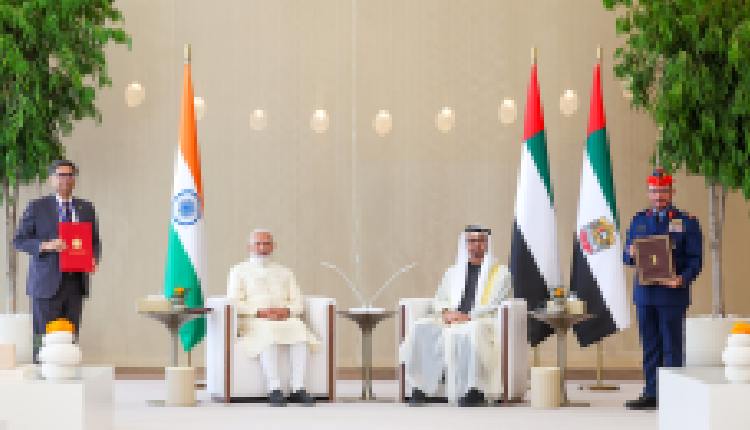
During Prime Minister Narendra Modi’s May 2026 visit to the UAE, the two countries deepened collaboration on crude oil, LNG and LPG, and agreed to increase UAE participation in India’s strategic petroleum reserves and explored strategic gas reserves.
Another area of co-operation is food-security which can link Gulf demand with India’s agricultural and food-processing capabilities. Investment in storage, logistics and reliable supply chains can be explored, the report noted.
Highlighting the timing of the event, it noted that “regional tensions have renewed attention on energy security, maritime trade and safe shipping through the Strait of Hormuz, while Gulf states diversify their economies, invest in advanced technology and strengthen commercial links with Asia.”
The Gulf is represented in the expanded BRICS through Saudi Arabia and the UAE, providing the bloc greater weight in the global energy and finance landscape. India holds deep relationships across all six GCC states, and hence acts as a natural bridge between the Gulf and the wider BRICS community.
Gulf states supply crude oil, LNG and petroleum products vital to India’s growth, while India supplies food, pharmaceuticals, engineering goods, textiles, machinery and digital services. Millions of Indians reside in the Gulf earning livelihoods or running businesses providing a strong human foundation to the relationship.
India-Gulf ties grew stronger in February 2026, when the country signed terms of reference with GCC and formally launched negotiations for a comprehensive free trade agreement, covering Bahrain, Kuwait, Oman, Qatar, Saudi Arabia and the UAE.
(IANS)