
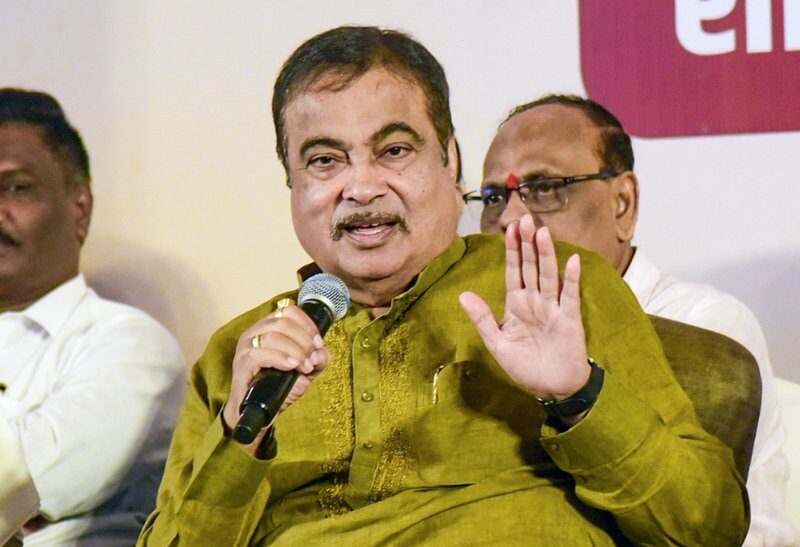
New Delhi: Union Minister for Road Transport and Highways Nitin Gadkari on Tuesday asserted that sugar prices are governed by global market dynamics and that governments have little role in determining the rates of agricultural commodities in an increasingly interconnected world economy.
Speaking at an event organised by the National Federation of Cooperative Sugar Factories Ltd (NFCSF), Gadkari responded to demands from state ministers and industry representatives seeking an increase in the minimum support price for sugar. His remarks come at a time when domestic retail sugar prices have climbed to record levels of over Rs 70 per kg amid tightening supplies.
The minister said that in a globalised economy, agricultural commodity prices are shaped by international demand and supply conditions rather than government decisions. He noted that sugar prices are heavily influenced by production trends in countries such as Brazil, while other commodities are similarly impacted by global market leaders.
“We are in a global economy now, and no government can decide the rates of agricultural produce in such an economy, even if they wanted to,” Gadkari said, adding that practical realities often make it difficult to implement demands for administered pricing.
Highlighting India’s competitiveness challenges, Gadkari pointed out that Brazil benefits from large-scale mechanised farming, which significantly lowers production costs. According to him, sugar production costs in Brazil are around Rs 23 per kg compared to Rs 33-34 per kg in India. As a result, surplus sugar production in Brazil often exerts downward pressure on prices in the Indian market.
The minister also drew attention to the broader challenges facing the agricultural sector. Referring to farmer distress in parts of the country, he said the fundamental issue is that agriculture remains economically unviable for many cultivators. He noted that finding sustainable solutions requires improving farm incomes through innovation and diversification.
Gadkari emphasised that relying solely on sugar production is no longer a viable strategy for the industry. Instead, he advocated greater focus on by-products and value-added opportunities, including biomass utilisation, straw-based products and organic manure, which can create additional revenue streams for sugar mills and farmers.
(IANS)