





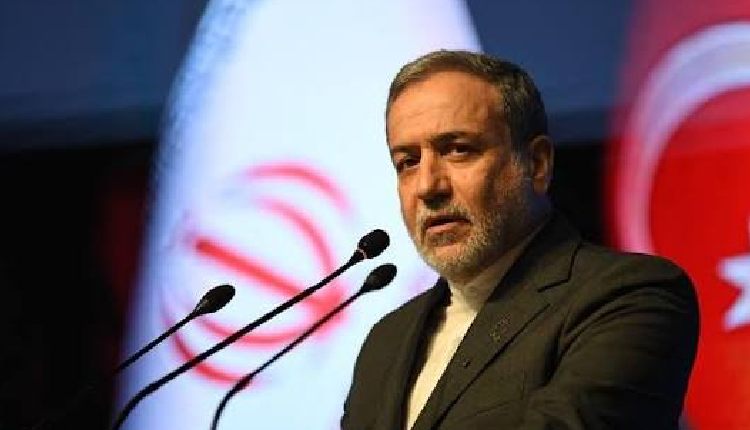
Washington: Iran has given the Trump administration a proposal to reopen the Strait of Hormuz and resume negotiations aimed at ending the broader war within seven days, Iranian Foreign Minister Abbas Araghchi said.
Araghchi said the proposal was delivered to US officials during indirect discussions conducted through mediators this week, according to The Washington Post.
The White House did not immediately respond to the newspaper’s request for comment.
The proposal could mark a new diplomatic opening after months of conflict and the near-closure of one of the world’s most important energy corridors. Between one-fifth and one-quarter of global oil supplies ordinarily pass through the Strait of Hormuz.
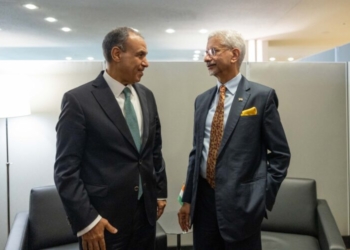
Araghchi disclosed the initiative while speaking to reporters on the sidelines of the United Nations General Assembly in New York.
He said the terms were similar to a memorandum of understanding reached by the two countries in June.
“The conditions we asked are nothing new,” Araghchi said.
It remained unclear whether the proposal would satisfy the Trump administration’s conditions for ending the conflict.
Tehran interpreted the June understanding as recognising Iranian control over the strait. The United States and its regional partners have rejected that position.
Iran mined the waterway and warned ships against attempting to pass without coordinating with Tehran after Israel and the United States attacked Iran in late February. Shipping traffic subsequently slowed to a trickle, contributing to higher energy prices worldwide.
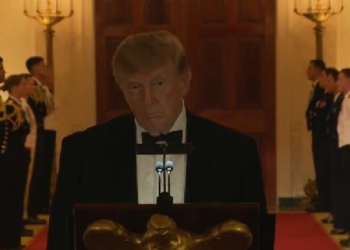
President Donald Trump acknowledged the diplomatic contact during his address to the General Assembly on Tuesday.
Trump said Iran could reach an agreement to end the conflict or face “annihilation”. Members of the Iranian delegation walked out during his speech.
Iranian President Masoud Pezeshkian responded in his own General Assembly address on Wednesday. He argued that Iran needed sufficient strength to protect itself from external threats.
“Iran must be powerful so as to avoid being threatened, to avoid its future being threatened,” Pezeshkian said.
“We are ready for dialogue and diplomacy and negotiations without accepting the language of force,” he said.
Trump has said the United States entered the war alongside Israel to prevent Iran from developing nuclear weapons.
Pezeshkian maintained that Iran would not seek nuclear arms. He said the country retained the right to develop “peaceful nuclear technologies”.
The dispute over Iran’s nuclear activities remains one of the central obstacles to an agreement. Washington has demanded safeguards to ensure Tehran cannot develop a weapon, while Iranian officials have insisted that the country must be allowed to maintain a civilian nuclear programme.
Pezeshkian used his UN appearance to reject what he described as attempts to force Iran into negotiations through military pressure.
“A world without power is dangerous,” he said. “But a world that only understands the language of war and bullying will not be safe.”
The new proposal combines two immediate priorities: restoring shipping through the Strait of Hormuz and reopening negotiations on a wider settlement. Araghchi did not disclose whether nuclear questions would be addressed during the proposed seven-day process.
(IANS)