





Odisha occupied a cherished place in Mahatma Gandhi’s heart. Between 1921 and 1946, the Father of the Nation visited the state eight times, travelling its towns and villages, speaking to people from every walk of life, and walking its dusty paths. These journeys were far more than political campaigns. Through public meetings, intimate interactions and long padayatras, Gandhi forged a deep emotional bond with the people of Odisha. His presence energised the freedom movement and simultaneously created greater awareness about pressing social issues, especially untouchability.
Significantly, it was from Odisha that he launched his historic Harijan padyatra for the first time. On his birth anniversary, Ommcom News recalls the enduring connection between Gandhi and this eastern state with pride and gratitude.
The First Spark: March 1921 and the Non-Cooperation Movement
March 1921 and the Non-Cooperation Movement Gandhi arrived in Odisha for the first time on March 23, 1921, stepping into Cuttack at a critical moment in the Non-Cooperation Movement. The very next day he held his first public meeting at Qadam-e-Rasool. Later that day he addressed women at Binod Bihari and, as evening descended, spoke to a vast gathering on the bed of the Kathajodi river. On 25 March he travelled to Bhadrak and addressed a meeting at Gandhi Padia.
He then visited the renowned Satyabadi Bana Vidyalaya founded by Pandit Gopabandhu Das before proceeding to Puri. On 27 March he spoke to a large crowd in the beach town about the freedom struggle. Two days later, accompanied by Gopabandhu Das, he reached Berhampur and addressed a huge assembly at the Berhampur Stadium. In less than a week, Gandhi had touched the hearts of people across coastal Odisha and planted the seeds of non-violent resistance.
A Brief but Meaningful Return: August 1925
Gandhi’s second visit was short yet purposeful. On 19 and 20 August 1925 he came to Cuttack primarily to see the Utkal Tannery established by the visionary Madhusudan Das. He examined the enterprise closely and offered whatever help he could. After visiting a few other places in the city, he left for Kolkata on the evening of 20 August.
Spreading the Message of Khadi: December 1927
In December 1927 Gandhi returned for a longer stay focused on promoting Khadi and village industries. From 4 to 21 December he toured several Khadi production centres, including those in Berhampur. He also made it a point to meet people living in the flood-affected areas of Bhadrak district. The intensive travel exhausted him and he fell ill, forcing him to remain indoors for some days. Despite poor health, he attended a public meeting in Cuttack on 20 December and left the city the following day, leaving behind a stronger network of Khadi workers.
A Fleeting Halt by the Mahanadi: December 1928
On 22 December 1928, while travelling to Kolkata to attend a Congress session, Gandhi made a one-day stop in western Odisha. He alighted at Jharsuguda, addressed a meeting there, and then proceeded to Sambalpur. On the riverside of the Mahanadi, local people gathered to place their problems before him. Though brief, the visit showed that Gandhi’s concern extended to every corner of the state.
The Historic Harijan Padyatra Begins: May 1934
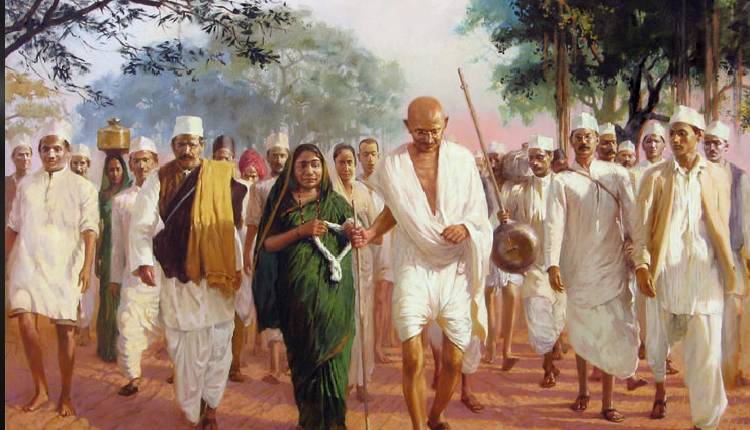
The fifth visit, from 5 to 16 May 1934, marked a turning point. Gandhi came with a clear mission—to work for the welfare of Dalits and to eradicate untouchability. On 5 May he addressed gatherings in Jharsuguda and Sambalpur, appealing to people to abandon the practice of untouchability. The next day he travelled by car to Angul and spoke there. On 7 May he reached Puri. The following day he unveiled a statue of Pandit Gopabandhu Das and began a padayatra from Puri towards Cuttack. Walking through villages, he stayed at places such as Kadua Ashram, Satyabhamapura and Balianta, meeting ordinary people at every halt. He left for Patna on 16 May, but the padayatra had only just begun.
Continuing the Long Walk for Equality: May–June 1934
Barely five days later Gandhi returned to resume the Harijan padyatra. From 21 May to 7 June he walked from Byree station in Jajpur district towards Bhadrak, covering rural areas of Cuttack, Kendrapada, Bari, Kabirpur and Bhadrak. Day after day he moved on foot through the countryside, carrying the message of social equality directly to the villages. This sustained journey remains one of the most significant chapters of his association with Odisha.
A Gathering of Constructive Workers: March 1938
In late March 1938 Gandhi visited Odisha once again, this time to attend a week-long conference of the Gandhi Seva Sangh held at Beraboi in the Delang area of Puri district. An agro and village enterprise exhibition was organised alongside the conference. Among the eminent leaders present were Sardar Vallabhbhai Patel and Rajendra Prasad. The event reinforced the importance of constructive village work and self-reliance.
A Final Glimpse from the Train: January 1946
Gandhi’s eighth and last visit came on January 20, 1946. Travelling by train towards Chennai, he met his supporters at the railway stations of Balasore, Bhadrak, Cuttack and Berhampur. Huge crowds gathered at every stop, eager for a final glimpse of the man who had walked their roads and spoken their language of hope and dignity.
Through these eight visits spanning a quarter of a century, Mahatma Gandhi did more than strengthen the freedom movement in Odisha. He walked its villages, listened to its people, and left behind a powerful legacy of social awakening. The dusty paths he once tread still seem to echo with his message of truth, non-violence and equality.
On this birth anniversary, Odisha remembers not only the leader, but the quiet, determined footsteps that once connected a nation’s conscience to its eastern shores.