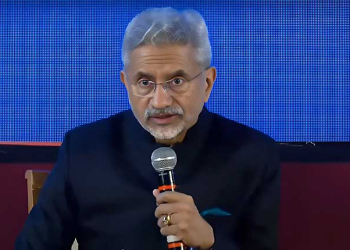






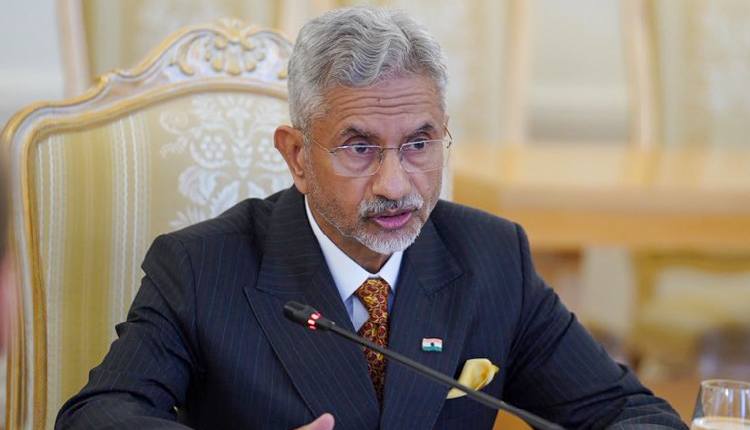
New Delhi: Navigating today’s turbulent world of “choke points”, where countries are using their leverage with far less restraint, requires good judgment, a steady hand and a lot of experience, External Affairs Minister (EAM) S Jaishankar said on Thursday.
Speaking at the NDTV World Summit 2026, EAM Jaishankar said the world has become volatile and constantly changing.
“This is today a world of choke points. It is a world of, if I were to dramatise it a bit, I would say almost hostage-taking, that countries are using leverages and instruments that they have with much less reticence and even responsibility. And that’s what we have to prepare for,” he said.
“Which is why I think in this very turbulent era, we have to sail through this, we have to navigate through this. We need good judgment. We need a steady hand. We need a lot of experience,” the EAM added.
Asked whether India could trust a trade deal with the US, given the Trump administration’s shifts on tariffs, EAM Jaishankar said every plan and decision now has to factor in global volatility, prompting countries to hedge.
“People will make sure not just that you don’t put your eggs in one basket, you look for multiple baskets and spread that around. So it’s like a kind of a portfolio management in a very volatile market. That’s the way today international relations is looking,” he said.
On the India-US trade deal, he said the two sides were moving towards it, but added that “it’s never done till it’s done” and that the last mile often posed challenges, which the negotiating teams were working through.
Warning against the growing tendency to use leverages and pressure points as standard practice in diplomacy, EAM Jaishankar said such an approach turns even normal activities into instruments of coercion.
“You get into that weaponisation mentality, then everything starts to be weaponised. And that unfortunately is what we have seen this decade,” he said.
Asked whether India lacked such leverage, the EAM said every country needs cards to play and India must keep building them, stressing that “at the end of the day, world respects capability”.
“One is you develop a capability as a defensive machine so that you have the capability at home and others cannot use it as a coercive instrument. The second is when you have the capability, the capability can be deployed internationally to give you a stronger card,” he said, citing India’s push to build semiconductor capability.
(IANS)