





Washington: Laos, a landlocked nation ruled by a fellow communist government, appears to be a natural ally for China, as it does not perceive Beijing as a direct security threat. Chinese assistance in air force training and support could strengthen Laos’ military capabilities while providing access to economic assistance, despite the risks of increasing dependence on Beijing, a report has stated.
It noted that by positioning itself as China’s preferred partner, the Southeast Asian nation could secure considerable strategic and economic benefits.
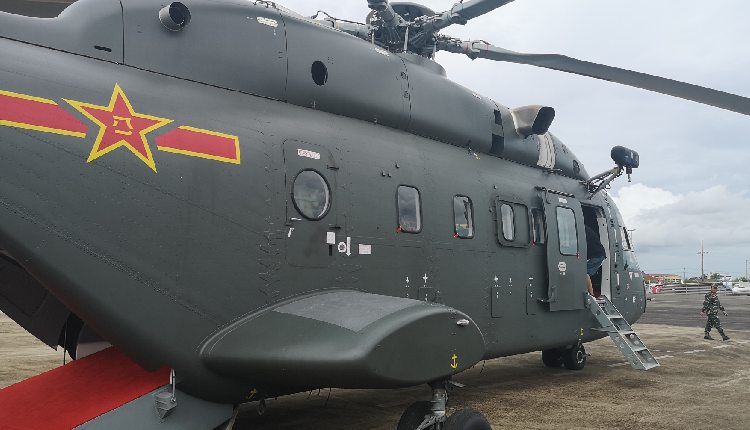
The Chinese Ministry of Defence announced on September 29 the establishment of a “joint support and training center” at an airport in Ban Keun, Laos, drawing renewed attention to the expanding presence of the Chinese Army in Southeast Asia.
While Beijing has refrained from describing the facility as a “base” and maintained that it is “not targeted at any third party,” the centre represents China’s first publicly acknowledged overseas military facility focused on airpower, according to a recent report in American news website ‘War on the Rocks’.
Alongside Djibouti and Cambodia’s Ream Naval Base, it said, the facility in Ban Keun forms part of China’s expanding network of overseas military and security infrastructure.
“Concern is understandable. While smaller than China’s base in Djibouti, satellite imagery reveals eight light attack aircraft and support vehicles on a 2,000-metre runway that is currently under construction. Although insufficient to support long-range bombers, the facility likely benefits China’s logistics and intelligence capabilities, diversifies Southeast Asian base access beyond Cambodia, and ties Laos into its arms sales network,” the report detailed.
According to the report, the joint centre in Laos could eventually strengthen the Chinese Air Force’s ability to project power across mainland Southeast Asia, with potential implications for US forces operating in the eastern Indian Ocean. For Vietnam, the development further reinforces its perception of being increasingly encircled.
“The reflex among many policymakers in Washington after each rumoured or announced Chinese military facility overseas is to interpret it through the lens of US-Chinese competition. In Cambodia’s case with Ream, Washington imposed sanctions as punishment. Yet, this reflex misunderstands the nuanced interests driving regional partners to work with China — and how to counter it,” it noted.
China continues to militarise land features in the South China Sea while expanding its strategic footprint across mainland Southeast Asia. The Laos airfield adds to the increasing influence alongside Cambodia’s Ream Naval Base, which opened in 2025 under official Cambodian control and hosts a rotating naval deployment, the report mentioned.
“Cambodia, Laos, and Thailand stand out for the depth of military-to-military relationships with Beijing, while Indonesia, Malaysia and Thailand have recently established 2+2 dialogues with China, involving foreign and defence ministers from both countries. Arms sales are also a growth area for Beijing. Indonesia expects the delivery of J-10 fighter jets, while Beijing surpassed the United States as Bangkok’s primary supplier,” it added.
Highlighting the wider implications of China’s growing footprint, the report said, “On the whole, Southeast Asian states may distrust the United States, but no government in the region wants Washington gone. While realistic assumptions are necessary about how far hedging states can move away from China and toward the United States, Washington needs to devote more resources and institutional attention to Southeast Asia’s complex security and threat landscape. A broad brush risks abdicating the initiative to China, but a tailored approach can better counterbalance Beijing.
–IANS–