




Bhubaneswar: The National Urban Conclave 2026 concluded in Bhubaneswar on Sunday with actionable recommendations to strengthen urban governance, planning and service delivery towards achieving Viksit Bharat 2047.
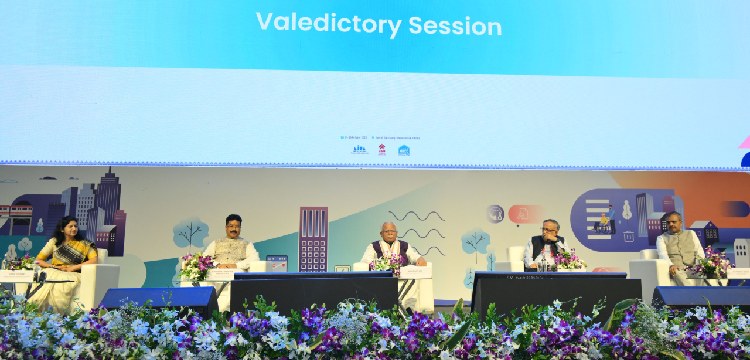
The closing ceremony was graced by Manohar Lal, Union Minister of Housing and Urban Affairs; Dr. Krushna Chandra Mahapatra, Minister of Housing and Urban Development, Odisha; Rajiv Gauba, Member, NITI Aayog; Satendra Singh, Secretary, Department of Urban Development, Ministry of Housing and Urban Affairs; and Usha Padhee, Additional Chief Secretary, Housing and Urban Development Department, Government of Odisha.
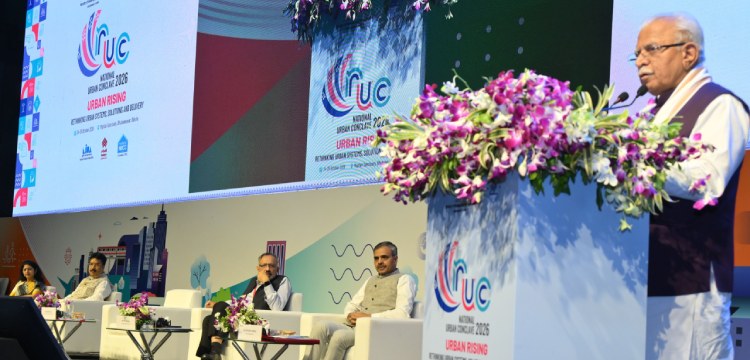
Delivering the closing remarks, Manohar Lal, Union Minister of Housing and Urban Affairs, reflected on India’s historical trajectory of urban development and the Government of India’s continued efforts to strengthen urban infrastructure and services.
Stating that “the intent of the Conclave is to deliberate on the future challenges of our cities”, he highlighted the progress achieved through national missions, including AMRUT, Swachh Bharat Mission–Urban and PM SVANidhi, in expanding water and sanitation services, improving waste management, strengthening urban mobility and promoting financial inclusion.
He emphasised the importance of affordable housing near employment centres and public transport, circularity in construction practices, and the scientific remediation of legacy waste. Noting that more than half of the country’s legacy waste has been remediated, he stressed the need to sustain these efforts and prevent the accumulation of new waste, ensuring that India’s urban transformation remains inclusive, sustainable and future-ready.
Delivering the welcome address at the valedictory session, Satendra Singh, Secretary, Department of Urban Development, Ministry of Housing and Urban Affairs, reflected on the key outcomes of the seven technical sessions and emphasised the need to translate policy deliberations into practical, implementable urban solutions.
He noted that “success should be measured by the quality of services, not merely by project completion”, highlighting the importance of strengthening institutional capacity, inter-agency coordination, municipal finances and accountability to improve service delivery.
Highlighting the spirit of cooperative federalism, he reaffirmed the Ministry’s commitment to working with states, cities and partner institutions to take forward the Conclave’s recommendations and advance the vision of Viksit Bharat 2047.
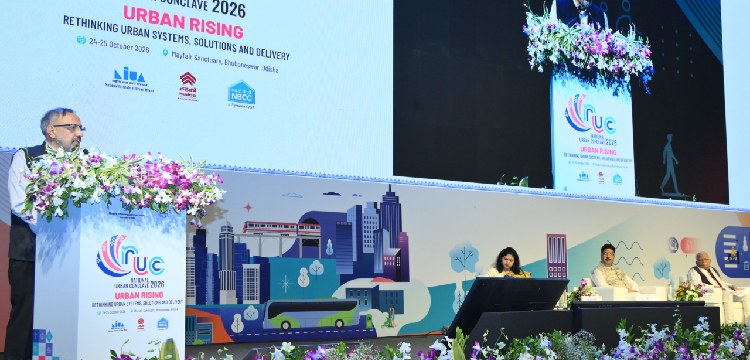
Delivering the special address, Rajiv Gauba, Member, NITI Aayog, emphasised the need for comprehensive reforms in urban governance, planning and municipal finance to manage India’s accelerating urban transition. Stating that “we cannot run cities from our state capitals. We need to empower our smaller cities”, he called for greater devolution of powers and finances to urban local bodies, empowered city leadership and stronger municipal accountability.
He stressed the importance of strengthening own-source revenues, reforming conventional land-use planning, and promoting higher densities, mixed-use development and transit-oriented development to improve housing affordability and economic productivity.
Highlighting initiatives such as the Urban Challenge Fund and City Economic Regions, he urged states to undertake structural reforms and called for linking funding under national urban missions to the implementation of these reforms, enabling cities to realise their potential as engines of growth towards Viksit Bharat 2047.
The second and concluding day of the National Urban Conclave 2026 focused on translating policy deliberations into actionable recommendations to strengthen urban governance, planning, infrastructure and service delivery.
Building on discussions across seven technical sessions, the Conclave brought together representatives from the Union and State Governments, urban local bodies, industry, academia and knowledge institutions to identify practical solutions to India’s evolving urban challenges and advance the vision of Viksit Bharat 2047.
Key Takeaways from Technical Deliberations
The session on ‘Right to Walk’ addressed fragmented pedestrian spaces, poor accessibility, inadequate integration with planning, unclear institutional responsibilities and funding gaps.
The session recommended institutionalising the ‘Right to Walk’ in statutory plans, securing pedestrian rights-of-way, strengthening the capacity and accountability of urban local bodies (ULBs), prioritising infrastructure quality and maintenance, adopting inclusive, community-led design, integrating pedestrian facilities into all street projects, and establishing dedicated financing mechanisms.
The session on ‘Water, Waste and Resource Efficiency’ recommended integrating water, wastewater and solid waste planning; shifting towards outcome-based service delivery; strengthening performance monitoring and lifecycle maintenance; promoting water reuse and circular resource recovery; developing markets for recovered resources; improving institutional accountability; and enabling sustainable financing through public-private partnerships (PPPs), municipal bonds and climate finance.
The session on ‘Affordable Housing – Demand and Supply Dynamics’ recommended reserving land for affordable housing, integrating housing with transit and employment centres, developing viable rental and transit housing models, introducing single-window approval systems, leveraging floor area ratio (FAR) and transferable development rights (TDR) incentives for cross-subsidisation, strengthening government participation through housing boards and PPPs, and ensuring long-term affordability through quality construction and maintenance.
The session on ‘Integrated Urban Development and Infrastructure Delivery’ recommended integrating spatial and infrastructure planning through shared GIS-based databases, promoting corridor-based and transit-oriented development, aligning investments across sectors and agencies, implementing targeted, citizen-informed urban interventions, leveraging land-based financing mechanisms, strengthening municipal creditworthiness, and improving institutional coordination.
The session on ‘New Paradigms for Urban Service Delivery’ recommended shifting from asset creation to outcome-based service delivery, integrating municipal agencies around clearly defined responsibilities, strengthening digital monitoring and citizen feedback systems, institutionalising performance-based contracts, developing specialised municipal cadres, improving own-source revenue mobilisation, and establishing a national framework for accountable, citizen-centric urban services.
The session on ‘Model Building Bye-Laws’ recommended simplifying building regulations and approvals through integrated digital platforms, introducing risk-based scrutiny and self-certification, rationalising FAR, density and parking norms, enabling mixed-use and transit-oriented development, incorporating climate resilience and disaster safety standards, incentivising green construction, and improving regulatory transparency and ease of doing business.
The session on ‘Model Municipal Law’ recommended empowering mayors with five-year tenures and clearly defined executive powers, strengthening the devolution of municipal functions, improving coordination with parastatal agencies, enhancing fiscal autonomy and own-source revenues, ensuring adequate technical staffing, empowering Ward and Zonal Committees, and revising the Model Municipal Law, 2003, through state-level consultations and implementation frameworks.
Launches and Releases
Several initiatives and publications were launched during the second day of the Conclave.
Used Water Marketplace under AMRUT 2.0
The digital platform connects ULBs with potential users and investors in the treated used-water ecosystem. ULBs can list the quantity and quality of treated water available for sale, enabling industries, institutions and private entities to identify and access procurement opportunities.
UCF Portal
The portal is a key digital initiative designed to enable the transparent, efficient and streamlined implementation of the Urban Challenge Fund. It serves as a common digital interface for states, Union Territories, ULBs and implementing agencies for project submission, tracking, appraisal and monitoring, thereby supporting informed decision-making.
Online Interactive Municipal Finance Data Hub
The multipurpose portal will connect municipal finance practitioners through online discussion forums, enabling two-way interactions. It will also support municipal reforms, including enhanced municipal revenue mobilisation and access to real-time digital data on ULB revenue and expenditure.
Street Food Hubs under PM SVANidhi
The initiative formally commenced the development of the 18 selected Street Food Hubs under PM SVANidhi. The release of the first tranche of funds marked the formal commencement of project implementation.
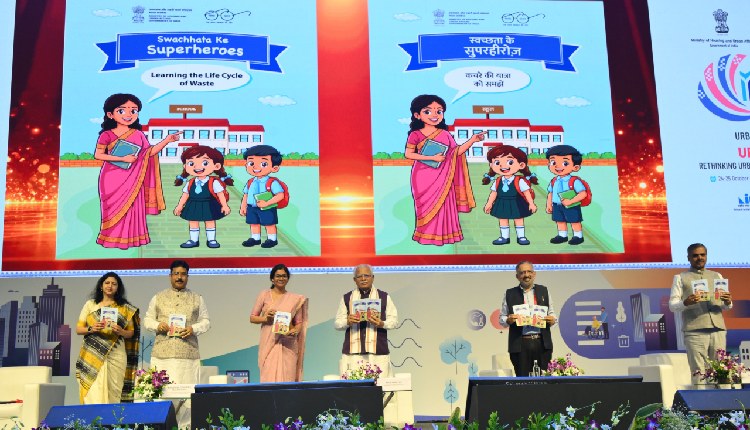
Swachhata Ke Superheroes
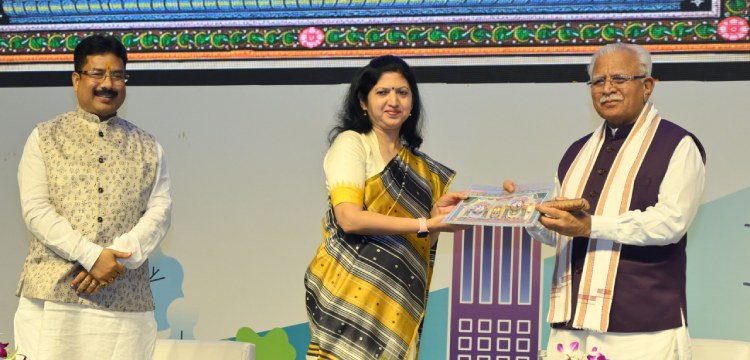
The book for children aims to instil the values of swachhata, waste segregation and responsible waste management among young readers.
CPWD Nirman
The web and mobile application is designed to enable digital monitoring of CPWD projects from initiation to completion. It will facilitate real-time progress tracking, milestone monitoring and inter-agency coordination, thereby enhancing transparency, accountability and data-driven decision-making.
CPWDway
The digital capacity-building platform offers short instructional videos on CPWD specifications, construction practices, project case studies, building services and architectural innovations. Integrated assessments will support continuous learning and practical skill development among government engineers and other engineering professionals.
Internship Scheme through the National Internship Portal
The initiative enables undergraduate engineering and architecture students to access internship opportunities with CPWD through AICTE’s National Internship Portal. The scheme will provide practical exposure to government infrastructure projects, construction technologies, project management and quality assurance, thereby strengthening industry–academia collaboration.
Technical Cooperation between JICA and CPHEEO
A Memorandum of Understanding (MoU) was signed between the Japan International Cooperation Agency (JICA) and the Central Public Health and Environmental Engineering Organisation (CPHEEO) to strengthen technical cooperation in promoting the circular use of treated used water.
The recommendations emerging from the two-day National Urban Conclave 2026 will inform the next phase of urban reforms, with an emphasis on strengthening institutional capacity, promoting integrated planning, ensuring sustainable financing and improving accountable service delivery.