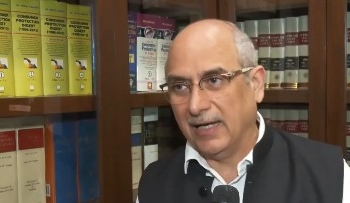






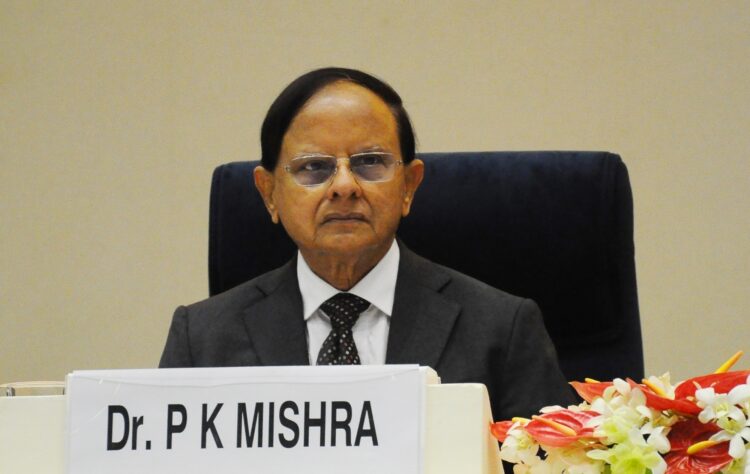
New Delhi: Dr PK Mishra, Principal Secretary to the Prime Minister, on Tuesday called for a comprehensive approach to disaster risk reduction, emphasising that the next decade must focus on protecting development and reducing economic losses alongside saving lives.
Addressing the meeting of senior officials on disaster risk reduction, convened by the United Nations Office for Disaster Risk Reduction (UNDRR) and co-chaired by India and the United Kingdom, he highlighted the growing interconnections among climate change, urbanisation, infrastructure expansion and environmental degradation.
Dr. Mishra stressed the importance of artificial intelligence, machine learning and multi-hazard early warning systems, underlining that warnings must trigger timely action and financing. He also called for advance planning of recovery mechanisms to ensure that reconstruction reduces, rather than reproduces, existing vulnerabilities.
Dr Mishra observed that while improvements in early warning, preparedness and emergency response have helped save lives, economic losses remain high. He called for moving beyond departmental silos towards a holistic understanding of risks and their cascading consequences.
Referring to the Sendai Framework for Disaster Risk Reduction, Dr Mishra called for its accelerated implementation through 2030 and greater investment in prevention, mitigation, and institutional capacity.
He highlighted India’s efforts under the leadership of Prime Minister Narendra Modi, including the Ten-Point Agenda on Disaster Risk Reduction (2016) and the amendments to the Disaster Management Act in 2025.
Reaffirming India’s commitment to international cooperation, he highlighted the establishment of the G20 Working Group on Disaster Risk Reduction during India’s G20 Presidency in 2023 and continued efforts to strengthen global collaboration in this area during its BRICS Chairship.
Dr Mishra outlined three priorities — a better understanding of emerging and interconnected risks; more effective investment in resilience across public finance, infrastructure, cities and natural systems; and stronger institutions supported by practical international cooperation.
(IANS)