





Bhubaneswar: The Odisha government on Sunday announced a comprehensive relief package for families affected by Cyclone ‘Arnab’, offering 50 kg of rice and Rs 2,500 in financial assistance to each affected family, besides a range of support measures for farmers, fishermen, traders, artisans and other vulnerable groups.
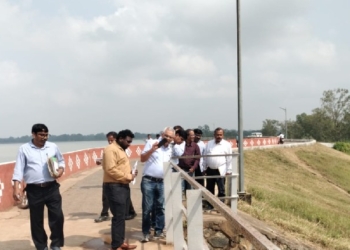
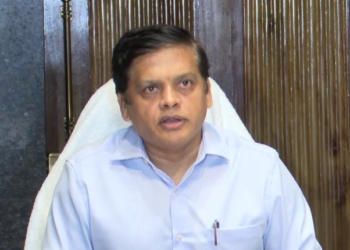
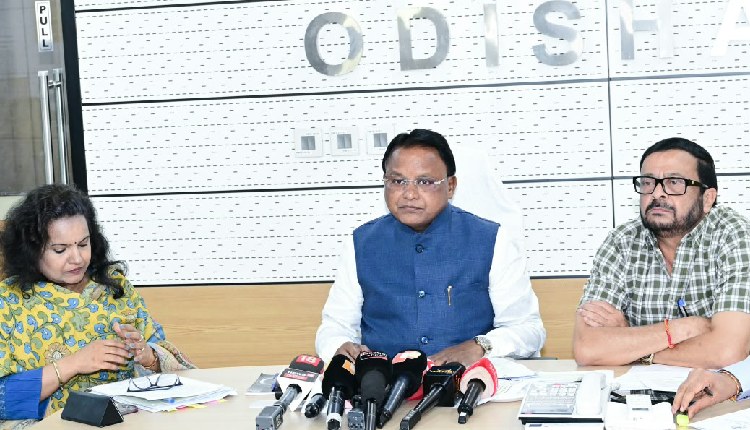
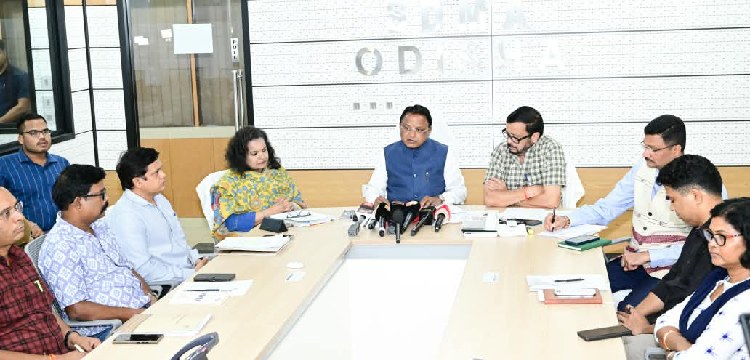
The package was announced by Chief Minister Mohan Charan Majhi after a high-level meeting at the Special Relief Commissioner’s office to review relief operations, restoration work and damage assessment following the cyclone.
Under the package, farmers who have suffered crop losses of 33 per cent or more will be eligible for input subsidies, while assistance has also been announced for damaged houses, livestock losses, fisheries, small businesses and other livelihood activities.
Addressing the media after the meeting, Majhi said the state government was committed to ensuring that every affected person received the necessary assistance.
He said he was in regular communication with the Central Government regarding the cyclone’s impact and the steps being taken by the state administration. He had also discussed the situation with Union Home Minister Amit Shah.
A Central Inter-Ministerial Committee will visit Odisha on November 2 to assess the damage, particularly in the worst-affected districts of Ganjam, Gajapati and Kandhamala, the Chief Minister said.
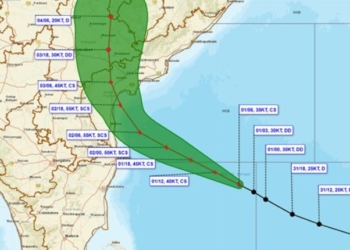
Majhi said that although the impact of Cyclone Arnab had not completely subsided, there was a possibility of another cyclone, ‘Murasu’, approaching. He directed government teams deployed for relief and monitoring operations to remain in their respective areas and respond to the evolving situation.
Agriculture and credit assistance
Farmers who have suffered crop losses of 33 per cent or more will receive input subsidies for a maximum landholding of two hectares.
The assistance will be Rs 8,500 per hectare for rainfed areas, Rs 17,000 for irrigated areas and Rs 22,500 for perennial crops. Minimum assistance will be Rs 1,000, Rs 2,000 and Rs 2,500, respectively, for these categories.
An assistance of Rs 18,000 per hectare will also be provided for removing sand or silt deposits from agricultural land, subject to a minimum payment of Rs 2,200 per farmer.
The government will distribute 1.75 lakh special agricultural mini-kits, comprising 1.2 lakh pulse kits, 5,000 oilseed kits and 50,000 vegetable seed kits.
Special assistance will also be extended to sugarcane farmers cultivating 2,000 hectares of affected land. The assistance will be Rs 27,500 per hectare for demonstrating the spaced transplanting method or Rs 12,500 per hectare for ratoon crop management.
A 75 per cent subsidy on pesticides and bio-pesticides will be provided during the 2026-27 Rabi season.
In areas where crop losses are 33 per cent or more, short-term Kharif crop loans will be converted into medium-term loans for farmers opting for the facility.
Joint Liability Groups will also be formed during the current Rabi season to extend credit to sharecroppers, landless farmers and cultivators operating under oral agreements.
Housing and livestock assistance
Families whose houses have been completely or severely damaged will receive Rs 1.2 lakh in plain areas and Rs 1.3 lakh in hilly areas.
Assistance of Rs 6,500 will be provided for partially damaged pucca houses and Rs 4,000 for partially damaged kutcha houses. Damaged huts will attract assistance of Rs 8,000, while Rs 3,000 will be provided for damaged cattle sheds.
Families whose houses have been washed away, completely destroyed or remained inundated for more than two days will receive Rs 2,500 each for clothing and household utensils.
Compensation has also been announced for livestock losses. Farmers will receive Rs 37,500 for the death of milch animals, Rs 4,000 for sheep, goats and pigs, Rs 32,000 for large draught animals and Rs 20,000 for small draught animals.
Assistance of Rs 100 per poultry bird, subject to a maximum of Rs 10,000, will also be provided.
The government will support 1,000 farmers in purchasing replacement livestock such as goats and bullocks. In addition, 5,000 dairy farmers in affected areas will receive cattle feed at the rate of 100 kg per animal, subject to a maximum of 500 kg per farmer.
Assistance will also be extended for restoring 200 poultry farms that have suffered more than 70 per cent damage under the Chief Minister’s Krushi Udyog Yojana.
Support for fisheries and businesses
Affected fish farmers will receive financial assistance of up to 75 per cent of the eligible cost, subject to a maximum of Rs 1,12,500 per hectare.
Assistance of Rs 22,500 will be provided for completely or partially damaged boats and Rs 15,000 for damaged fishing nets. Marine and Chilika fishermen will receive Rs 60,000 for damaged boats and Rs 15,000 for damaged fishing nets.
Support will also be extended to fish farmers whose pond embankments have been breached or whose ponds have suffered soil erosion, as well as community ponds leased by Women Self-Help Groups. Financial assistance of up to Rs 1.75 lakh per hectare has also been announced.
The package includes measures for affected micro, small and medium enterprises (MSMEs), traders, shopkeepers, street vendors and other commercial establishments.
Eligible MSMEs, traders and shopkeepers will be provided loans of up to Rs 12 lakh, with a 25 per cent subsidy subject to a maximum of Rs 3 lakh. The state government will transfer the subsidy directly to the respective banks.
Street vendors, temporary stall owners and kiosk operators will receive Rs 10,000, while shops and commercial establishments will be provided Rs 25,000.
Assistance for SHGs, artisans and silk farmers
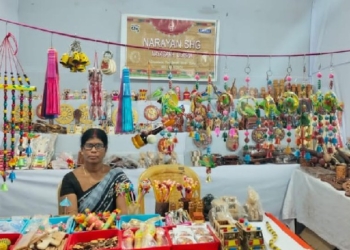
All eligible Women Self-Help Groups affected by the cyclone will receive additional seed money of Rs 5,000.
Weavers and artisans will be provided Rs 5,000 each to replace damaged equipment and tools, along with an additional Rs 5,000 to compensate for the loss of materials.
Affected Eri, Mulberry and Tussar silk farmers will receive input assistance of Rs 6,000 per hectare, while Muga silk farmers will receive Rs 7,500 per hectare.
Sericulture farmers whose rearing houses have been completely damaged will receive financial assistance of Rs 1.75 lakh each.
Lift irrigation restoration
The Odisha Lift Irrigation Corporation will immediately undertake repairs to lift irrigation points on a priority basis in all affected villages.
The Chief Minister has directed officials to ensure that all such irrigation points are operational before the commencement of the Rabi season and instructed them to complete the restoration work without delay.
Revenue and Disaster Management Minister Suresh Pujari, Chief Secretary Anu Garg, Additional Chief Secretary of the Revenue and Disaster Management Department Dr Arabinda Kumar Padhee, Special Relief Commissioner Rajesh Prabhakar Patil and other senior officials attended the meeting.