






Washington: US officials are investigating what triggered a nationwide flight halt after older air traffic control equipment became overloaded, with the Department of Homeland Security saying it had found no evidence of a cyberattack but had not ruled one out.
Transportation Secretary Sean Duffy said communications and radar data became unstable at air traffic control facilities on Friday afternoon (local time). He attributed the disruption to overloaded legacy equipment but said officials were still working to establish precisely what went wrong.
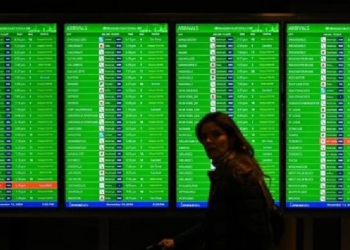
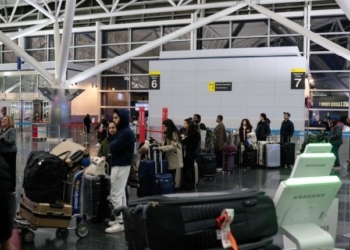
The Federal Aviation Administration lifted the nationwide ground stop on Friday evening, leaving airlines to work through delayed and cancelled flights. Duffy warned that getting passengers to their destinations would take time and depend in part on the availability of flight crews.
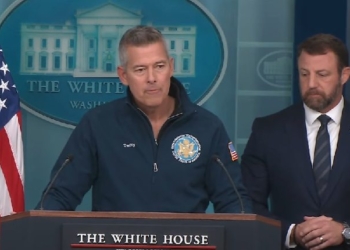
At a White House briefing with Duffy, Homeland Security Secretary Markwayne Mullin said investigators had not found evidence of a cyberattack or signs that anyone had entered the system. He said the inquiry was continuing and officials were not ruling anything out.
Mullin also said the disruption was not connected to a separate Microsoft outage.
Duffy said the problems began at about 3:36 p.m. Eastern time, when air traffic control centres and terminal radar facilities began receiving inconsistent radar and communications data. More than 3,500 aircraft were in the air at the time, he said.
The transportation secretary said radar and communications had not been completely lost. Pilots and controllers followed established procedures to bring aircraft down safely, while essential medical and law enforcement flights were allowed to continue, he said.
Both of them pointed to the age of the air traffic control network, although their descriptions left questions about how the overload occurred.
Mullin suggested that newer equipment and technology had overwhelmed the older system. Later, when a reporter asked whether FAA patching had caused the outage, Duffy said it had not. He said the older analogue system had been overloaded with data and that upgraded digital equipment had not experienced the same problem.
Duffy said his team was still examining the details and that he did not want to provide incorrect information about the cause. The briefing did not establish a final explanation for what triggered the overload.
He said the affected facilities had been brought back online after officials took steps to reduce the load on the network. But he cautioned that restoring normal schedules would take time, as airlines assessed whether pilots and cabin crews were available.
The FAA’s air traffic control network includes airport towers, terminal radar facilities and en route centres. Controllers use communications and surveillance systems to guide aircraft through US airspace.
(IANS)