





Rourkela: Researchers from the National Institute of Technology (NIT) Rourkela have found a way to repurpose inactive proteins discarded by pharmaceutical companies. Professor Harekrushna Sahoo, Professor Monalisa Mishra and Professor Devendra Verma have converted these waste materials into hydrogels with potential applications in wound healing, tissue regeneration and drug delivery.
Proteins perform a wide range of functions in the human body. Along with properties such as repairing tissues and regulating biological processes, they are also central to modern medicines and regenerative therapies. However, proteins are delicate molecules. Exposure to heat, chemicals or harsh processing conditions can cause them to lose their three-dimensional structure. Once unfolded, the molecules tend to stick together, forming clumps known as aggregates. This aggregation causes proteins to lose their biological function. As a result, pharmaceutical and biotechnology companies typically discard them.
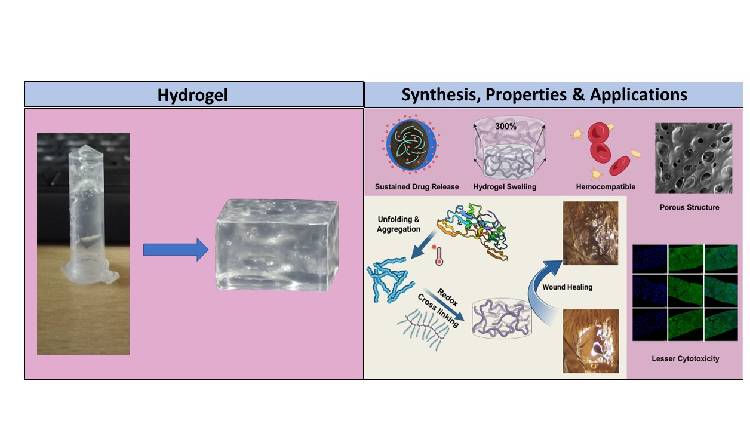
The NIT Rourkela research team has developed a process to convert these discarded proteins into wound-healing microgels. To achieve this, the team heated the BMP-2 proteins to about 85°C for ten minutes, which made them unfold. Chemical reactions then made the unfolded proteins clump together. As the next step in the process, the hydrogen peroxide and hyaluronic acid was added to these clumps to turn them into a gel form.
The gel contains tiny pores allowing it to absorb water, retain medicines, and interact with the body’s tissues.
Highlighting the role of two components in enhancing the hydrogel’s properties, Professor Harekrushna Sahoo, Department of Chemistry, NIT Rourkela, said, “The synthesis and performance are associated with the synergistic contribution of BMP-2 protein and hyaluronic acid, particularly its water-retention properties which improved the hydrogel architecture, antioxidant activity and sustained drug-release characteristics.”
The findings of this research have appeared in the Royal Society of Chemistry’s Journal of Materials Chemistry B (2026).
In addition to this, the research team has also secured an Indian Patent for the developed technology. Application number: 202531107839, Date: 6th November 2025.
In lab scale tests, the researchers filled the hydrogel with antibiotic ampicillin and checked its drug releasing capabilities, suggesting its potential use in targeted drug delivery. The gel also supported the growth of fibroblasts, the cells responsible for wound healing.
Speaking about the wound-healing properties of the developed hydrogel, Professor Monalisa Mishra, Associate Professor, Department of Life Sciences, NIT Rourkela, said, “Evaluation of the wound-healing efficacy of the newly designed and synthesized BMP-2–hyaluronic acid composite hydrogel was done using Drosophila melanogaster as the in vivo model. Although, we found that the hydrogel is quite promising with our model but still it has to be done and proved biocompatibility with higher animal models before clinical trial.”
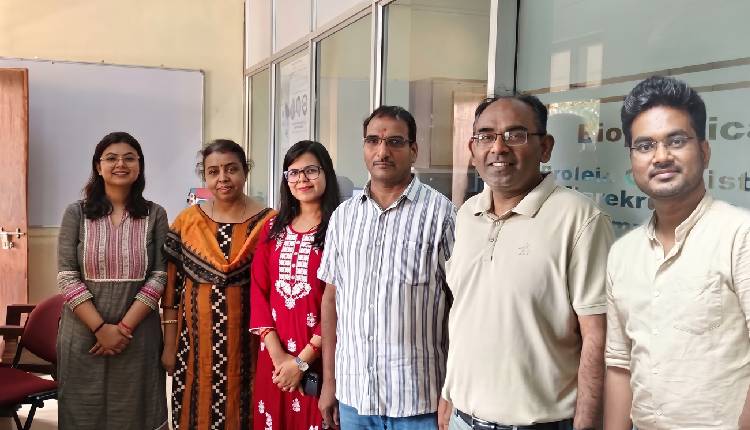
As the next step, the research team plans to build biological models to test how safe and effective the hydrogel is as a therapy.
Highlighting the potential for clinical trials and the next steps in research, Prof. Devendra Verma, Professor, Department of Biotechnology and Medical Engineering, NIT Rourkela, said “The cell-line outcome is promising and could be an efficient candidate for clinical trials provided its biocompatible and non-toxic to higher animal models. It might take 10-12 months to prove the same with higher animal models which might open up for clinical trial.”
The research innovation by NIT Rourkela researchers is a major step towards developing sustainable biomaterials for wound healing and tissue regeneration.