



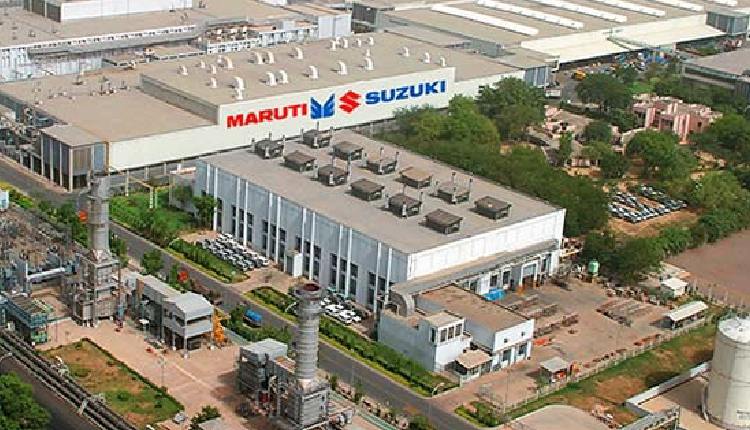
New Delhi: Maruti Suzuki India Limited, the country’s largest car manufacturer, on Monday informed that its board has approved a Rs 4,960-crore proposal to acquire land for expansion of its manufacturing capacity in Gujarat.
The land acquisition is for the expansion of production capacity at Khoraj Industrial Estate from Gujarat Industrial Development Corporation, and “the proposed capacity addition is up to 1 million (10 lakh) units”, Maruti Suzuki India said in an exchange filing.
“The cost of land acquisition, development, and preparatory activities approved by the board is Rs 4,960 crore,” it said, adding that the overall investment would be finalised and approved by the board while framing the phases of installation of capacity.
The mode of financing would be a combination of internal accruals and external borrowings, Maruti Suzuki India said.
“The total existing capacity is around 24 lakh units per annum in Gurugram, Manesar, Kharkhoda, and Hansalpur, with a capability to produce 26 lakh units per annum. This includes the units produced at erstwhile Suzuki Motor Gujarat Private Limited, which has been amalgamated with the Company,” the filing said.
The existing capacity is fully utilised, the vehicle manufacturer added.
The car manufacturer had produced over 22.55 lakh vehicles in 2025 — its highest-ever output in a calendar year. This is the second consecutive year that Maruti Suzuki India has exceeded 20 lakh units in annual production. The production includes vehicles for domestic sales, exports, and OEM supplies.
Managing director and CEO of Maruti Suzuki, Hisashi Takeuchi, said that a high degree of localisation helped the company achieve such scale while maintaining the global competitiveness of India’s automotive manufacturing ecosystem.
Maruti Suzuki India has exported 3.95 lakh vehicles in 2025, its highest ever in any calendar year. This marks a growth of over 21 per cent as compared to 2024.
The company with over 40 per cent share of the domestic market in the passenger vehicle segment plans to enhance its manufacturing capacity to 4 million units per annum to meet rising domestic demand and serve international markets.
(IANS)