



New Delhi: Finance Minister Nirmala Sitharaman on Friday said the new Income-tax Act, 2025 will bring major relief for small business owners and professionals by simplifying rules and reducing compliance burden, while also aiming to cut down tax-related disputes.
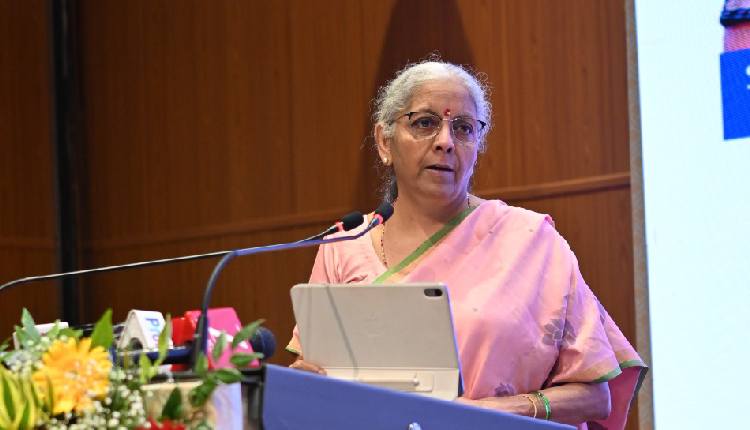
Speaking at the launch of the nationwide awareness campaign ‘PRARAMBH 2026’, FM Sitharaman highlighted that small businesses and professionals are the backbone of India’s economy and the new law has been designed keeping their needs in mind.
“Under the new framework, businesses with a turnover of up to Rs 10 crore, subject to certain conditions, will not be required to maintain detailed books of accounts or undergo audits,” the Finance Minister stated.
“This will significantly reduce the compliance burden and provide much-needed relief to smaller enterprises,” FM Sitharaman mentioned.
The Finance Minister also pointed out that several contentious issues, including pre-construction interest on housing loans, have now been clearly addressed in the new law, reducing ambiguity and scope for disputes.
Emphasising the importance of lowering litigation, FM Sitharaman said that every case reaching a tribunal reflects a gap in the system.
Finance Minister stressed that the new Act aims to minimise errors, disputes, and compliance costs, encouraging a shift towards smoother and more transparent tax compliance.
The government has also rolled out a new digital platform, Income Tax Website 2.0, alongside the law.
“This will allow taxpayers to easily ask questions, communicate with authorities, and file returns,” the minister stated.
Officials have also been directed to expand outreach beyond major cities and engage with different groups, including students.
The new Income-tax Act replaces the decades-old Income-tax Act, 1961, which had become complex due to thousands of amendments over the years.
FM Sitharaman said the new law simplifies the structure significantly, reducing the number of sections from around 819 to 536 and chapters from 47 to 23.
The total length of the law has also been cut nearly in half. In a major change, the distinction between “previous year” and “assessment year” has been removed, introducing a single, simplified tax year system.
The minister said such simplification will make it easier for taxpayers to understand and comply with the law.
(IANS)