


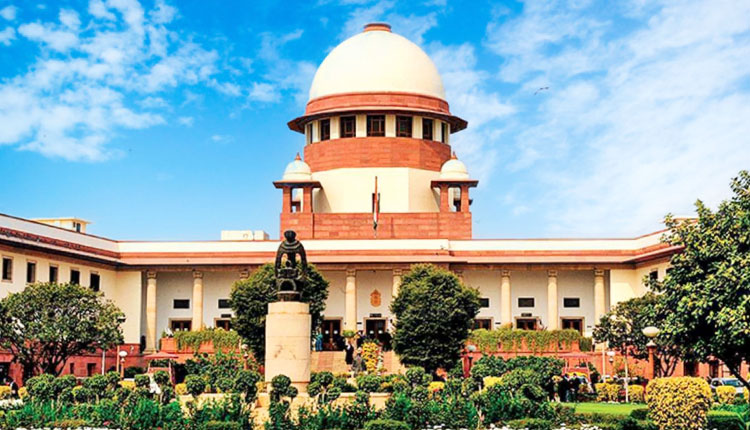
New Delhi: In a significant ruling on bail jurisprudence, the Supreme Court has observed that courts should not insist on upfront monetary deposits or undertakings as a precondition for the grant or consideration of bail, as such a practice has the potential to derail the criminal justice system and be misused to coerce settlements.
A bench of Justices Manoj Misra and Manmohan made the observations while hearing a special leave petition (SLP) challenging a Delhi High Court order that declined to extend the interim bail of an accused in a case involving the alleged diversion of government subsidy funds.
Relying on its recent ruling in Gajanan Dattatray Gore vs. State of Maharashtra, the apex court reiterated that courts must not link bail relief to financial conditions.
“The decision in Gajanan Dattatray Gore deprecates the practice of the courts in insisting on upfront deposits, or undertaking for such deposits, or compliance(s) of certain obligations, from bail/stay applicants for consideration of their prayer on merits,” the Justice Misra-led Bench said.
Such a practice “encourages implication with an oblique purpose and has the potential to derail the criminal justice delivery system by making it a tool in the hands of unscrupulous complainant(s) to extort a settlement and force the other side to give up its right of defence”, it added.
The SLP arose from a July 21, 2025, order of the Delhi High Court, which refused to extend the accused’s interim bail in connection with an FIR registered by the Economic Offences Wing after his failure to comply with an undertaking to deposit the remaining allegedly diverted amount.
In its order, the Supreme Court observed that instead of repeatedly extending interim bail while insisting on further deposits, the appropriate course was to decide the regular bail application on its own merits.
“If a person is unable to comply with the undertaking, that is not a ground to defer consideration of bail prayer on merits,” the bench observed.
It further noted that in offences under Section 409 of the IPC, there is no presumption of culpability of a company director, and such liability has to be established during trial.
Disposing of the SLP, the apex court directed the Delhi High Court to decide the accused’s regular bail application expeditiously, preferably within three weeks, while allowing the interim protection to continue in the meantime.
“In the interregnum, the interim order that was passed on 21.07.2025 shall remain operative,” it ordered.
–IANS