


New Delhi: Union Consumer Affairs Minister Pralhad Joshi has released the ‘Electric Agricultural Tractors — Test Code’, developed by the Bureau of Indian Standards (BIS), to ensure the safety, reliability, and performance of electric agricultural tractors through uniform and standardised testing protocols across the country, as per an official statement issued on Sunday.
IS 19262:2025 ‘Electric Agricultural Tractors — Test Code’ establishes a common understanding among all stakeholders with respect to uniform terminology, general guidelines, and tests to be carried out on electric agricultural tractors, including testing PTO power, drawbar power, and the performance of belts and pulleys, etc. It also covers vibration measurement, specification verification, and inspection of various components and assemblies of electric agricultural tractors, according to the statement.
The standard draws technical assistance from IS 5994: 2022 ‘Agricultural tractors — Test code’, and relevant Automotive Industry Standards developed for electric vehicles, suitably adapted for agricultural applications. The implementation of IS 19262: 2025 through authorised testing institutes would facilitate wider adoption of electric agricultural tractors in the country, promote innovation in clean agricultural technologies, and contribute to reduced emissions and sustainable agricultural mechanisation.
The test data generated using the procedures prescribed in IS 19262: 2025 is expected to provide a scientific basis for evaluating performance and safety characteristics of electric agricultural tractors. Such data would also assist in the future development of acceptance criteria and conformity assessment schemes specific to electric tractors. By prescribing structured and uniform testing procedures, the standard aims to support manufacturers in delivering reliable and safe products, while giving farmers and consumers greater confidence in the performance and capabilities of electric agricultural tractors, the statement explained.
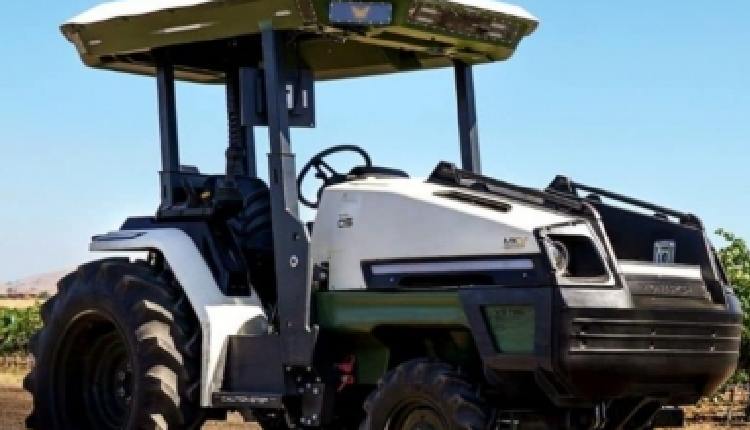
Electric agricultural tractors represent an emerging and important segment in India’s farm mechanisation ecosystem. These tractors use electric motor(s) powered by battery packs, instead of conventional diesel engines, for propulsion and other agricultural operations. With rapid advancements in battery technology, electric motors, and power electronics, electric tractors have evolved significantly in recent years, enabling the development of efficient and capable machines.
These tractors offer a sustainable alternative to traditional diesel-powered tractors, with benefits including reduced emissions, lower operating costs, and improved operational performance. An electric tractor eliminates tailpipe emissions at the farm level, helping reduce air pollution and the carbon footprint of agricultural operations.
For farmers working long hours in fields, this also provides a healthier working environment with significantly lower noise and no exposure to exhaust fumes. Also, having fewer moving parts than diesel engines, these tractors promise lower maintenance requirements, reduced operating costs, and improved energy efficiency. These tractors help reduce diesel consumption in the agricultural sector. By lowering the use of this fossil fuel, they also reduce the use of natural resources required for diesel production.
As the adoption of electric agricultural tractors grows in the country, the absence of dedicated and harmonised testing procedures posed challenges in assessing their performance, safety, and reliability in a consistent manner. In response to this requirement and the request of the Mechanisation & Technology Division, Ministry of Agriculture & Farmers’ Welfare, to develop electric tractor standards on priority, the Bureau of Indian Standards took up the formulation of an Indian Standard to establish standardised testing protocols for electric agricultural tractors.
The formulation of this standard involved active participation from key stakeholders, including electric tractor manufacturers, testing and certification agencies, research and academic institutions, and technical experts in the fields of agricultural engineering and electric mobility. Representatives from the Ministry of Agriculture and Farmers’ Welfare, the ICAR-Central Institute of Agricultural Engineering, Bhopal, the Central Farm Machinery Training and Testing Institute, Budni, the Tractor and Mechanisation Association, New Delhi, the Automotive Research Association of India, Pune, and the All India Farmers Alliance, New Delhi, contributed significantly during the standard development process.
The notification of this standard, which is voluntary, marks an important step towards strengthening India’s standardisation framework for emerging technologies in the agriculture sector, while aligning domestic practices with evolving international trends in electric mobility and farm mechanisation, the statement added.
(IANS)