


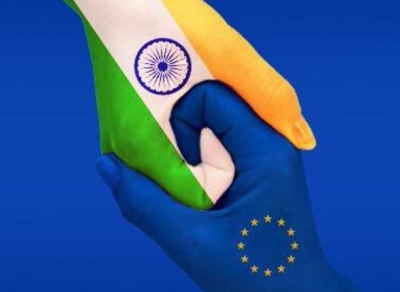
New Delhi: The successful conclusion of the negotiations on the EU-India Free Trade Agreement (FTA) comes against the backdrop of the dramatic shift in the global strategic environment, which led to a stepping up of efforts by the two sides to recalibrate the bilateral economic partnership, according to an article published by the European Policy Centre (EPC).
“The EU has recently pushed to diversify its trade partnerships with unprecedented determination. In Brussels, policymakers have grown increasingly wary of China’s state-led economic practices while simultaneously grappling with a more aggressive and often unpredictable shift in US trade policy. This, together with the wider fragmentation of global economic governance, has reinforced the EU’s resolve to reduce strategic dependencies and broaden its network of economic partners,” the article written by Almut Maller and Ivano di Carlo stated.
Amid Russia’s invasion of Ukraine and an increasingly assertive pursuit of national interests by Washington and Beijing, the EU fears for the future of open markets and the rules-based international order on which the bloc’s prosperity depends. In this context, the new FTA with India represents an additional building block of this diversification agenda, the article pointed out.
According to the article, the FTA also provides India a “strategic hedge” against the economic pressure mounted by the Donald Trump administration over the country’s imports of cheap oil from Russia.
IT points out that political leaders of the EU and India chose to give their renewed trade commitment prominent public visibility, describing it as “the mother of all deals”. The European leaders also attended India’s high-profile Republic Day celebrations to drive home the point.
“Beyond the positive impact that economists assess for trade between the EU and India under the agreement, both sides were keen to present their new alliance as a timely move by two of the world’s largest democratic economies to re-strengthen credible and reliable trade frameworks, with the ambition of generating impact well beyond their bilateral relationship,” the article stated.
For the EU, the political stakes are particularly high. Brussels must demonstrate the extent to which its new trade strategy can face the challenge posed by the US under the presidency of Donald Trump, the article added.
(IANS)