


New Delhi: Free diagnosis and multi-drug treatment at public health hospitals is ensuring that India remains leprosy-free, said the government on Friday.
National Leprosy Day in India is observed annually on January 30, coinciding with the death anniversary of Mahatma Gandhi, to honour his work with those affected by the disease.
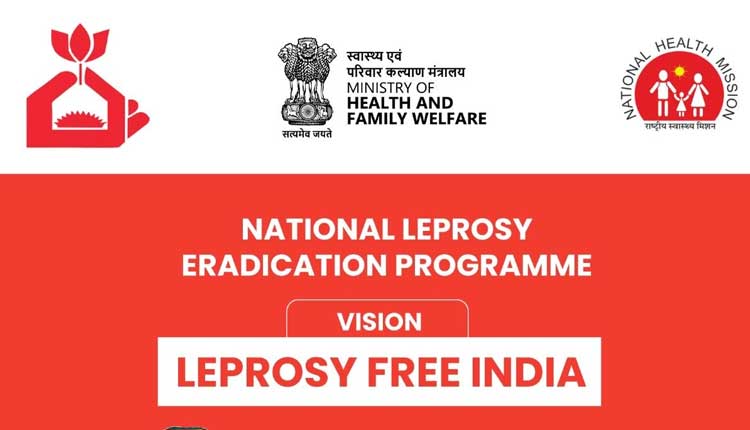
“Under the National Leprosy Eradication Programme (NLEP), India continues its efforts towards a Leprosy-Free India, ensuring free diagnosis, treatment, and care services at government health facilities nationwide,” the Health Ministry posted on social media platform X.
“Let us work together to eliminate stigma and ensure dignity and care for all,” it added.
Leprosy, also known as Hansen disease, is a chronic infectious disease caused mainly by a type of bacteria called Mycobacterium leprae. The disease affects the skin, the peripheral nerves, the mucosa of the upper respiratory tract, and the eyes.
Apart from the physical deformity, persons affected by leprosy also face stigmatisation and discrimination. However, leprosy is curable, and treatment in the early stages can prevent disability.
India achieved the official elimination of leprosy as a public health problem (less than 1 case per 10,000 population) nationally in December 2005.
As of March 2025, 31 states/UTs and 638 districts have achieved this, with a prevalence rate of 0.57 per 10,000.
The NLEP now targets “Zero Transmission, Zero Leprosy” by 2027 through early detection, free multidrug therapy (MDT), and stigma reduction.
Under the NLEP, the government provides services such as free diagnosis and treatment (MDT) at all government health facilities, microcellular rubber footwears for patients, free assistive devices for leprosy patients, self-care kits for patients with ulcers, and reconstructive surgery for Grade 2 deformities with a welfare allowance of Rs 12,000.
All services under NLEP are available free of cost at all government health facilities.
If left untreated, leprosy may cause progressive and permanent disabilities. The bacteria are transmitted via droplets from the nose and mouth during close and frequent contact with untreated cases.
Leprosy is also a neglected tropical disease (NTD), which occurs in more than 120 countries, with around 2,00,000 new cases reported every year.
(IANS)