



New Delhi: India’s tryst with Naxalism began in 1967 and continued into the 2000s in various forms and names, beginning with challenging feudal landholdings that later spread southwards, rising in defiance against the larger state itself in accordance with Mao Zedong’s phrase, “political power comes from the barrel of a gun.”
The doctrine of Communist China’s founding father — adopted in India by a handful of ultra-Leftists from a peasant uprising at Naxalbari in northern West Bengal — soon turned into romanticism rather than a political philosophy.
Gun-toting, camouflage-jacket-wearing “Maoists” carved the “Red Corridor” through jungles and thickets from then undivided Andhra Pradesh, Maharashtra, Madhya Pradesh (later including Chhattisgarh), Odisha, undivided Bihar, and West Bengal, extending into Nepal’s open borders and further north.
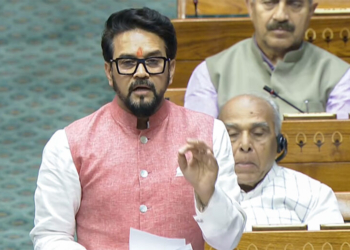
Now, almost 60 years later, Union Home Minister Amit Shah announced in Parliament on Monday that the country is finally “Naxal-free,” marking what he described as the end of a decades-long insurgency that had once spread across large swathes of the country.
While rendering his speech, Shah mentioned the history and impact of the movement that killed thousands — members of security forces and common people — and choked progress and growth in the regions they dominated.
He traced the movement’s origins in West Bengal and highlighted its expansion across multiple states, culminating in the formation of Maoist groups.
Shah accused previous governments of allowing their growth and emphasised that Maoist violence has claimed over 20,000 lives. He asserted that it was a battle against democracy, warning that such movements aimed to create governance and security vacuums.
He assured firm security measures with accelerated development in affected areas to eliminate insurgency and restore order.
According to the Home Minister, the movement was “patronised” by former Prime Minister Indira Gandhi, who allegedly allowed Leftist ideology to gain ground in India’s political discourse.
He underscored Naxalism not only as a security challenge but also as a product of political choices made during the Congress era.
By linking the insurgency to past leadership, Shah emphasised the Bharatiya Janata Party’s narrative of correcting historical wrongs and positioning itself as the guarantor of national stability.
He further stirred the “urban Naxal” controversy, mentioning apparent support to cadres by a section of town-based intelligentsia and cited examples in support of his statement.
Undoubtedly, ultra-Left insurgency in India has steadily declined over the past two decades. At its peak, it affected more than 200 districts across India along the “Red Corridor.”
Today, as the government claims, only a handful remain vulnerable, and even those are under control.
Several factors contributed to this decline, Shah reiterated, ranging from security operations, infrastructure development, and community engagement.
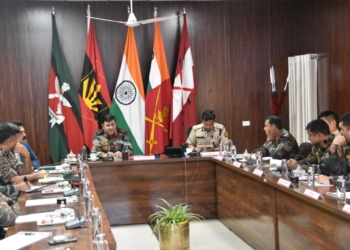
Coordinated efforts by central and state forces, including specialised units like the Central Reserve Police Force’s COBRA battalions, disrupted Naxal networks.
Meanwhile, roads, schools, and healthcare facilities were expanded in previously neglected tribal areas, reducing the appeal of insurgent groups. Programmes aimed at integrating tribal populations into mainstream governance and providing livelihood opportunities further weakened the insurgents’ social base.
While the official declaration is momentous, challenges remain. Residual pockets of insurgency still exist, and the political dogma has not been totally eradicated.
(IANS)