


New Delhi: Congress Parliamentary Party chairperson Sonia Gandhi’s scathing condemnation of India’s so-called “silence” over the killing of Iranian Supreme Leader Ayatollah Ali Khamenei doesn’t hold water, several leaders and experts reckoned on Tuesday.
While the West Asia is caught up in throes of a full-blown war, triggered by US-Israeli strikes leading to the killing of Khamenei, the opposition parties in India are questioning the country’s standing and its diplomatic handling of affairs in the Middle-Eastern region.
Congress and INDIA bloc have criticised Centre’s stand, particularly with regard to Iran, with Sonia Gandhi condemning India’s alleged silence over the killing of Iranian Supreme Leader. This has elicited strong counters from BJP, which sought to show it the mirror by digging out ‘uncomfortable’ instances from the past when the Congress-led government didn’t stand with the dictatorial regimes like Ayatollah and Gaddafi (Libya) and rather sided with the US-led forces.
The all-out war in West Asia will soon spiralling effect on economies around the world, with countries like India facing the heat owing to its energy dependency on Iran. However, experts opine that India’s stand is driven by its “national interests” and not any external factors.
A host of experts and political watchers believe that the government led by Prime Minister Narendra Modi has acted with “utmost caution” and chosen to prioritise its national interests above everything.
Other weighing on their views on the matter, stated “India has decided when to speak and how to speak. It will do so based on its assessment of national interest, regional stability and the safety of its citizens. That is not silence. That is statecraft.”
Earlier in the day, Sonia Gandhi in her scathing article accused the Centre of taking a side, mentioning that the government refrained from condemning the assassination of Khamenei or violation of Iranian sovereignty and the PM confined himself to condemning Iran’s retaliatory strike on the UAE, without addressing the sequence of events that preceded it.
However, experts have cited multiple instances where the Congress-led governments maintained a neutral stand or rather chose to stand with global forces while maintaining a distance from oppressive and dictatorial regimes, including those led by Saddam Hussain in Iraq and Muhammad Gaddafi in Libya.
When the Congress-led UPA was in power, India voted against Iran at the International Atomic Energy Agency in 2005, 2006 and 2009. These votes aligned with Western powers during negotiations over the India–US Civil Nuclear Agreement. At that time, there was no hesitation in sidelining what is now described as a civilisational relationship.
In 2011, when Libyan dictator Muammar Gaddafi was killed during the uprising, the Congress-led UPA government neither issued a formal condolence nor mounted any dramatic condemnation.
“In 2011, when Gaddafi was killed fleeing a NATO bomb strike, the UPA government said nothing. India had strong ties with Libya then too with seven ministers including Pranab Mukherjee visiting the country between 2004 and 2007. Was UPA wrong then or is the Modi government wrong now?” questioned one analyst.
BJP, referring to these instances, has hit back at Congress party, stating that the grand old party must refrain from “lecturing on moral responsibility” and the selective memory cannot be the basis of selective outrage.
Moreover, Ayatollah Ali Khamenei regime’s repeated attempts to intervene in India’s national matters explains New Delhi’s stance and blunts Opposition’s attack on morality.
Over the years, Khamenei spoke on India’s internal affairs, seeking to build an opinion against India and isolate it globally.
He amplified propaganda around the Delhi riots, attempting to portray them as a one-sided massacre while ignoring documented violence against Hindus. He compared India with Gaza, an inflammatory analogy clearly designed to provoke Muslim nations and isolate India diplomatically.
In 2017, he called upon the Muslim world to mobilise support for what he termed the “oppressed Muslims of Kashmir.” He spoke on Article 370 and the CAA as well. Despite these repeated intrusions, India did not indulge in rhetorical retaliation. It maintained diplomatic composure and engagement.
Even after the horrific 2008 Mumbai attacks, India had reason to feel disappointed with Tehran’s response. Contemporary reporting indicated that sections of Iranian media commentary appeared sympathetic to Pakistan, and an Iranian official reportedly avoided explicitly acknowledging that the terrorists had come from Pakistani soil, instead describing Pakistan itself as a victim of terrorism.
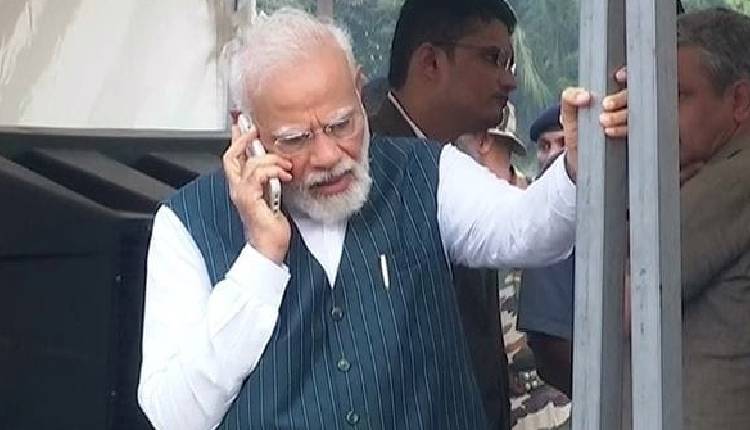
On the other hand, even as hostilities in West Asia rage on, Prime Minister Narendra Modi has spoken to Israeli PM and Gulf counterparts in the West Asia and expressed solidarity while calling for an end to armed confrontation and pursuing dialogue as the way forward.
“Besides political bickering, one thing that does hold water is that India’s foreign policy has been guided by the national interest, as much as during previous dispensations, as of now, and therefore the rhetoric and propaganda about country’s diplomatic stand with regard to Iran is nothing more than politics and political grandstanding,” another expert highlighted.
(IANS)